
Recently, I got a cute LAUREN Ralph Lauren (LRL) dress off Poshmark, and the first thing I did was to have a close look at it, inside and out, to make sure there were no (previously undisclosed) issues with it. Yes, I did get burned on my last Poshmark purchase but, also, this is just generally good practice. Anyway, in the process, I found myself doing an impromptu assessment of its likely vintage, ultimately concluding that it was probably from circa 2005-2010.
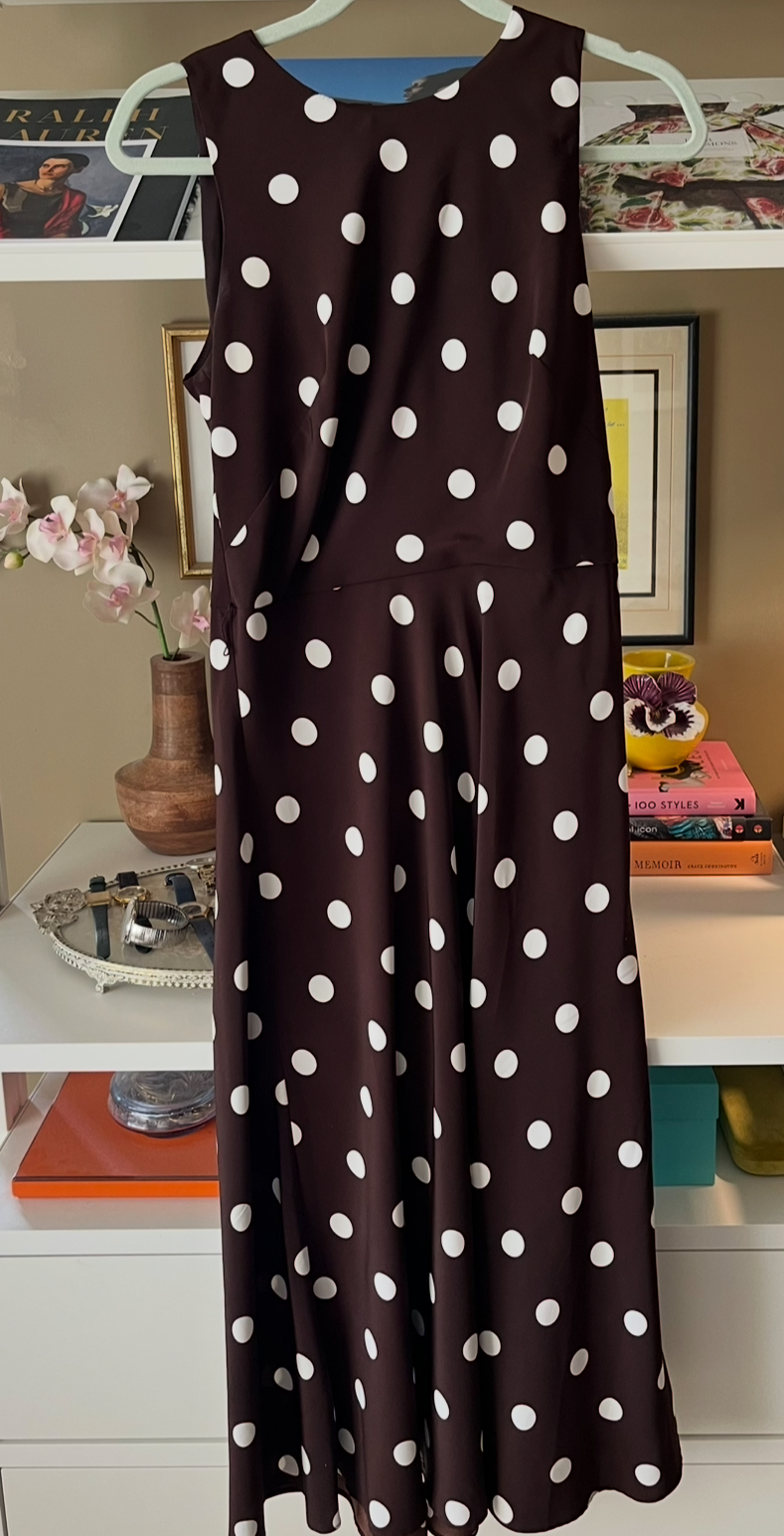
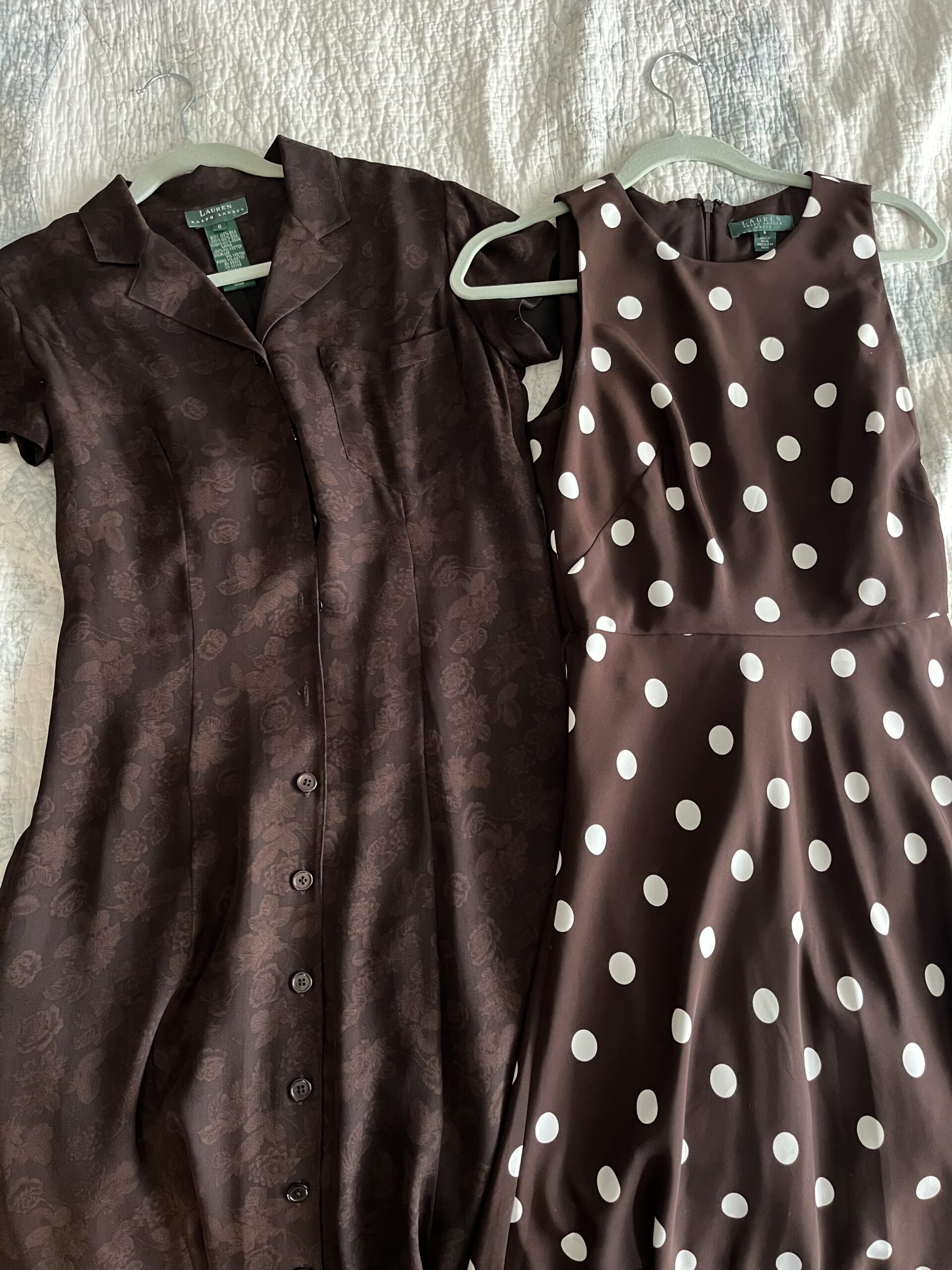
Playing the “guess the vintage” game is a fun – at least if you’re me – so I decided to share my process here in case anyone else wants to play along at home. Keep in mind that I’m neither a fashion history/industry expert nor a sewist, so this is based purely on my experiences as a long-time thrifter and lover of clothes. To better illustrate this particular example, I thought it would be helpful to compare my newly purchased dress with another LRL dress I thrifted last year, which I’ve estimated to be circa 2000-2005.
Style
One of the things I love about the Ralph Lauren brand universe is the constant recycling. Like every other fashion company, they put out new collections all the time which, from season to season and year to year, are pretty diverse. But, if you take a longer view, you can quickly see certain themes and styles that get periodically re-issued in slightly new or different iterations. I think that’s why it’s so easy to spot a “Ralph Lauren piece”. Unlike a lot of designer-led brands these days, RL has a very cohesive and consistent brand identity – much of which comes from the fact they do a lot of the same things, over and over.
I love this for a few reasons. It makes it very easy to mix and match pieces from different decades – great for someone who buys a lot of secondhand. It also makes it easier to find pieces that suit a specific niche you’re looking to fill. Can’t find the current version of that piece? Maybe you can find the 2010s version, or the 2000s version, or the 90s version.
All this to say: the style of a particular RL piece is not, by itself, a super helpful indicator of its vintage.
Haha … next!
Label
RL label tags are the closest thing to a goldmine when it comes to trying to figure out vintage. There is a LOT of information online that breaks down the various sub-brand labels and their different iterations over the years. I’ve written a bit about this before, so I am not going to re-hash all that now. Instead, I’m going to take you through the way I “read” the label on my new Poshmark dress.
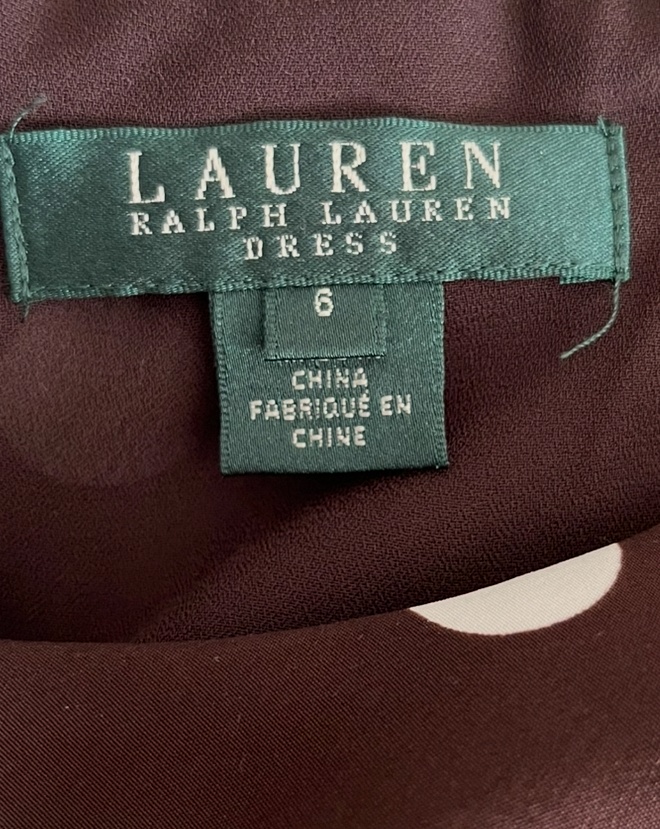
First two things to note are (i) it’s a green label (not black, which is current LRL), and (ii) the lettering is woven, not printed on the label. Based on these two things, I would immediately put this dress as pre-2015. This is not a scientific decision, by the way. I don’t know the exact dates when LRL labels changed from one version to another, so this is just my best guesswork based on stuff I’ve seen over the years.
Second thing, and this is slightly less obvious unless you’re familiar with different LRL vintages, the label is narrow … that is, narrower than other versions of the green label. Here is a side-by-side comparison with the label of my other LRL dress:
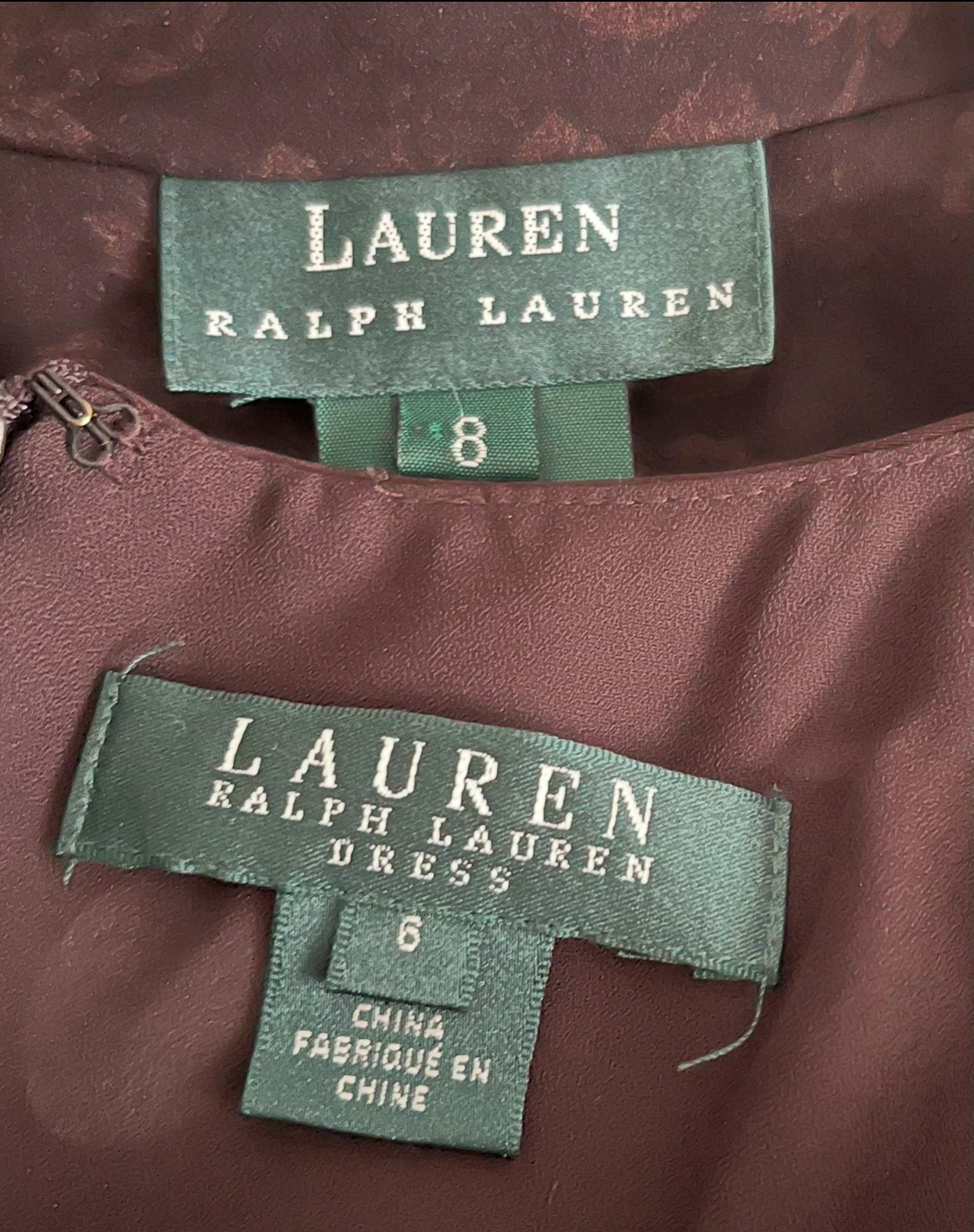
Older LRL labels tend to be wider/bigger. Again, I don’t have exact dates at my fingertips, but I would personally put the narrower labels down as being post-2005.
The other thing that supports that date range is the country of manufacture. This is another key sign/clue to be found on labels. I’ve also written about this before, but in a nutshell: offshoring of clothing production happened in a certain geographical pattern, starting in the 1950s with Japan (I think) and thereafter moving to other parts of the globe in a sequence that, presumably, followed favourable tax/labour/regulation regimes. China became a common manufacturing location starting in the mid- to late 90s, I think. In many cases, prior to 2000, the “made in” would reference Hong Kong.
In this case, both labels say “made in China” which, to me, points to both of them being produced after 2000.
Materials
While it’s difficult, if not impossible, to date a garment solely based on the fabric used, this can be a helpful clue (in conjunction with other signs) in narrowing down the vintage. The 2 dresses here are a good illustration. Here is a closer look at their materials information:
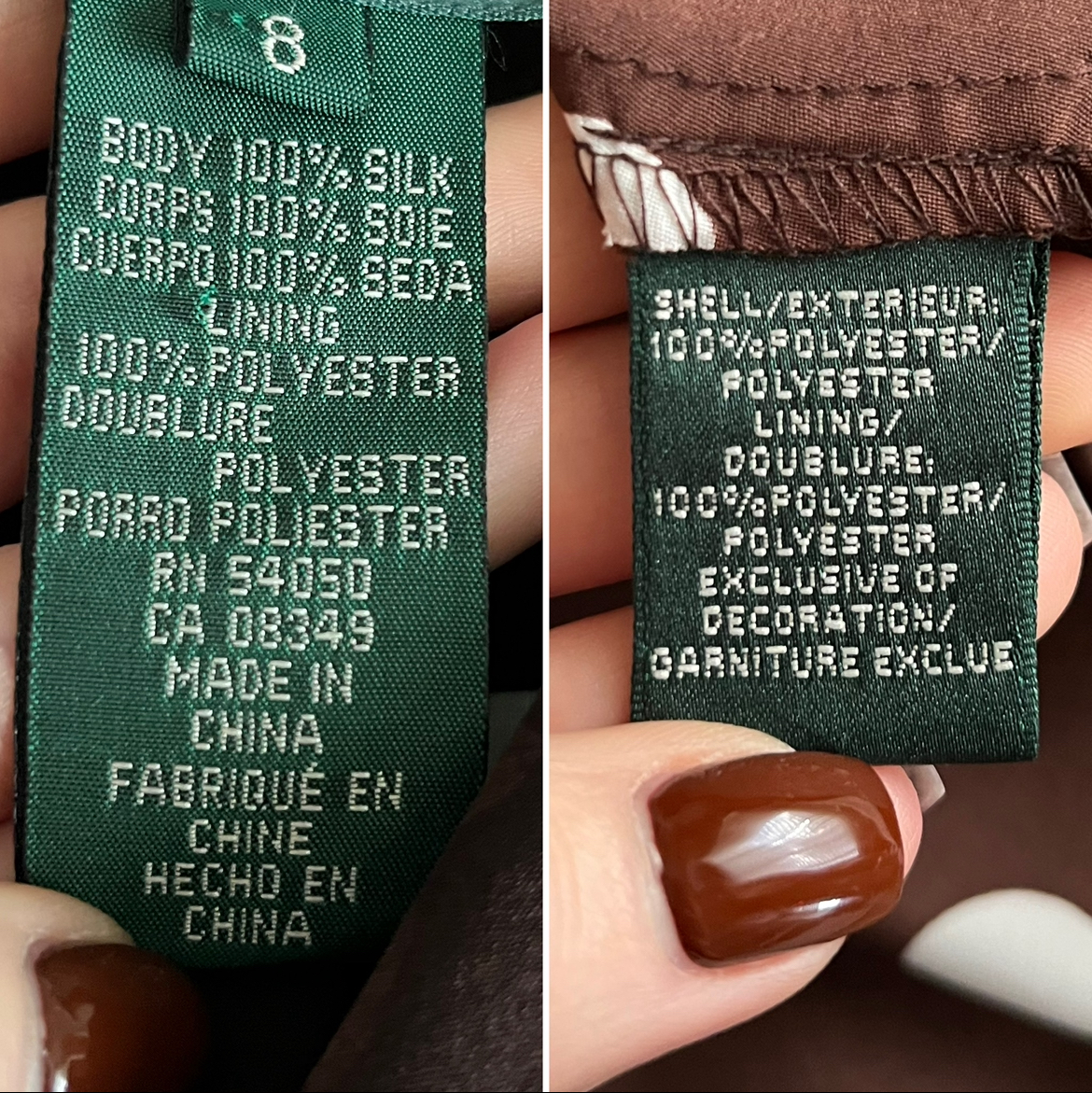
One is silk, the other is polyester. Care to guess which one has the older-looking tag? Yeah, the silk one. Both of them are lined with polyester but, importantly, the silk one is fully lined whereas the other one is only partially lined (top half only).
We all know that fabric is one of the first categories where companies save on costs. This is why I wanted to use these 2 dresses as an example; both are from the same brand and of similar “dressiness” so it’s an apples-to-apples comparison. After about 2005-2008, use of natural fabrics like silk became increasingly rare in mall/department brands.
Companies also began to scrimp on things like linings – in some cases, to the detriment of the garments. This is actually my biggest pet peeve with the polka dot dress (which, overall, I really like). I’m not universally opposed to polyester, but I hate polyester that easily gets staticky and then clings to the body … and the version they used in this particular dress does. A full lining on the skirt part would have solved that problem, in lieu of using a different fabric. I know because I tried the dress on while wearing a (polyester) skirt slip underneath, and it stopped clinging.
Again, based on the fabric and lining situation, I would put the polka dot dress as being definitely post-2005. Conversely, I would put the other dress as being pre-2005.
Construction
Like fabric, construction is a helpful clue to assess in conjunction with other relevant information. As with fabric, construction is one of the categories where companies try to cut down on costs. The way hems and seams are finished can help narrow down the vintage – not to a specific year, of course, but a general era.
Here’s a comparison of the seams on both dresses:
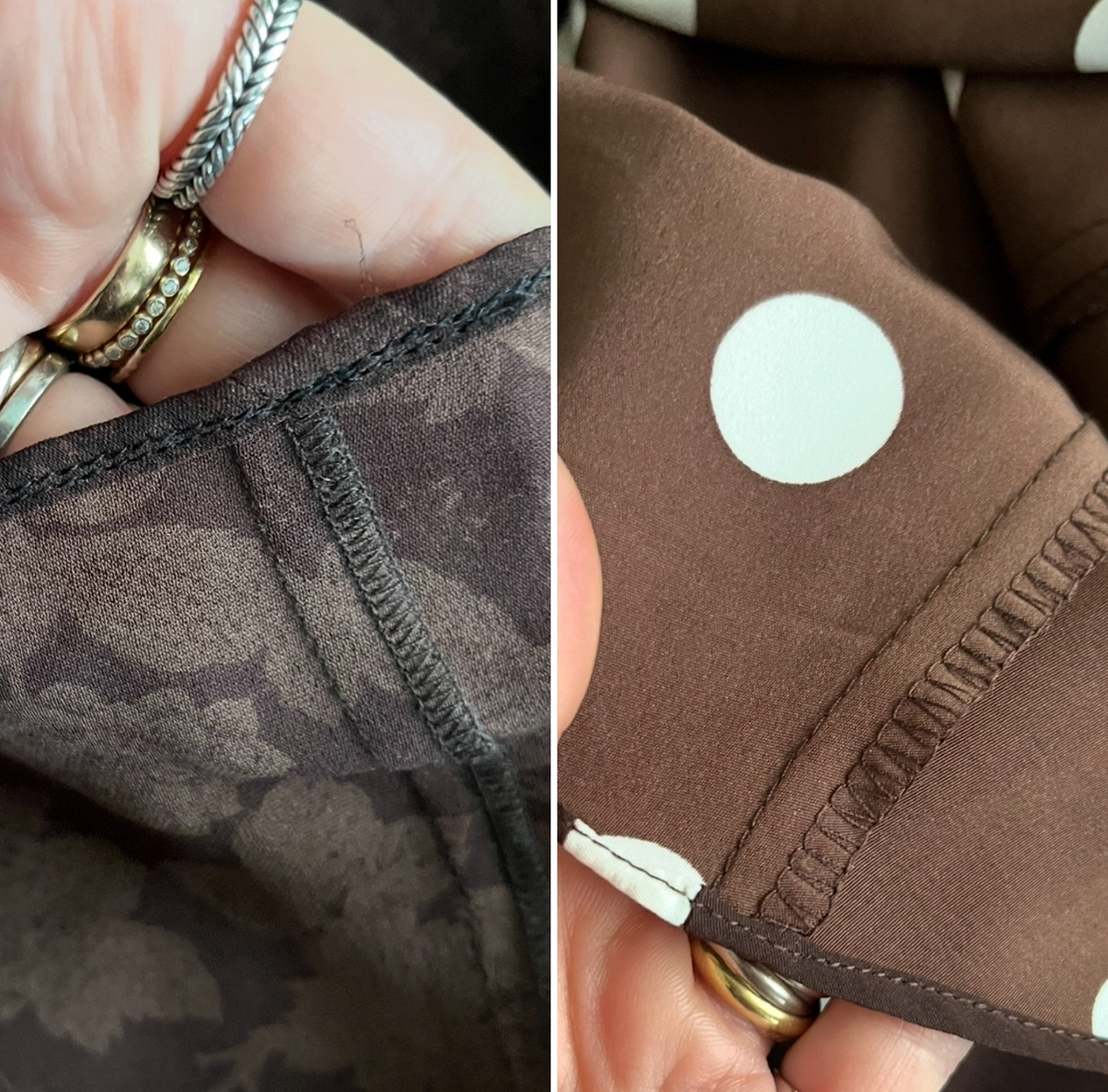
Again, I’m not a sewist so I don’t know all the technical jargon, but the technique used looks similar to me. However, the actual stitching and finishing on the dress on the left looks a bit neater and, well, nicer. Not a major difference, but I think it does support my assessment that the dress on the left is of slightly older vintage than the polka dot dress on the right.
The last thing I want to point out is a fairly tiny detail, but it’s actually what made me narrow down the vintage of the polka dot dress to 2005-2010. I’ve already talked about why I chose 2005 on the early end. Here’s why I picked 2010 on the late end.
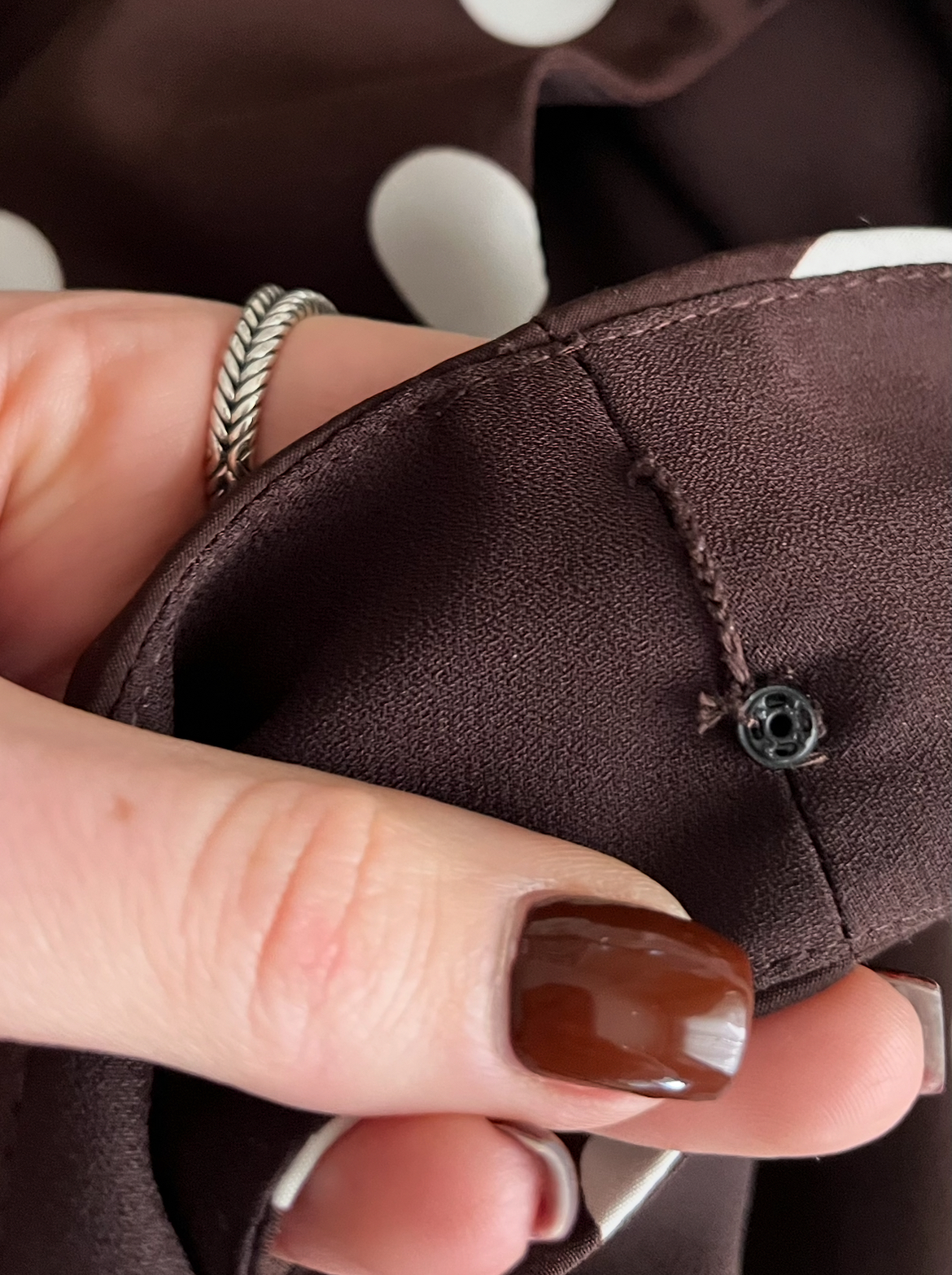
That’s right: a bra strap keeper. These little things used to be not-uncommon on thin-strapped dresses in the past, but they seem to have gone the way of the dodo in the last 10-15 years (outside of designer brands, maybe). I think it’s a very nice touch, and super practical to boot. Sure, they’re easy enough to add at home, but why aren’t brands doing it themselves anymore? Well, we know why: cost, duh.
And that’s it!
Hope this was fun and/or somewhat instructive. Kthanxbye 🙂
Hi! Sewist/new reader here. In case you’re interested, the technical jargon for that kind of seam finish is serging. The reason it looks different between the two is that the stitch length is shorter on the silk dress, meaning that the threads that wrap around the edge are closer together and there are more of them (if there is a second line of stitching on the right side that lines up with the edge of the serging, then it might actually be coverstitching, but that’s more common on knits). My guess is that the smaller stitch length is because it’s silk. A higher end finish that’s preferred for silk would be a French seam.
Thank you! This is super helpful.
Ooo—-I love the polka dot dress. I’m pretty sure that I have the same one in navy. It’s a bit worn out now but I bought it at the Polo outlet probably around 2008.
That would totally track! Although I’m sure RL has done a million versions of this dress over the years, so it’s difficult to say with absolute certainty. Regardless, it speaks to the classic appeal of certain styles, patterns, etc.