After finishing the first draft of The Mysterious Affair at Gaunt Hall back in July, I spent the rest of the summer catching up on my long-neglected TBR list. And I made a decent dent! Of course, I also added books to the list, so the physical pile is just about as tall as ever … but we’re still gonna count that as progress. Since at least one person expressed interest in seeing what I’ve been reading, I decided to do a speed round of quick reviews here; if you want to see (and hear) more, you can head over to my writing IG account [murders_she_writes] where I post regular book reviews and reccs.
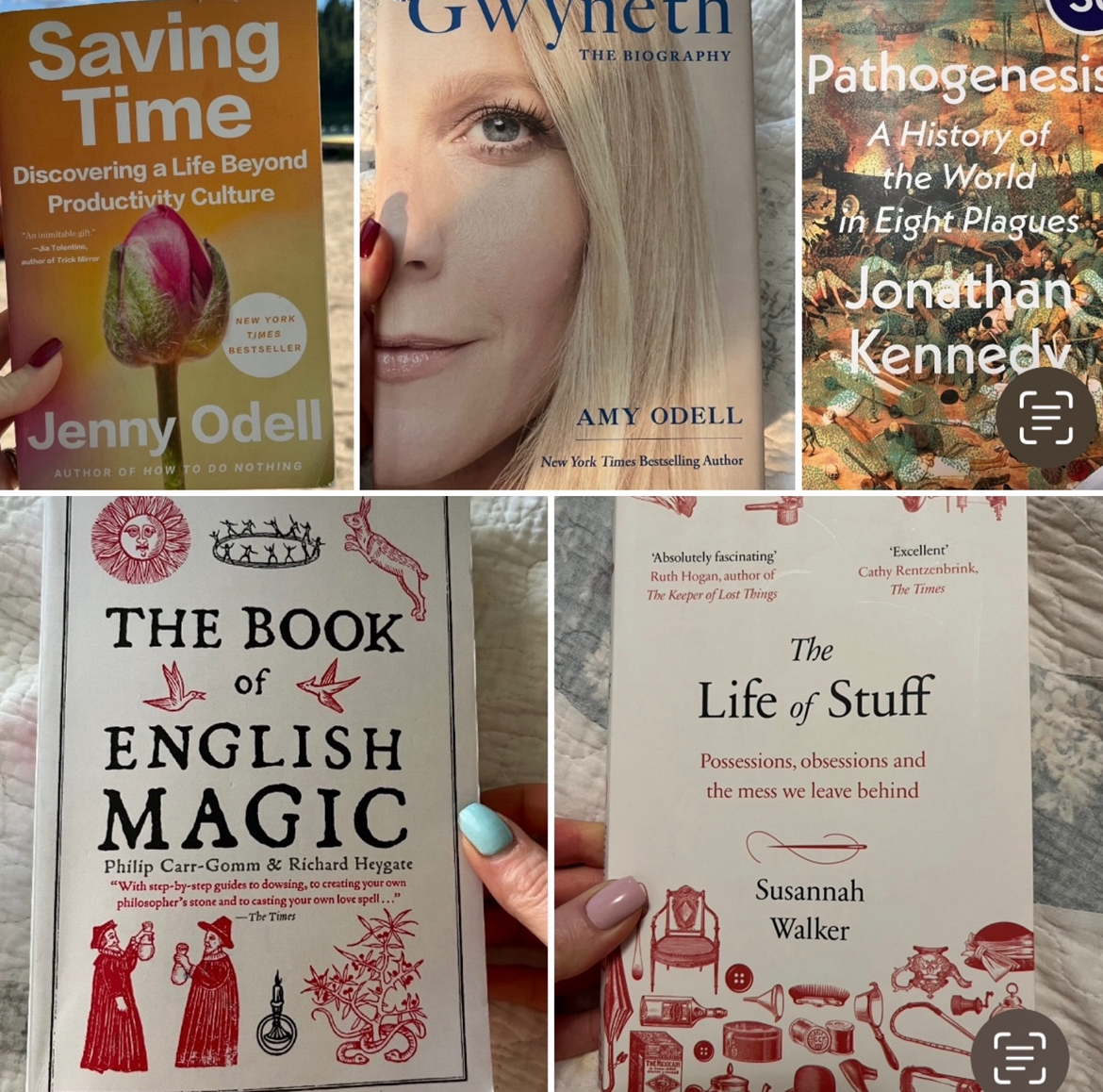
This is a verrrry random assortment of non-fiction books, but all ones I enjoyed a great deal (for different reasons). I thought Saving Time by Jenny Odell was a thought-provoking follow-up to her previous book How To Do Nothing. In the last few years, I have spent a lot of time examining my relationship with the concept of ‘productivity’ (particularly but not exclusively in connection with creativity and creative work) and working to disentangle myself from unhealthy habits. I find books like Odell’s to be helpful as I’m figuring out how to reframe my perspective and my own internal language around work, rest, and creativity; they are a good counterpoint to the capitalism-driven messaging I’m constantly bombarded with on social media.
Gwyneth by Amy Odell (any relation, I wonder?) was a fun, gossipy celebrity bio. Nothing deep, but sometimes you just want that hit of 90s nostalgia, yeah? At the other end of the spectrum, Pathogenesis by Jonathan Kenndy was a serious but engrossing read. As the title says, it’s a look at human history through the lens of epidemiology; basically, how various pathogens have influenced our history, from the paleolithic era onwards (up to and including the COVID years). The book is well-written and very accessible.
As I was writing The Mysterious Affair at Gaunt Hall, I fell down a rabbit hole of reading about the history of magic — research, if you will. I read a few books by Ronald Hutton, who is a preeminent scholar in this field, but they were generally fairly dense and leaning more towards the academic. The Book of English Magic, on the other hand, was both super informative and super accessible. It’s a good introduction to basically every aspect of (English) magic from pre-Roman times onwards. You can read about Druids, water dowsing, cunning folk, wizards, Rosicrucians, Wicca, and more. And each chapter has a really good bibliography for further reading.
The Life of Stuff by Susannah Walker was quietly devastating, and so so good. It’s a memoir that touches on grief, identity, mental illness, intergenerational trauma, and our relationship with the objects in our life. The book describes the author’s attempts to grapple with the legacy left by her mother, who was a hoarder in her later years — both the physical (her mother’s dilapidated house full of objects) and the emotional (their own difficult relationship and their family’s history of mental illness, alcoholism, and fractured relationships). As someone who, like the author (and her mother), sees objects as vessels of personal history and identity, this book struck many, many chords in me. It’s beautifully written and thought-provoking. Highly recommend.
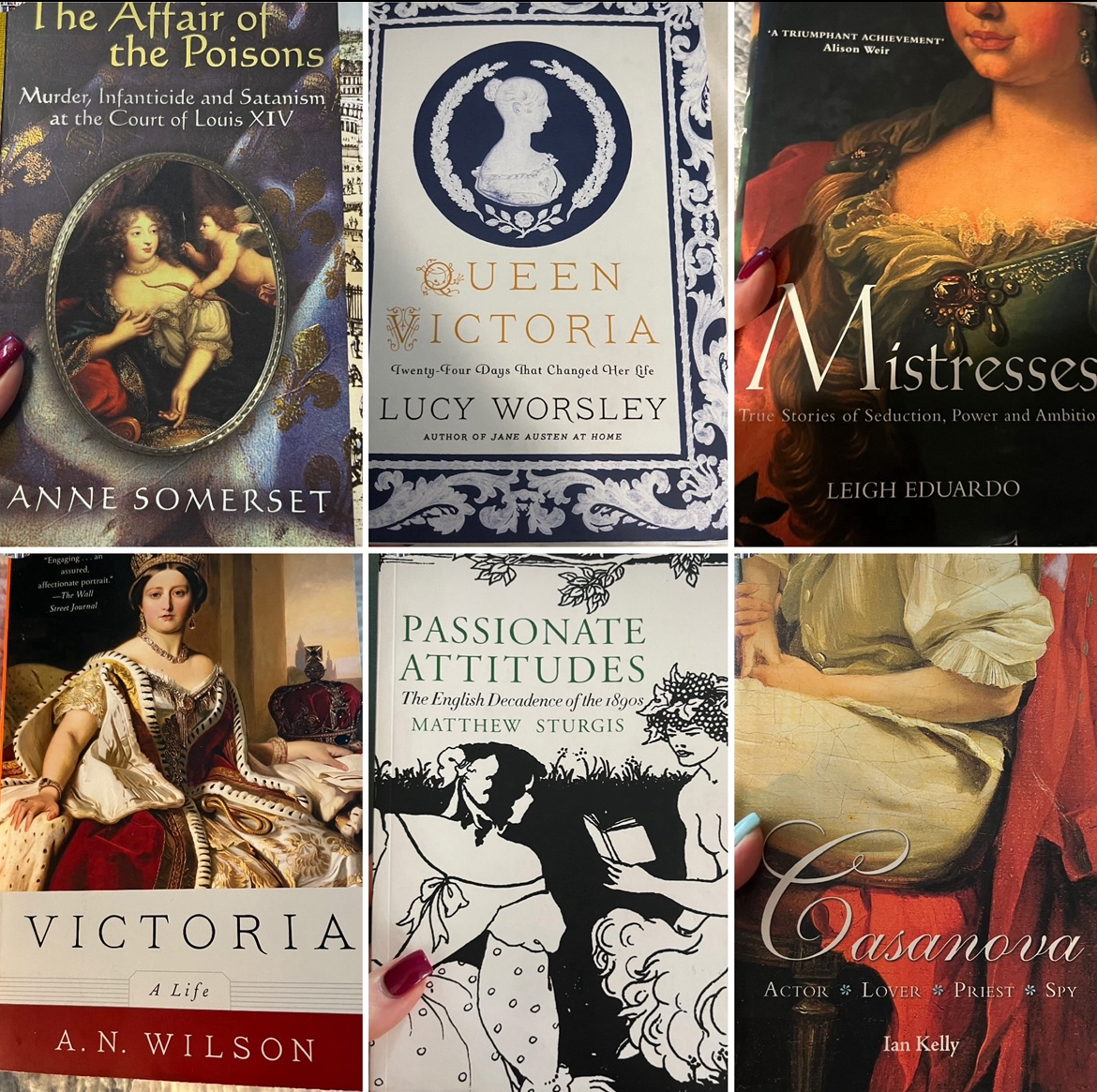
Of course, I’ve also been reading a lot of historical non-fiction because that’s my ultimate jam. These were all pretty good reads, but my faves were the two Queen Victoria books (that was another one of my recent rabbit holes) and the Casanova book. It’s always exciting when I see that Lucy Worsley has a new book.
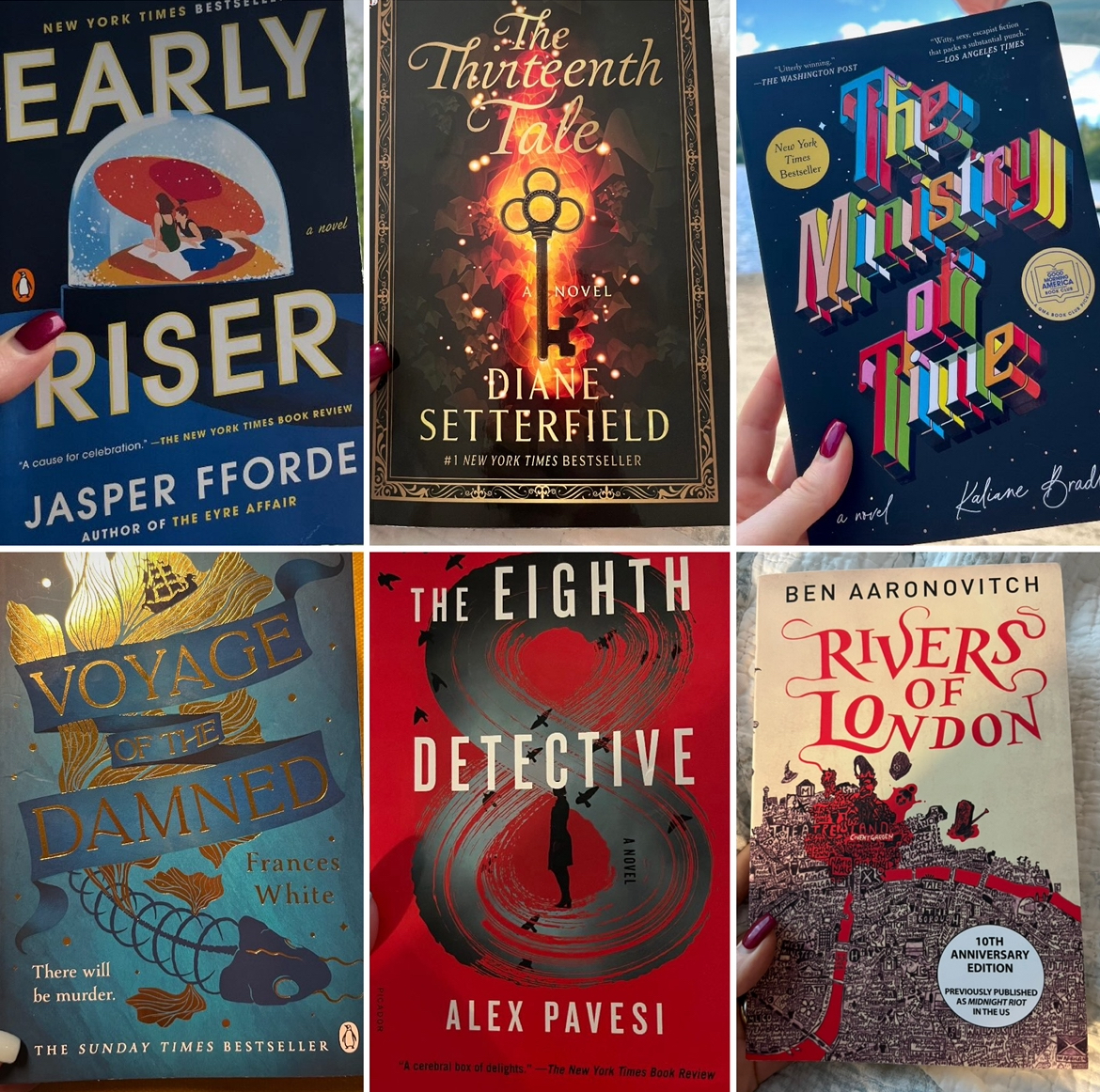
I spent a bunch of reading time trying to find comps for The Mysterious Affair at Gaunt Hall in preparation for querying, which meant lots of fantasy and fantasy-mystery on tap. None of these books ended up being good comps, but they were super fun reads. My top faves were Rivers of London, Voyage of the Damned, and Early Riser. I think I have found my new fave series in Rivers of London; I have already devoured the next 2 books, and am patiently waiting for the rest to come in (via holds at my library).
The Eighth Detective is just straight mystery, not fantasy, but it has a cool premise and will keep you close to the edge of your seat all the way through. The Thirteenth Tale is also not fantasy, but rather gothic suspense. Not my usual flavour of tea, but I enjoyed it quite a lot — the writing is beautiful.
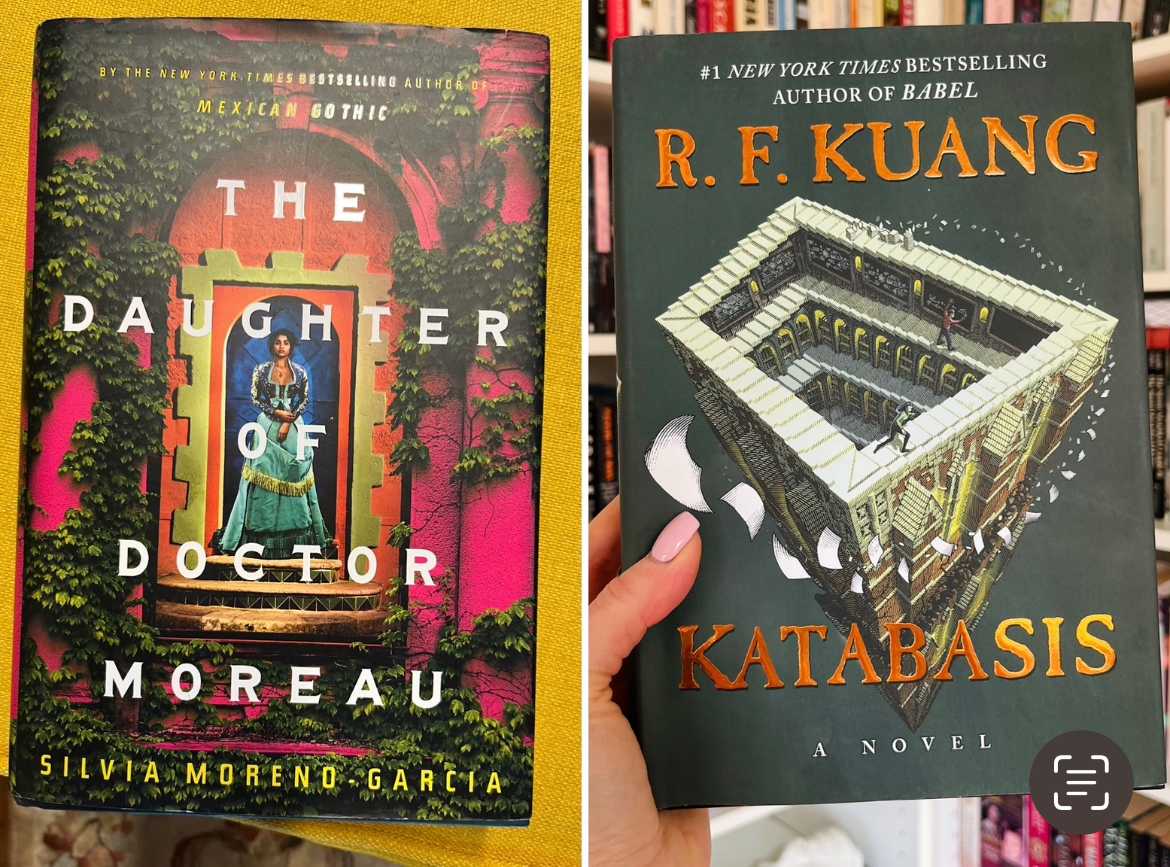
These 2 are my most recent reads, and I’m going to go against the grain (maybe?) and say that I preferred The Daughter of Doctor Moreau to Katabasis. I have a LOT of thoughts on the latter, which could be a whole separate post, but suffice it to say that I simply found TDoDM to be a more fun, engrossing read. Katabasis is a far more ambitious book but (imo) doesn’t quite succeed in all of its ambitions and also has some pacing and characterization issues that got in the way of the story (for me). If you’ve read it, I would love to hear your thoughts.
And please share your recent reads and reccs in the comments!!
I think I’m the requester so thank you! Lots of good ideas here—some of which I’ve read, (Early Riser, Thirteenth Tale, Ministry of Time), and this is inspiring me to try the Rivers of London series! Along with some of the others, especially the Life of Stuff. I’ve been reading a mix lately—mainly Barbara Pym and mysteries. I read How to Solve Your Own murder and How to seal your own fate by Kristen Perrin and enjoyed both of those—a contemporary mystery and one connected going back to the 1960s. And the Marble Hall Murders by Anthony Horowitz. My sister works in public health so I’ll also try Pathogenesis. And I liked How to Do Nothing, so I’m interested in the follow up.
Thanks for the reccs!