Month: October 2025

Four Purchases You Should Probably Avoid (According to Some Internet Stranger)

As a self-avowed materialist and maximalist (maxi-materialist?), it may seem surprising that I have any rules or limitations on purchases. More is more, right? Well, no. I am fortunate to live a life of abundance, but it has been built on intentional accumulation. Less gives me more: more enjoyment from the things I own, and more time to enjoy them. The most important thing that intentional spending has allowed me to do is to buy back my time. A few years ago, following a series of unfortunate events, I had an existential epiphany and decided to radically rearrange the architecture of my life, pretty much top to bottom. That included taking a step back – or rather, sideways – with my career and moving into a different role; a role that I love and, more importantly, that allows me to work part-time. It was a huge leap to make at the age of 41 (particularly as the former primary income-earner in the family); one that has transformed my life in the best way, and one that was only possible because of choices my husband and I made up to that point.

Being intentional is hard when you exist in a late-stage capitalist society. Capitalism does not respect individual self-determination. It might pay lip service to it, because that helps it sell its products, but that is not the same thing. Capitalism wants to influence (aka dictate) our personal decisions to serve its interests, not to enable us to make the decisions that best serve our interests and values. Asserting our values through intentional living (and spending) will always feel like swimming against a strong tide. It’s hard work! But the rewards are immense.

There are many facets to living with intention, but I wanted to focus on spending in this post because in a capitalist system, money is undoubtedly the biggest lever of control at our disposal. Money is the tool for building our best lives. Consequently, people focus a lot on its accumulation – and, to be clear, that is important (you can’t use something you don’t have) – but not nearly as much on the other half of the equation, spending. To hoard money is, in my opinion, to render money useless; a tool is a tool because it does something. A tool that sits in a drawer, forever, is useless. On the flip side, using (spending) money without intention renders it meaningless. A tool is useful when it serves a useful purpose. Throwing it around at random doesn’t generally accomplish anything worthwhile. And remember: money is a finite resource. You can swing a hammer around for decades without running out of hammer; at a certain point, you can run out of money if you keep spending it … and there will always be more and more and more things to spend money on. That’s capitalism, baby.

Ok, enough philosophizing! Let’s talk about the 4 types of purchases I try to avoid in order to give myself the room (mentally and financially) to live (and spend) intentionally.

Occasion-Based Purchases

One of the strategies that companies have been leaning into a lot in recent years to sell us stuff is to tie product marketing to “special occasions”. This can be anything from specific holidays (Halloween, Valentine’s Day, etc.) to life events, whether rare or mundane (vacations, people’s weddings, girls’ brunch, date night, etc.). And that’s the thing to remember: anything can be turned into a “special occasion” if a company wants to sell you something bad enough. Do you always need a new thing, or multiple new things, for each of these occasions? I can’t answer that question for you, but I recommend that you ask it.

For me, this is the easiest category to ignore and cut out of my spending. It’s not that I won’t spend money on these occasions if they are things I enjoy, but the money is spent on the experience itself, not on accoutrements. If I need a bathing suit because I’m going on a vacation where I’ll be swimming, I will buy one – but I won’t buy a new one every time I go on a vacation. I will buy Halloween candy every year, but not Halloween decorations. [I actually don’t buy any seasonal décor because it’s not something that brings me joy, but I don’t judge people who love it and buy it, if they’re doing so in an intentional manner.] I love going to weddings, but I don’t think I’ve bought a new dress specifically for a wedding in … ever, actually. I have plenty of dresses, so I will not let the occasion of an upcoming wedding serve as an inducement to buy a new one.  

Keep in mind that, more often than not, special occasion-marketed products are offered at a cost premium. So not only are you being influenced to buy something that, quite likely, you wouldn’t have otherwise bought, you are paying extra for it.

Ego-Propping Purchases

I went back and forth on whether to reference “identity” or “ego” in describing this category, and if you’ve read my previous post on the self/identity conundrum, perhaps you might appreciate the distinction. I decided to go with ego because it gets to what I think is the root of the issue here: while we all, to some extent or another, buy things as an exercise in identity-making and/or identity-expression, there is a specific category of purchases that are driven by the need to influence how other people perceive us. This is different than saying: I love X therefore I buy Y. It’s saying: I want people to think I am X, therefore I buy Y.

In the first case, I am buying Y because it’s necessary to my own experience/expression of X. In the second case, I am not buying Y because it’s a necessary adjunct to my love of X, but because I think it’s necessary for other people to perceive me in a certain way. Here are some concrete examples from my own life to hopefully illustrate this point.

I buy books because I love to read and to have my own library. I do not buy books or have my own library because I want people to think I’m smart or well-read. I do not care if people think I’m smart or well-read. It’s nice if they do, but I find no value in spending any energy, time, or money trying to persuade them to do so.

I do not own a very nice car. My 2018 Mitsubishi Mirage is, for me, the perfect car. I paid for it in cash, and it gets me from point A to point B. That is the sum total of what I require from any vehicle – cheap, reliable, 4 wheels and an engine. I don’t like driving, and I don’t like cars, except as a necessary evil. I do not buy a luxury vehicle because I want people to think I’m well-off. I don’t not buy a small, basic, cheap car because I worry that people will think I’m not well-off. I don’t care what people think about my financial situation any more than I care that they think I’m smart.

If, for the purposes of this discussion, we define “ego” as that part of ourselves that is concerned with how other people perceive us, then I can definitively say that I do not, and have not for most of my adult life, made ego-propping purchases. And it is incredibly liberating. Chasing other people’s good opinion is a fickle, expensive, and ultimately meaningless endeavour. And, yes, that is me stepping up on a soapbox. Everyone has their own values. Spending your money based on their values leaves less time and money to devote to your values. That is the opposite of intentional.

And this is not, for the record, a question of one set of values being objectively better than another. Books are not better than cars in an absolute, objective sense. They are better to me, and that’s the key.

Life Upgrade Purchases

This category is, in some ways, connected to the previous but it also connects to another aspect of capitalism. Capitalism is predicated on the idea of constant growth, which is also sometimes presented as constant progress. We are told that everything, from population-level history down to the individual, follows an ever-upwards trajectory. To live is to constantly improve. If we’re not moving up, we’re failing.

There are many problems with this kind of thinking, about which we could talk for days and weeks. For the purposes of this post, I will stick to one facet of the issue which is the culturally-ingrained expectation that we continually upgrade our standard of living as soon as it becomes financially feasible to do so. Get a promotion and a raise? Buy a fancier bag, a better car, a bigger house. Why?  Because (A) it’s progress, and progress is the highest goal, and (B) more expensive things are inherently better, and you deserve better, don’t you?

You do deserve better, but you should also get to define what that means to you. A bigger house has its advantages, but it also has costs – not just in terms of purchase price and maintenance expenses, but opportunity costs. A bigger house requires a bigger (ongoing) investment of money, time, and energy. Making that investment comes at the expense of other things. Are those things also (or more) important to you as the big house? If so, progress might look different for you. Progress might not look like a bigger house but, say, more vacations. Or it can look like more of the same old, same old.

Here is something to consider: the less expensive your daily life is (relative to your income), the more control you have over it because fewer of your decisions will be dictated by demands that are “locked in”. A smaller house leaves me with more money, time, and energy to apply to other parts of my life which, for me, might be just as critical to the architecture of my ‘best life’ as the house.

And here’s something else to consider: the Diderot effect. The French philosopher bought a gorgeous new dressing gown, then realized that everything else he owned looked shabby by comparison, and he suddenly felt the urge to replace those things with nicer, more expensive versions. This is a universal experience, and one that is very hard to resist. What it means is that there is always a danger that, in “upgrading” one part of our lives, we open the door to a desire for other upgrades, and on and on.

Here, please let me emphasize that I do not advocate for living like a pauper (unless you like that sort of thing) or never buying nicer things than you currently own. What I’m saying is that it’s important to be mindful of the factors at play, and their impact on your decisions. Upgrading for the sake of upgrading – without considering how the decision aligns with your values and your vision for your ‘best life’ – is a risky proposition. Proceed with caution.

Emotional Regulation Purchases

I’ll be honest: this was the hardest category for me to get under control. Especially during that period of my life when I had not yet achieved a clear vision of my ‘best life’ and a clear articulation of my personal values. Those things are a wonderful bulwark against emotional (dys)regulation purchases. They are both anchor and compass in a world that comes at you very fast and hard, and tosses you around like a ship in a storm. Before I had a clear vision of what I wanted my life to look like, I was often very dissatisfied with my day to day. And because I had nothing to work towards (i.e. no sense of purpose), I looked around for things that could provide a burst of satisfaction in the moment.

You know what I’m going to say next: capitalism loves to offer us little treats. They’re packaged as rewards for our hard work, but they primarily serve to keep us working hard. (A) because they cost money, and (B) because they don’t actually really satisfy our true need (for purpose) so we keep buying more and more to fill the hole.

Life needs meaning, and meaning comes from a sense of purpose. Purpose requires intention. Intention takes effort. The way our current world works, we are given very little time and space to make that effort. We are tired, over-scheduled, over-worked, stressed out. It’s easier to buy something to feel good in the moment, then to try to find the time and mental energy to think about what would make us happy in the long run.

While I did, in the past, make plenty of emotional regulation purchases, I was lucky – their negative impact was minimized by several factors. One, I had a stable and comfortable income, which gave me a bigger cushion to manage the impact of my “little treats”. Two, as noted, I was not buying things to impress other people or upgrade my life, which meant that my “little treats” were, in the scheme of things, relatively inexpensive. [Shopping secondhand for most of my adult life helped a lot too.] So the dents were small, relative to the cushion. That being said, the best thing I did for myself, was to address the underlying issue – that was far more impactful than either (A) getting myself a bigger cushion, or (B) buying cheaper “little treats”.

One last thing to add here: one of the ways in which I managed “losing” 40% of my income when I switched to a part-time role was by drastically reducing my “little treat-ing”. And it was surprisingly easy to do because – and this is key – by that point I had rearranged my life to align with my purpose, vision, and values. I don’t need “little treats” to get through the day now, because I love my day-to-day as it is … and part of why I love it is because I changed my work-life balance. Put it another way: before, I was working more hours to have more money to spend on things to make up for the fact that there wasn’t enough time in my life for meaning because I was spending so much time working – to have money for things that didn’t add true meaning to my life. Lather, rinse, repeat.

Ok, one last last thing (I promise!): What I am describing here is the very definition of first-world problems so if that doesn’t apply to your life, you can go ahead and ignore everything I’ve just said. Not everyone is running the same kind of race, so I will never generalize my experiences and opinions. I would love to hear yours, so please feel free to share in the comments. We all learn more that way 🙂
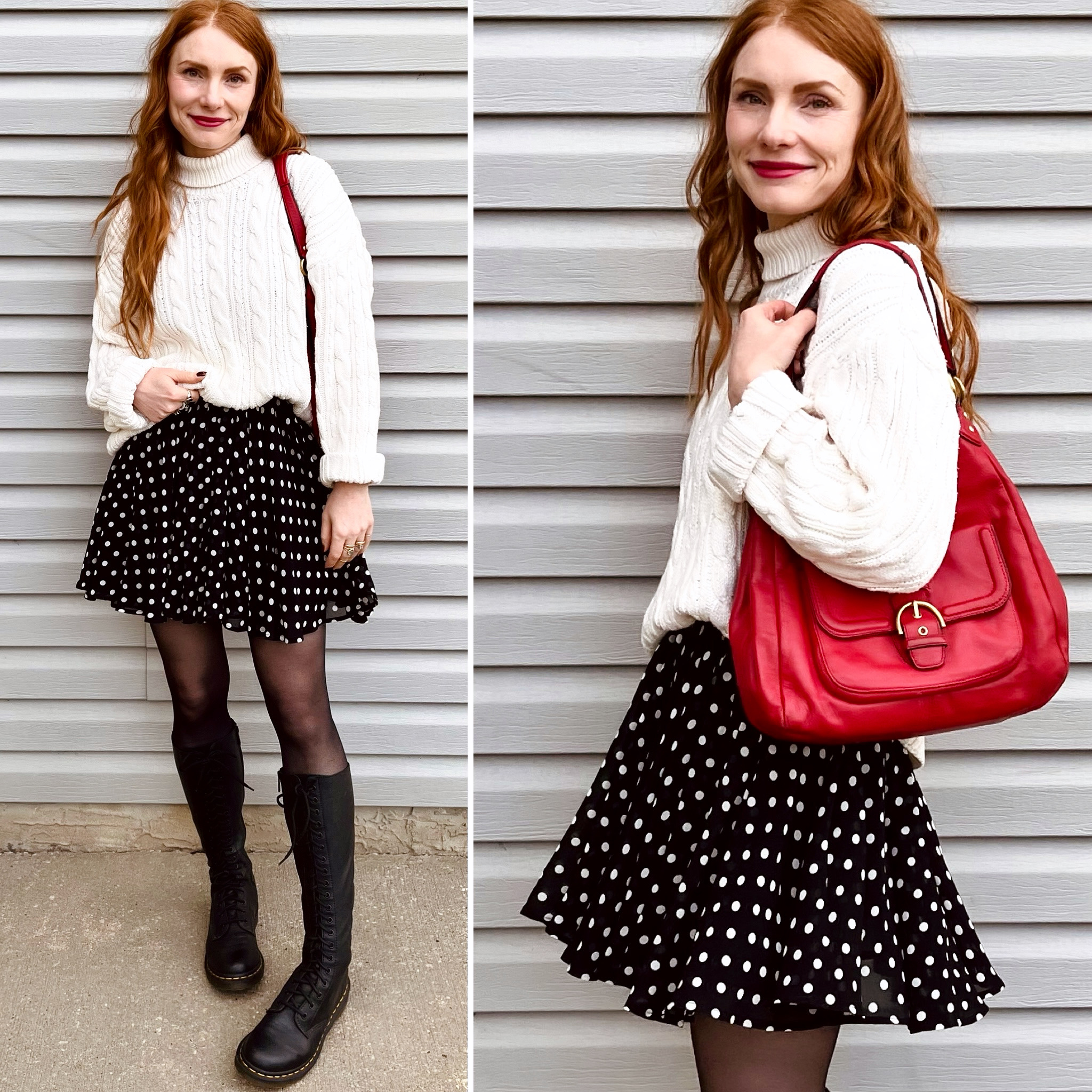
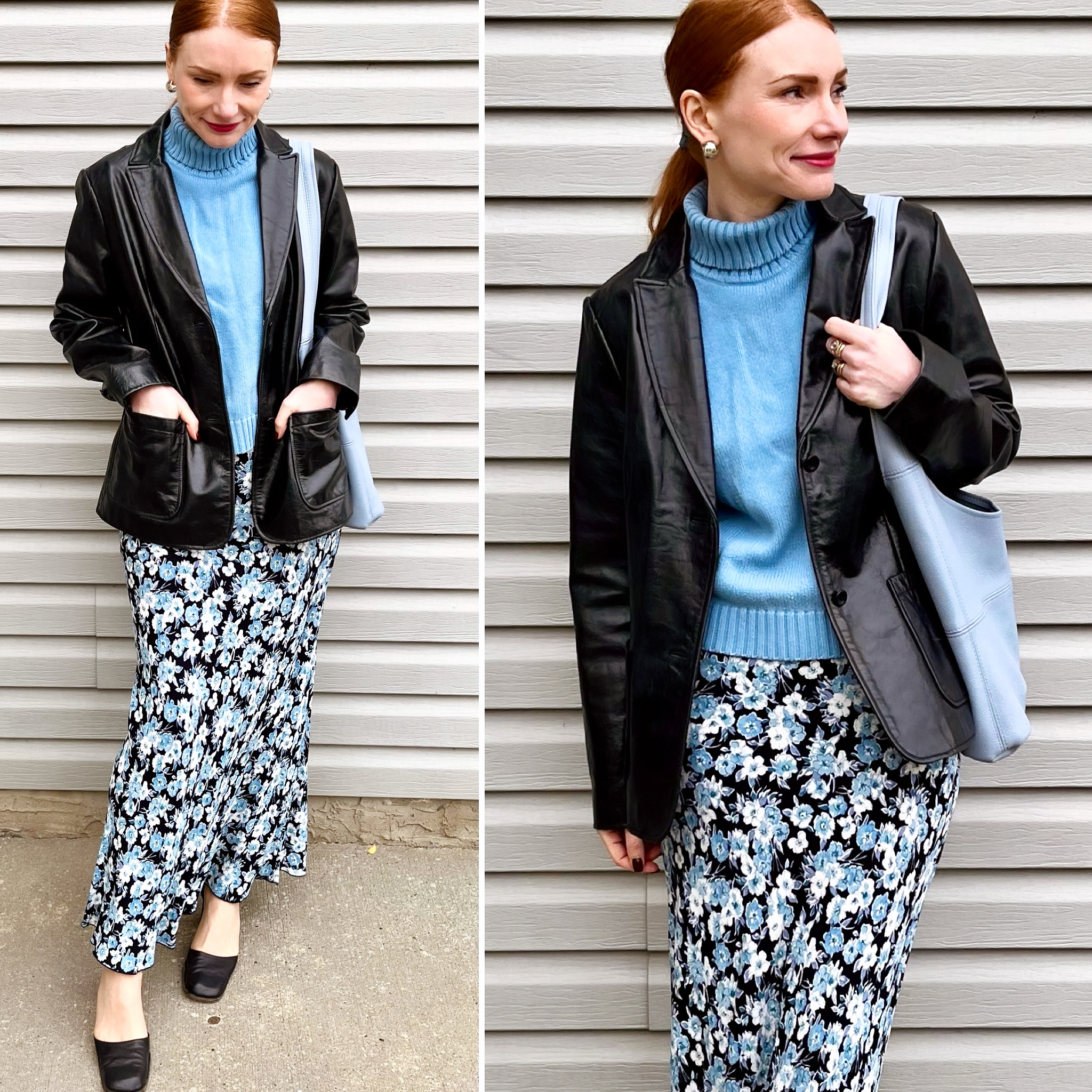
Friday Feels #18

It was a short work week, but it was busy, busy, busy anyway. This was entirely my fault, because I have bit off more than I can comfortably chew. Trying to cram writing the first draft of a new book in the same month that I start prepping another book for publication, which also happens to be a busy month at work, which also happens to be the month that schools close due to a teachers’ strike, which also happens to be a regular month full of regular chores (plus winter prep) … well, you get the idea. A normal person would have pressed pause on at least one thing [*cough* new book *cough*] but my neurodivergent brain will not allow that to happen because we live and die by our To Do List, ok? Anyway, being too busy to think is not altogether a bad thing at times when to think is to immediately spiral. And writing every spare minute of the day leaves me less time to doomscroll, aka immediately spiral x 1000.

I am also, on top of all that, trying to make sure that I am not neglecting the blog either. I have a few cool (I think they’re cool) post ideas, so it’s just a question of sitting down, gathering my thoughts, and you know, actually putting the words down. So, like, time. I need more time. Why are there only 28 hours in a day?? Wait, what’s that? Only 24? Well, sh*t.

Just kidding.

I do actually sleep (and a good 8 hours a day, thankyouverymuch) so, in fact, there are even fewer hours to work with. Sigh. But we persevere and squeeze every last drop of juice from the lemons of life.

Seriously, though, if there are any topics or posts you’d like to hear me blather on about here, pop them in the comments. As you may have noticed, I’ve been branching out, away from just strictly fashion and personal style, with my blog writing, so feel free to suggest broader topics. Life after 40 has been my exploration and learning era, so I love talking about just about anything.

You know what finally came in the mail? The H&M cream cardigan I ordered on Poshmark over a month ago. [Did I mention there is also a postal strike going on?] Funny story: as soon as I bought it — like, literally, a week later — I found a H&M cream cardigan at the thrift store. For $6. I paid $30 (shipping included) for mine. I thought it was the exact same one, and was feeling pretty bummed out: A) because of the price, and B) because I didn’t love the material of the thrift store one when I saw it in person. The ones I already own are a cotton blend, the one at the thrift store was acrylic, and had a totally different handfeel.

Plot twist.

The cardigan I ordered was different! Very similar style and same colour, but better. The fit is better (for me) and this one is also cotton, like my others. YAY! So the extra cost, and waiting time, was totally worth it. Gotta love when that happens!

Have a great weekend!

Tales of Thrift: Thrift Your Life (pt. 2)

Editor’s note: hi, it’s me, I’m the editor. The content of this series is adapted from the Memoir That Never Was, which I wrote last year. The themes centered on identity-making and my relationship with secondhand stuff), but in writing it, I ended up synthesizing ideas that have been pivotal to my growth as a person since turning 40. Although I decided to shelve my Memoir That Never Was indefinitely, I decided that there are parts of it I would like to share here on the blog. It will get pretty personal/vulnerable at times, but I think the community we’ve created here is a wonderful (and safe) space, and I hope that these posts will inspire reflection and conversation. Cheers!

Years of walking through thrift stores, looking at things people have discarded or left behind has taught me that beauty can be found in unexpected places, and that I should look for it wherever I go. And once I started looking, I did begin to see it – everywhere I went. Our society has an obstinate tunnel vision about what beauty looks like. But the human desire for beauty is much greater than that, and it imbues everything we make and touch and use. There is beauty in a well-loved wool sweater, in a handmade quilt, in a porcelain cup. There is beauty in the way a woman wears that sweater, in how she displays that quilt, in how she pours tea into that cup and drinks it. Being able to see that beauty – in what society calls mundane, especially – is a wellspring of gratitude, amazement, and wonder. You know the saying, “life is beautiful”? Its simplicity seems almost ridiculous once you grasp the full truth of it; once you feel the truth of it in your bones. Society gives us little room to grasp it. It’s like being in the most extraordinary museum ever built, and being pushed and jostled along at breakneck speed by a guide who gestures vaguely in every direction, “beautiful, beautiful, beautiful, let’s keep moving, so beautiful, marvelous, extraordinary, this way, please keep up”. You know you’re in the vicinity of beautiful things because someone is telling you that you are, but you see practically nothing, and have no time to decide how you feel about any of it.

Pause. Breathe.

There are no guides at the thrift store. You have to look, and stop, and look again. Touch things, turn them over, really have a close look. What do they look like? How do they feel in your hands? What do they remind you of? How do they make you feel? You might start to wonder. Who made this? Who used this? Do I have a place in the story of this object? Does it have a place in mine?

I’m not gonna lie. I’ve bought a lot of things in thrift stores over the years. I’m a Taurus Rising, I like pretty things, ok? At least, that’s what I told myself for a long time: I just like beautiful things. Call me materialistic, I don’t care. Guilty as charged. I am the person that picks a material thing over an experience most of the time.

(As a sidenote, it’s funny to me how society says we should value experiences more than material things, while constantly whispering in our ears “but do you have enough stuff yet?” If society really wanted us to value experiences more than things, it would stop overproducing things. But what society actually wants is to sell us something, anything, experiences or things, it doesn’t matter – preferably both.)

Recently, I began to reevaluate this self-belief and I eventually arrived at the conclusion that, for me, experience and object are inextricably linked. When I buy a book, I’m not simply buying an object. I am buying the experience of reading it – for the first time, and a second and a third – and losing myself in a new world or learning something about the one I’m living in. I am buying the experience of owning my own library and being surrounded by books at home – a feeling I find deeply soothing. The experiential value of clothing is pretty obvious, of course. But even the objects I buy simply for display are part of various experiences: the experience of finding the object (I have so many good thrifting stories!), the experience of looking at it on a shelf at home and enjoying its beauty in harmony with its surroundings, the experience of creating an indelible record of the person I am in that moment. If you look around my house, at the objects I have accumulated – and I mean, really pause and look, not simply allow your eyes to glide over like you’re watching Uncle Frank’s 2016 holiday pictures from Puerta Vallarta again for the 20th time – you can “read” my story: what I like, what I value, what I dream. I was recently visiting the house of an old friend I hadn’t seen in a few years, and we spent most of the time going around her house looking at various objects that she had added since my last visit. She wasn’t “showing off” her material possessions to me; we were catching up on her life. Each object had a story, which connected to other stories, which connected to others, and so on. I got to hear about her trips, her new hobbies, her plans for the future. All of that was possible because she’s a person who sees the beauty in objects, who values them, who allows them to have meaning. Buying something doesn’t make it meaningful; value isn’t determined by cost. Beauty, value, meaning exist in a relationship between the person and the object.

My recent reevaluation of my relationship with material things led me to another realization as well. For me, the value of an object is not just a question of beauty or experience: I love things that look like they have history. It’s not just an Old Money thing. At, least, I don’t think it is. W. David Marx writes that “all status symbols require alibis – reasons for adoption other than status seeking.”[1] I don’t think of myself as someone who needs alibis, but one should never underestimate one’s capacity for self-deception. So, ok: maybe enjoying nice things that are a bit shabby – that look lived in, well-loved – is, in part, a question of showing off my cultural capital, acquired not by birth but by “absorbing the tastes … and preferences of high-status people”[2] through my thrifting habit. I don’t love this take, but that doesn’t necessarily mean it’s not true. Still, several things can be true at the same time, and I do think my taste in interior design is more than Old Money cosplay. I’ve never wanted a house that looks like an expensive showroom. I want a house that reminds me of my grandparents’ house, with its books and its rugs, its knickknacks and its piano, its opera vinyl records and its porcelain-tiled fireplace – all of them belonging to an era that had vanished long before I was born. I want a house that evokes that same sense of wonder and happiness I felt as a child in a space that filled my imagination like a combination of museum, time machine, and magical refuge. I want, most of all, a house that looks like a layer cake, bringing together the stories of many generations.

And here we have arrived at the crux of the matter. Because, of course, as an immigrant in a new country, I have no material history from which to build my layer cake. The vast majority of my family’s belongings had to be left behind when we moved to the West; we couldn’t take much with us, and what we took were mostly functional things. Most of my grandparents’ possessions are gone too; for various reasons, there was no opportunity to save more than a few sentimental items before their respective houses were sold. I have my memories of those houses – islands slipping a little farther into an ocean of oblivion with each passing year – and not much else to help me piece together my families’ stories. When my dad is gone, I will lose the last person who is also a keeper of those stories. It is an incredibly lonely thought – hard to bear now, harder to bear later, I’m sure. It’s the same for my husband, who left a war-torn country with pretty much the clothes on his back. Between us, we have precious little in the way of what you might call heirlooms. I don’t have my grandmother’s hand-embroidered tablecloths; he doesn’t have his grandpa’s watch. All we can do is create our own heirlooms.

It might sound silly, in this context, to say that I buy things because they have history. Why does it matter if they do, if it’s not my own family’s history? Can someone else’s grandma’s handmade quilt replace my grandmother’s tablecloths? In a literal sense, of course not. But I like to think of it in a different way. My memories, my family stories, are an inextricable part of my relationship with the world around me. When I look at an object and find it beautiful, it is not a judgment made in a vacuum; it’s a judgment that speaks, among other things, of my memories. I’m not buying a Japanese vase because I think my mom would have loved it; yet, my taste was shaped, in small imperceptible ways, by who my mom was, and her mother before her, and her mother before that. And so, even though you won’t see their possessions when you look around my house, I like to think that you can still catch glimpses of them here and there. There are glimpses of my husband’s ancestors too. There are glimpses of the people we are, of course, and the people our children are becoming. It feels a little less lonely to think about it that way.

Thrifting brought a sense of wonder back into my life by helping me notice the beauty in everyday objects. I think it can do the same for others, which is why I am always excited to hear about people giving it a try for the first time. It also inspired me to start paying attention to how I engaged with the objects in my life. To acknowledge a relationship. That, to me, is the core of mindfulness. I used to think that mindfulness required meditation, and meditation required somehow dumping out the contents of one’s mind and focusing on a single thing like breathing or a mantra — a practice as fundamentally incompatible with the way my brain works as riding a bicycle is to a fish. I was wrong. There are many paths to mindfulness, and also many facets to it – some more accessible than others. I’ve always lived inside my own head, so inward-facing mindfulness came relatively easily once I figured out how to put myself into a flow state (or, as I like to call it, meditation for people who can’t meditate). Outward-facing mindfulness is different; it’s not like plugging in an antenna and tuning in to the right station, but more like putting on a pair of glasses and seeing what we couldn’t see before: that we live in relation to the physical world, not wholly separate like starships moving through space. Mindfulness requires us to acknowledge that we exist as part of a relationship, but that is only the beginning. The relationship is something each of us gets to define for ourselves, and in doing so, create meaning.


[1] Marx p. 57

[2] Marx p. 41