I have a new hobby so, of course, I have to tell you all about it. Are we even (internet) friends if you don’t have to sit and listen to my random enthusiasms? I think not.
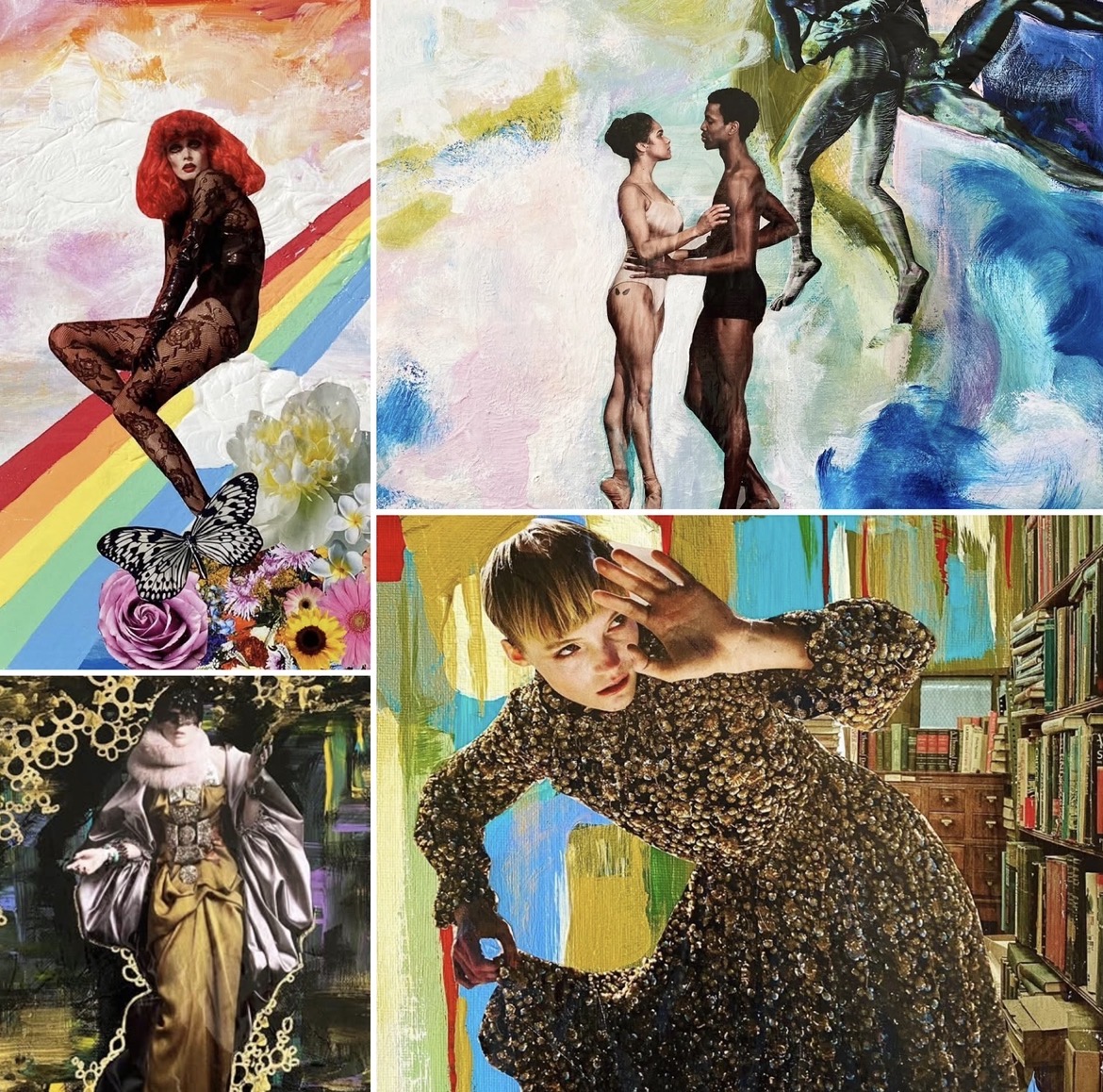
OK, so technically this is not a new-new hobby. I have piles of old scrapbooks to prove it. I’ve also done mixed media collage before. Remember my tarot-inspired collage paintings?
And now the two have come together in a new, fun way. But let me back up a bit. It started with my writing notebook. I started keeping one last year – it’s a place to write down story ideas and characters, iterate plot outlines, track my writing progress, make writing to-do lists, etc. Because I’m still a kid with a stationery fetish at heart, I had to make my notebook look pretty: pick one with a cute cover, use coloured pens to write, add stickers. I have a low-key “vintage” sticker obsession. [That is to say, I love stickers with vintage designs, especially anything to do with flowers, butterflies, books, astrology, tarot, and magic-related symbols.] I have been collecting stickers and sticker books for years but I also suffer from that problem where you keep “saving” stuff because it’s “too pretty to use”. Know what I’m talking about? Well, I bit the bullet and started actually using my stickers and adding them to my writing notebook.
And it was fun! It reminded me of my old scrapbooks, where I’d cut out pictures from magazines and make little collages around my scribblings – random musings, poetry, you name it. I went and pulled them out of storage and had a lovely walk down memory lane. [Actually, some of my old poetry, angsty as it was, isn’t half bad.] And it fired up the old spark again. I decided I wanted to start a new project: a decorated book where I could collect bits and bobs of inspiration, like a moodboard to go alongside my writing notebook. A collection of quotes, ideas, poetry, pretty images, etc. A good friend of mine who’s into scrapbooking told me the technical term for that is a “commonplace book”. So that’s what I set out to do.
I found a nice, big notebook – technically a drawing notebook (from the dollar store) because I wanted thicker paper so my pens (Sharpie ultra fine markers) wouldn’t bleed through too much – and got my other supplies together: sticker books, leftover magazine cutouts (from my collage days), tape. Yes, regular old tape. Try not to be too horrified. But my idea was to create something pretty lo-fi at first, so the “taped together” look was intentional. [Mostly; it was also just convenient and I’m lazy.]
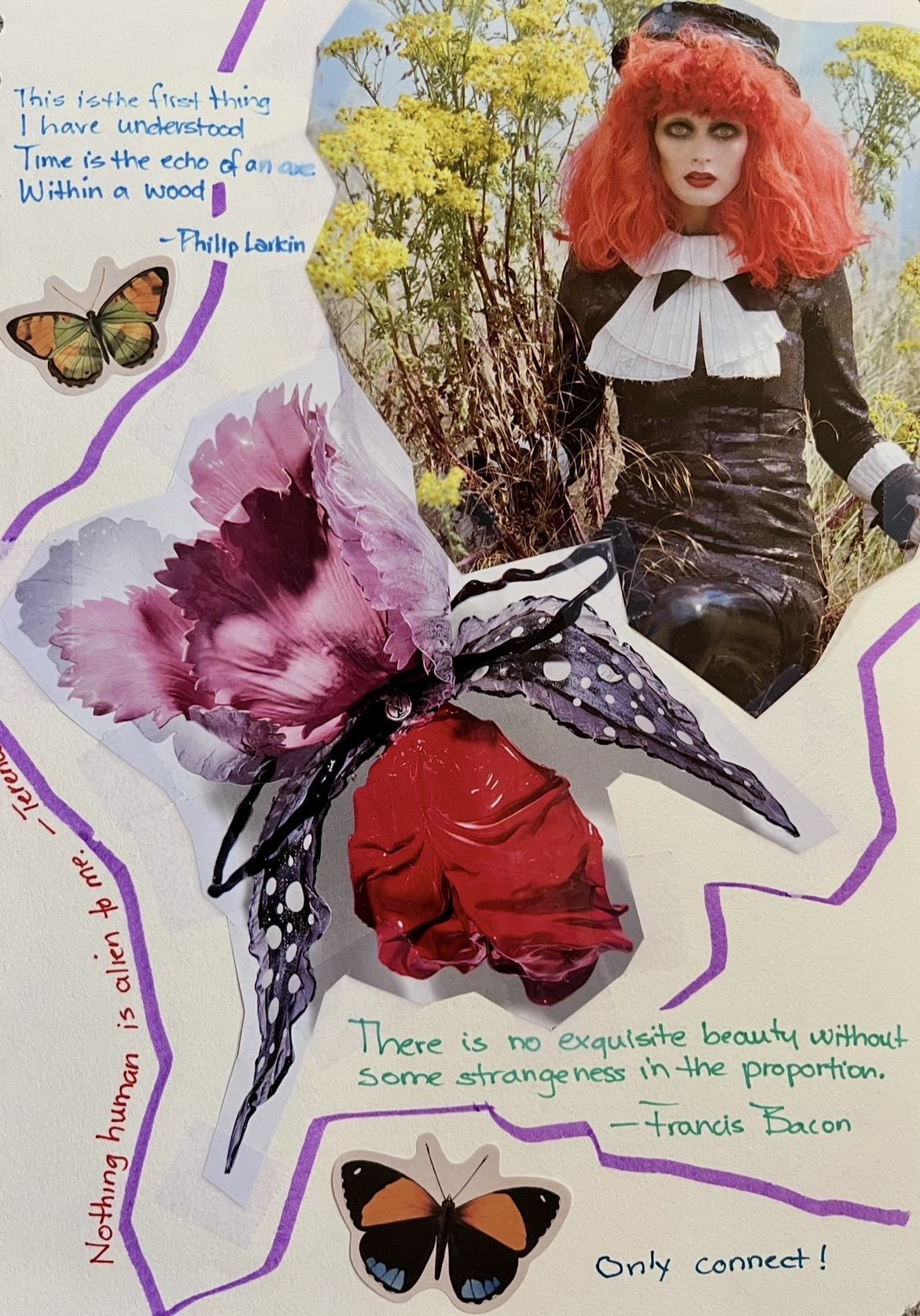
As with all creative projects, it began to evolve – quickly. I started getting more adventurous with my compilations and slowly moved towards a more visuals-heavy, collage-based approach.
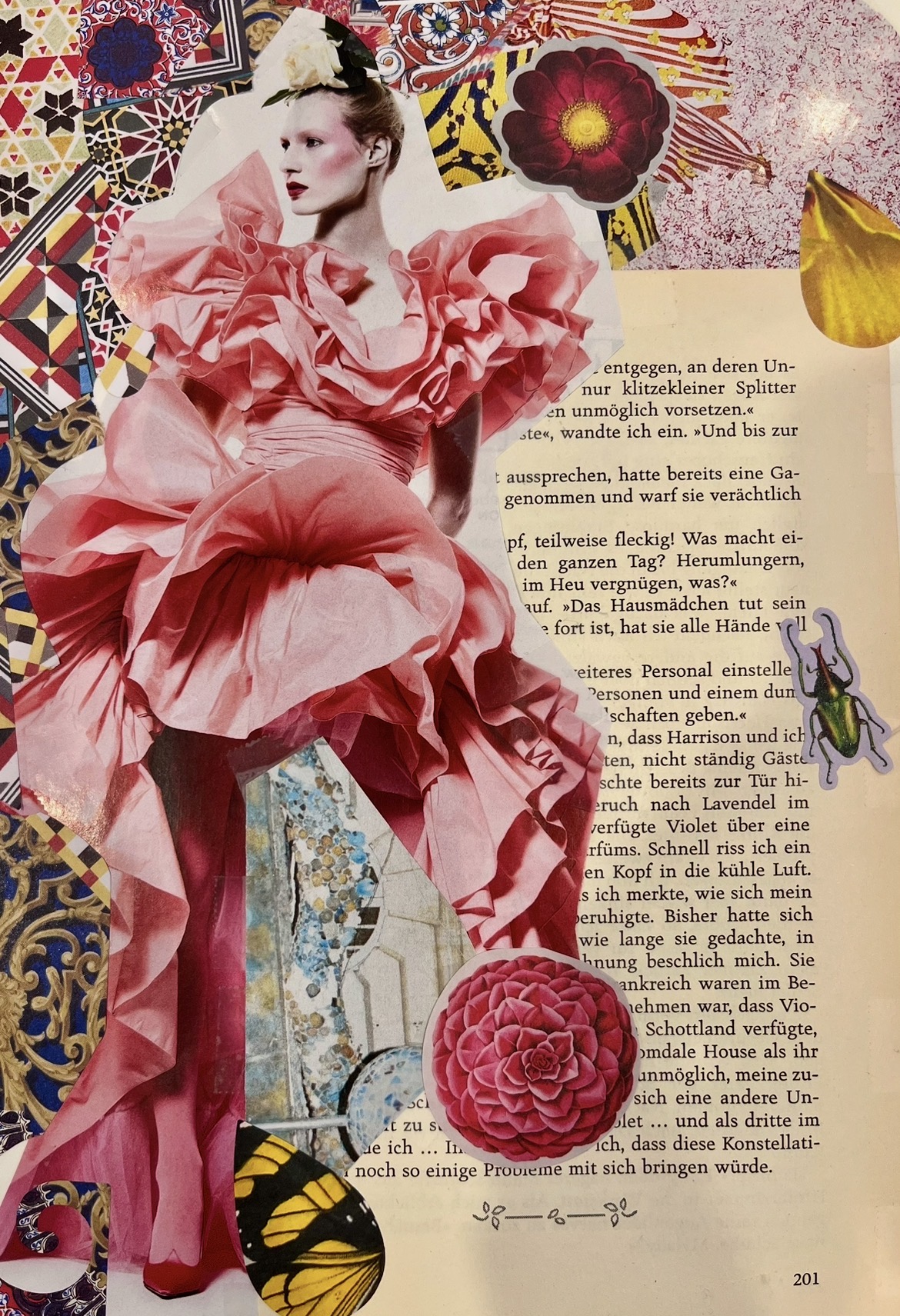
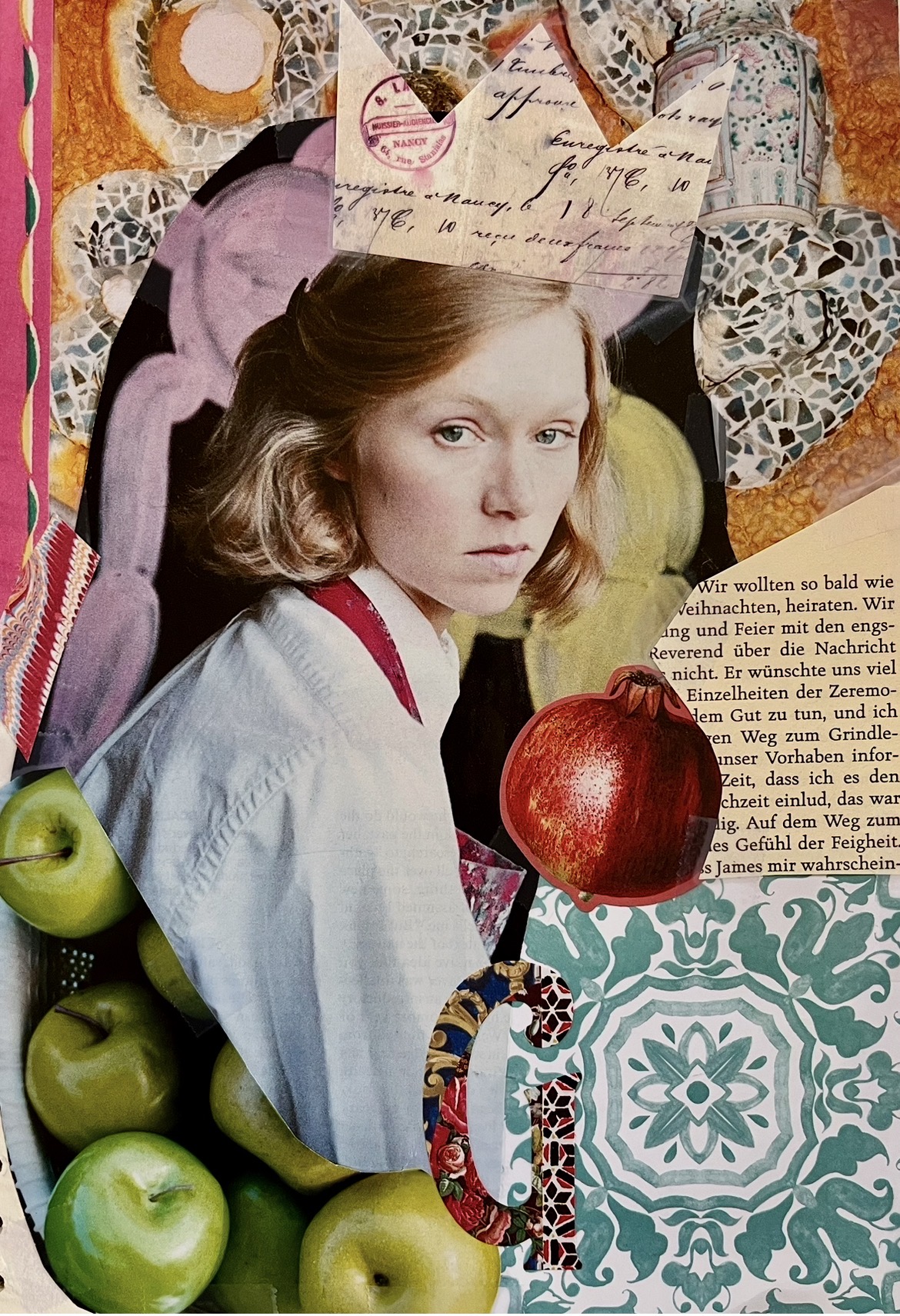
I eventually did some basic Googling and discovered tape runner, which was a gamechanger. Basically, imagine glue and whiteout correction tape having a baby – that’s a tape runner. It’s so easy to use and perfect for paper-based collages. I started with the name brand stuff (Scotch), then moved to the no-name version because … well, I was going through a lot of the stuff quickly. It was a collage extravaganza!
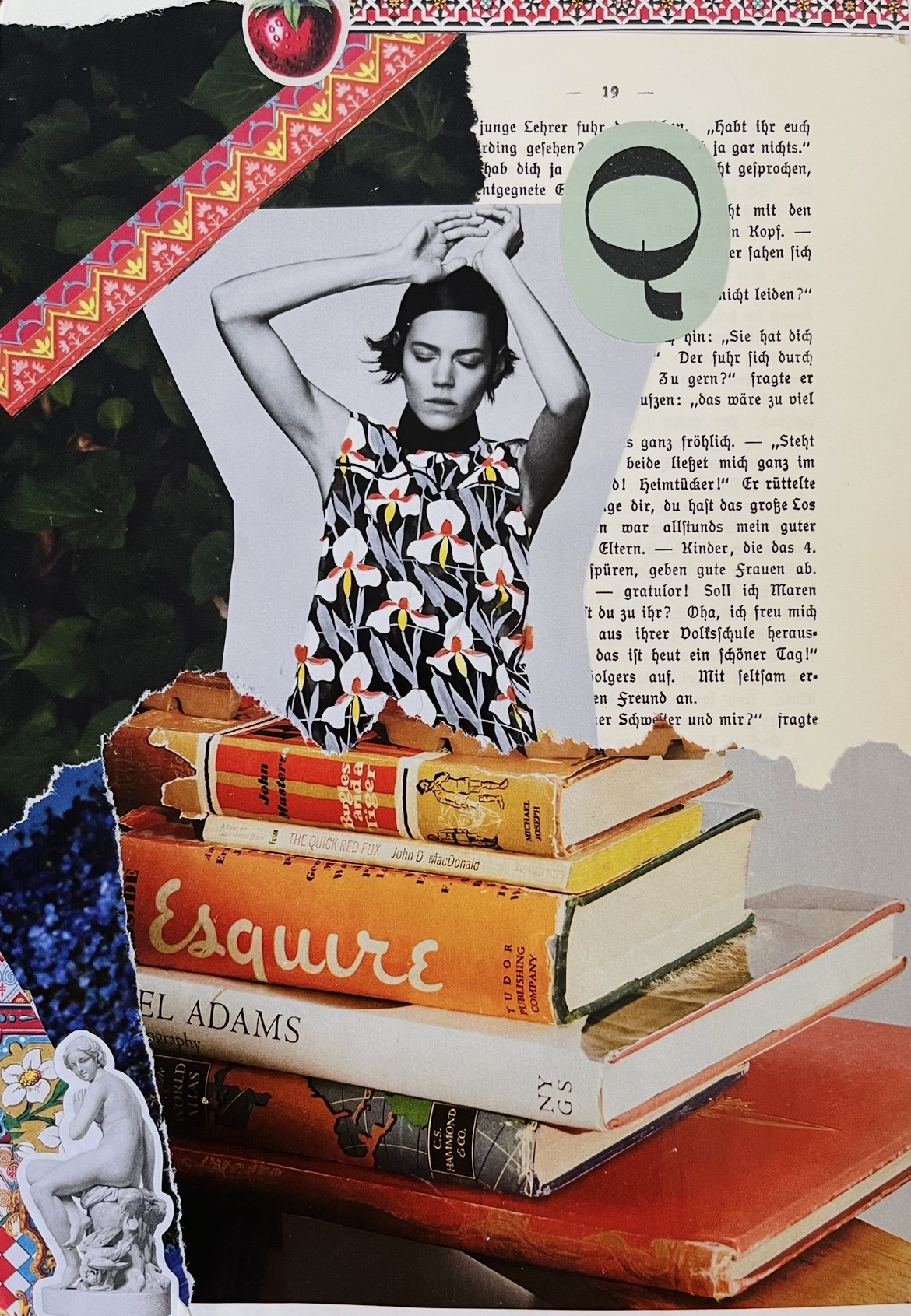
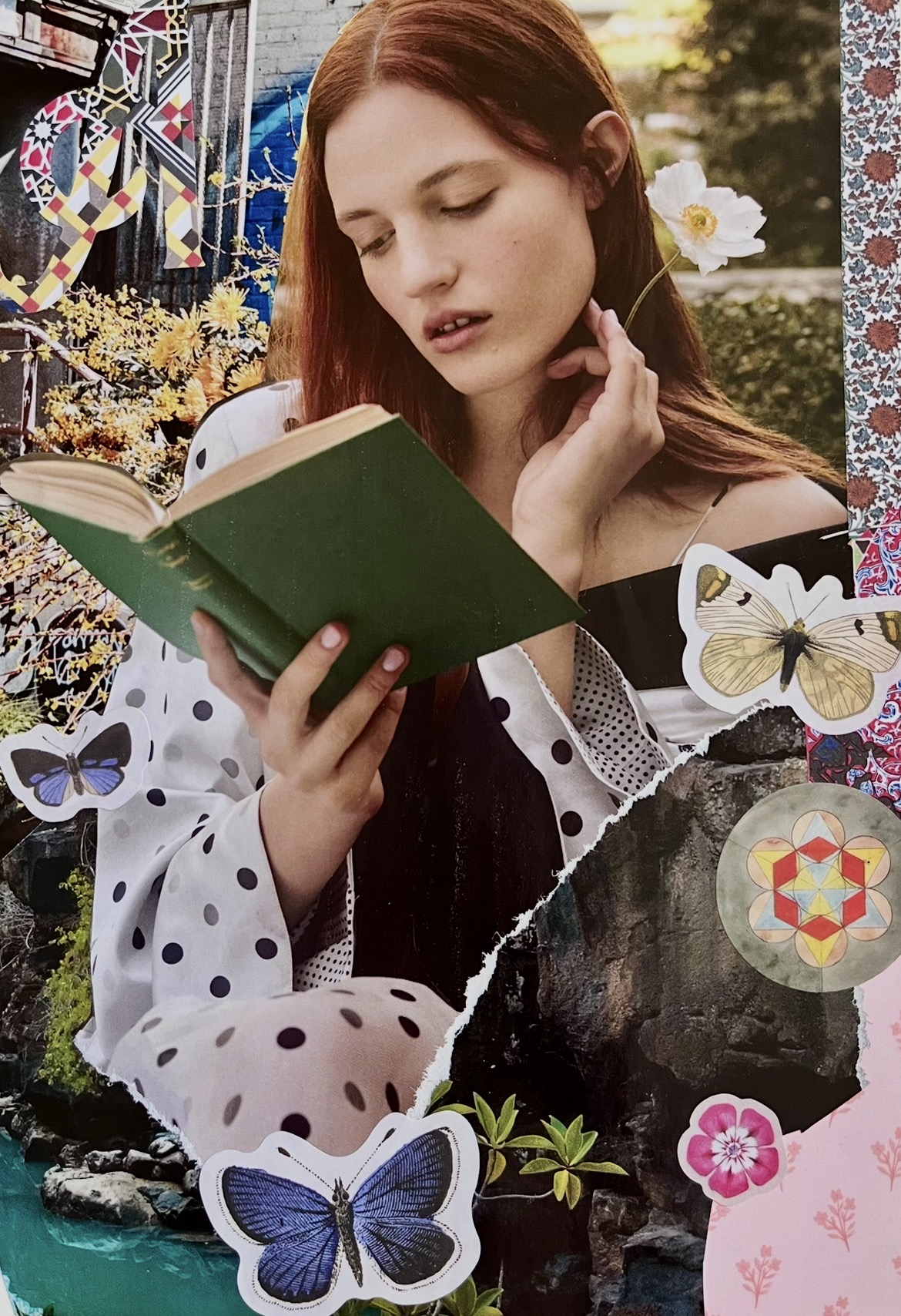
Creating these is basically the perfect relaxation activity – especially if I throw on a fave mystery show in the background for company. It has done the most to help me cut back on my phone screen time in the evenings; being tired and looking to decompress is when I’m most vulnerable to the siren call of doomscrolling, and this is a fantastic replacement for that. It requires very little dexterity or skill, so it’s pure creative expression. Every step of the process is fun, from going through old magazines and tearing out interesting images and useful scraps, to assembling a new collage. When I started, I was really focused on “statement” images, the ones that can serve as the focal point of a collage. But the more I experimented, moving towards “full page” collages, the more I realized that the “background” bits are equally important. And it became a fun challenge to develop an eye for useful scraps that can be layered to create interesting tableaux. It’s all about colours, textures, patterns, juxtaposition.
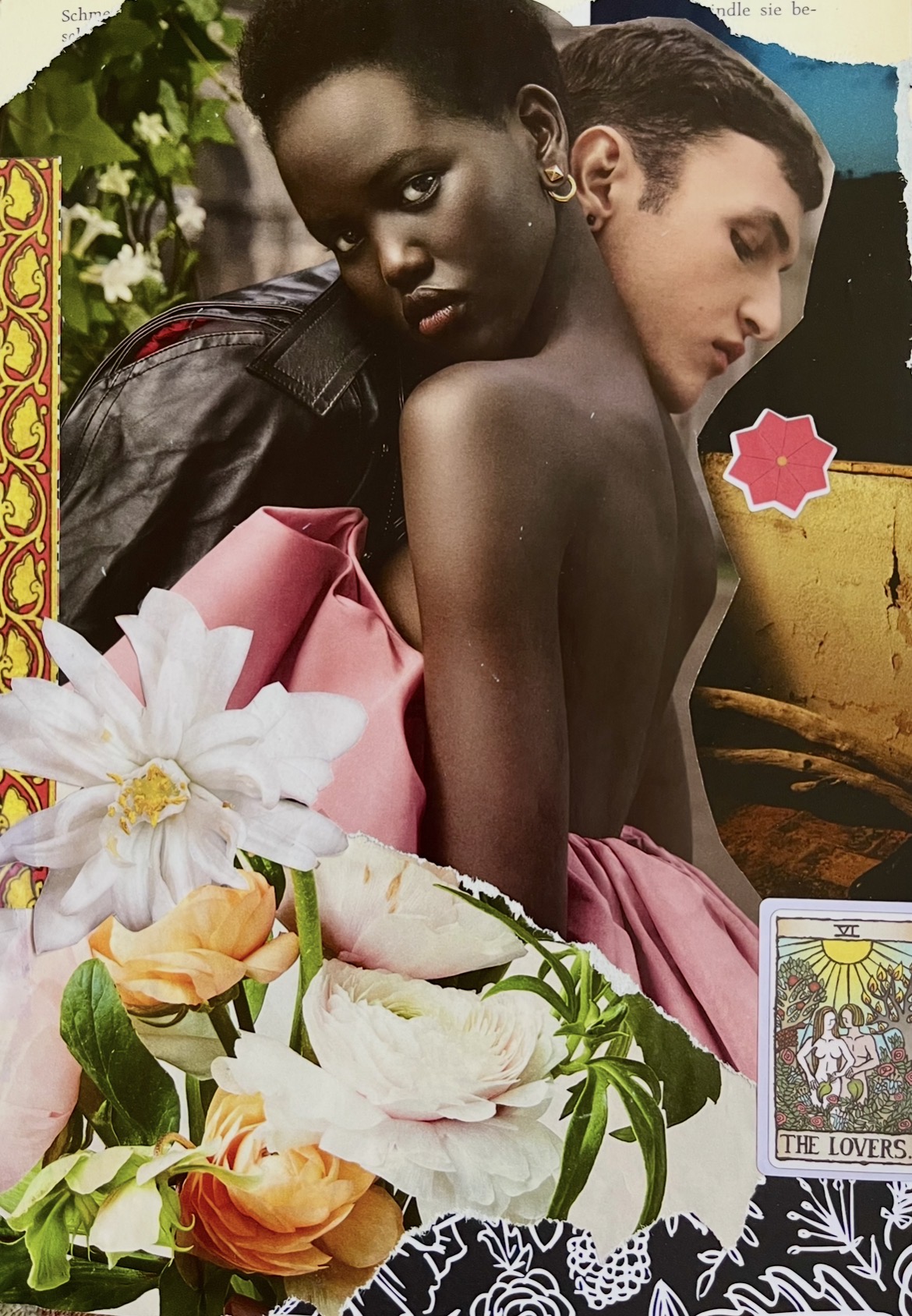
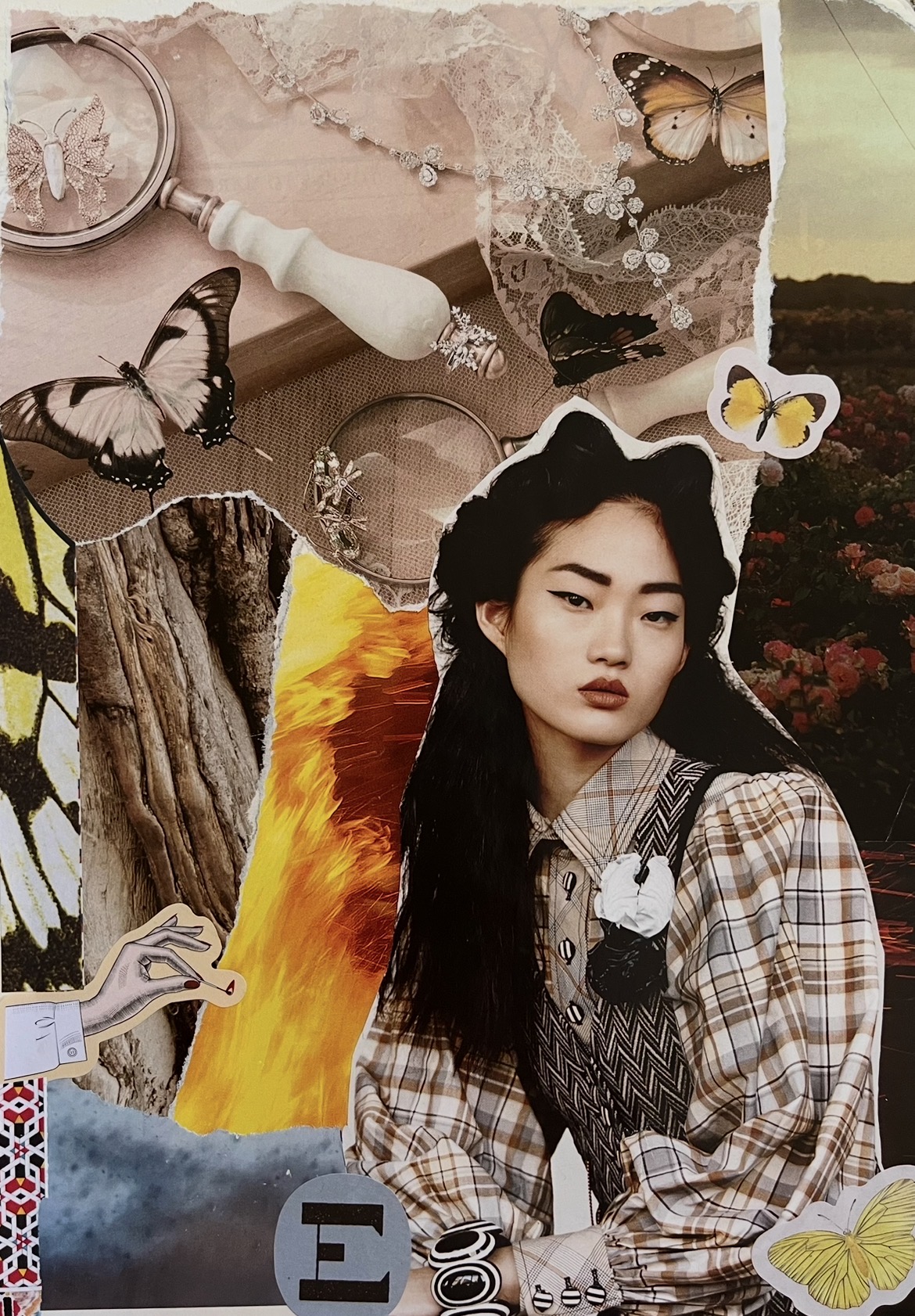
The hardest part is sourcing magazines, which are my preferred media for creating collages. I have a fairly large collection of fashion magazines at home, which I have been judiciously pruning for many years now. Some, I don’t want to touch because they’re special editions or very old; many have already been pruned as much as I’m willing to go, because I don’t want to destroy them altogether. I used to find a lot of magazines at the thrifts, but that is no longer the case – especially for fashion ones like Vogue and Harper’s Bazaar (my faves, because they have the best editorial photos shoots with interesting set-ups and themes). I’ve looked into other options, like FB Marketplace; years ago, I lucked into buying someone’s massive collection of hundreds of old magazines for, like, a hundred bucks. Sadly, I haven’t found a deal like that again. A lot of sellers seem to be asking $5 per issue and up. In contrast, Value Village is a relative bargain at about $2 per issue. I also recently realized that non-fashion magazines, like National Geographic, can be good sources for “background” scraps – landscape photos often have very interesting colours and patterns. Those at least are easier to find.
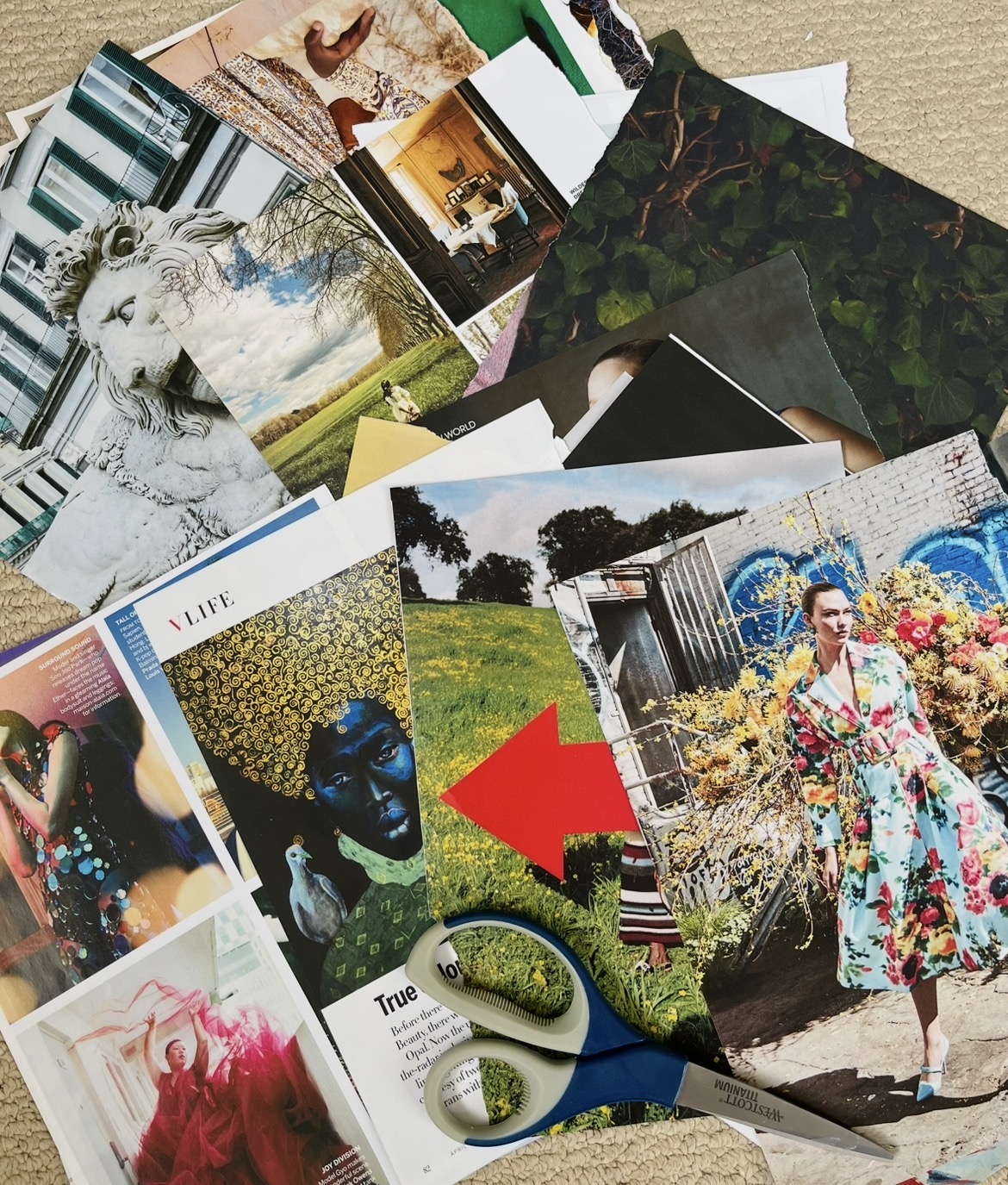
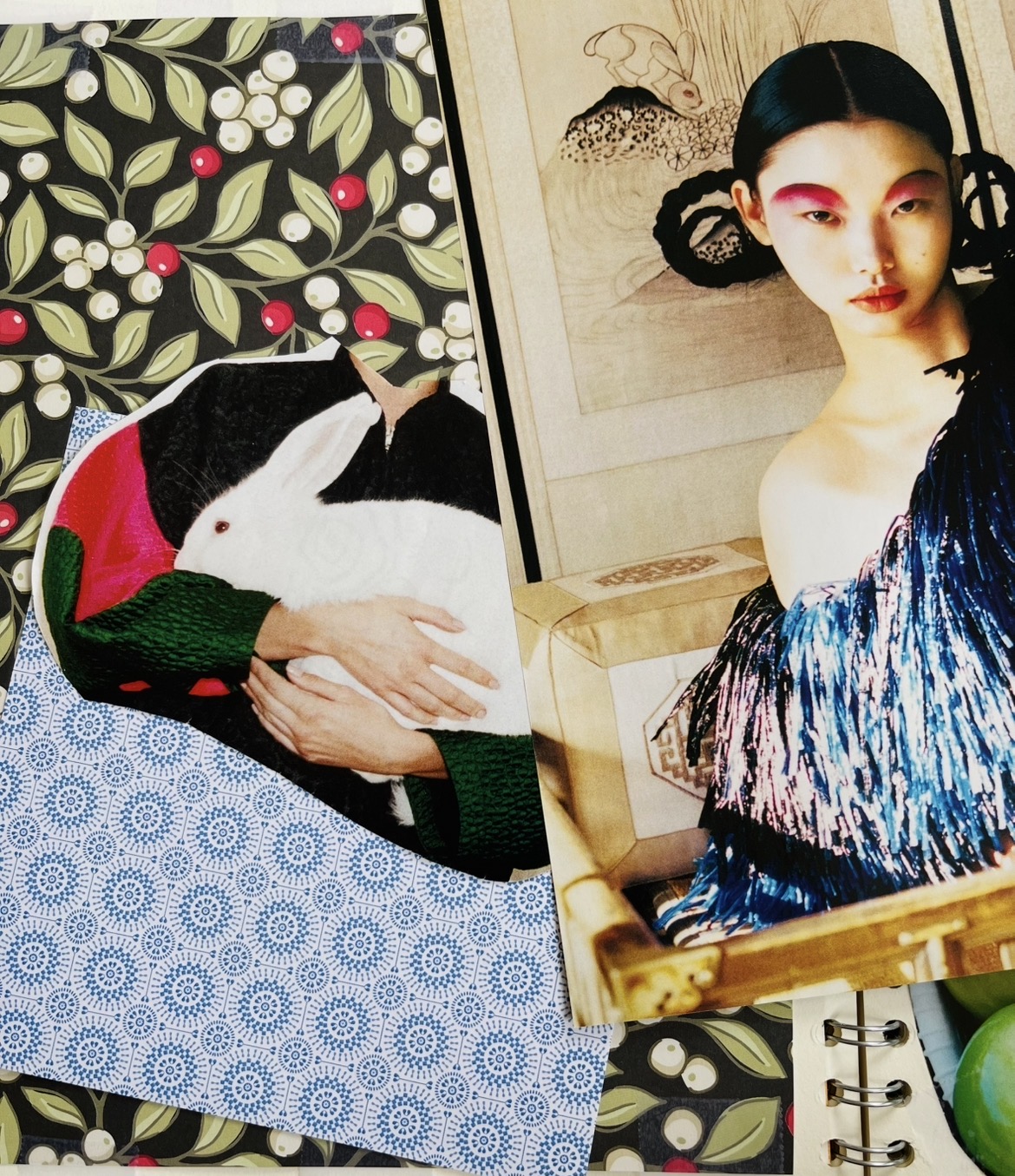
Here’s a collage in progress:
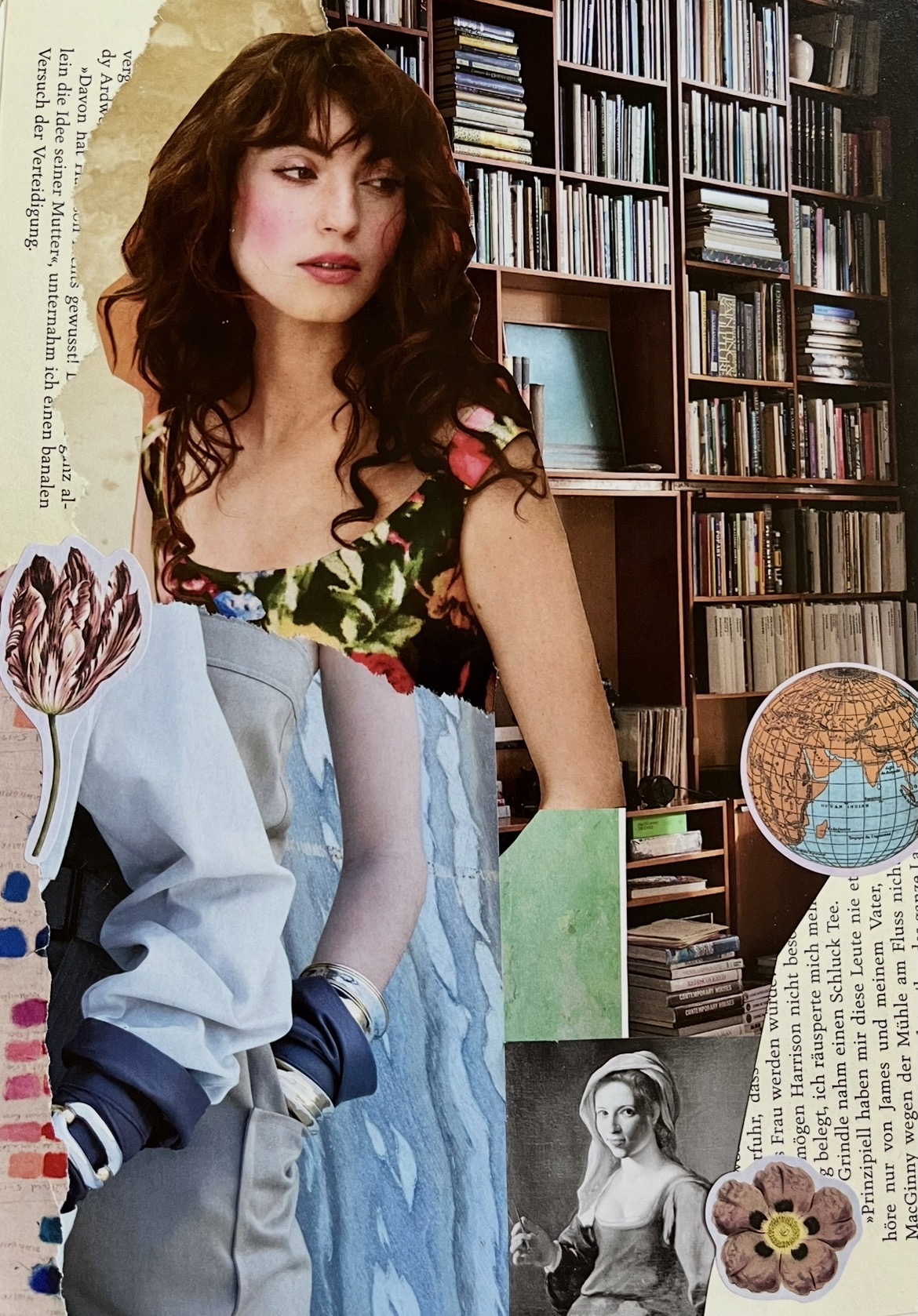
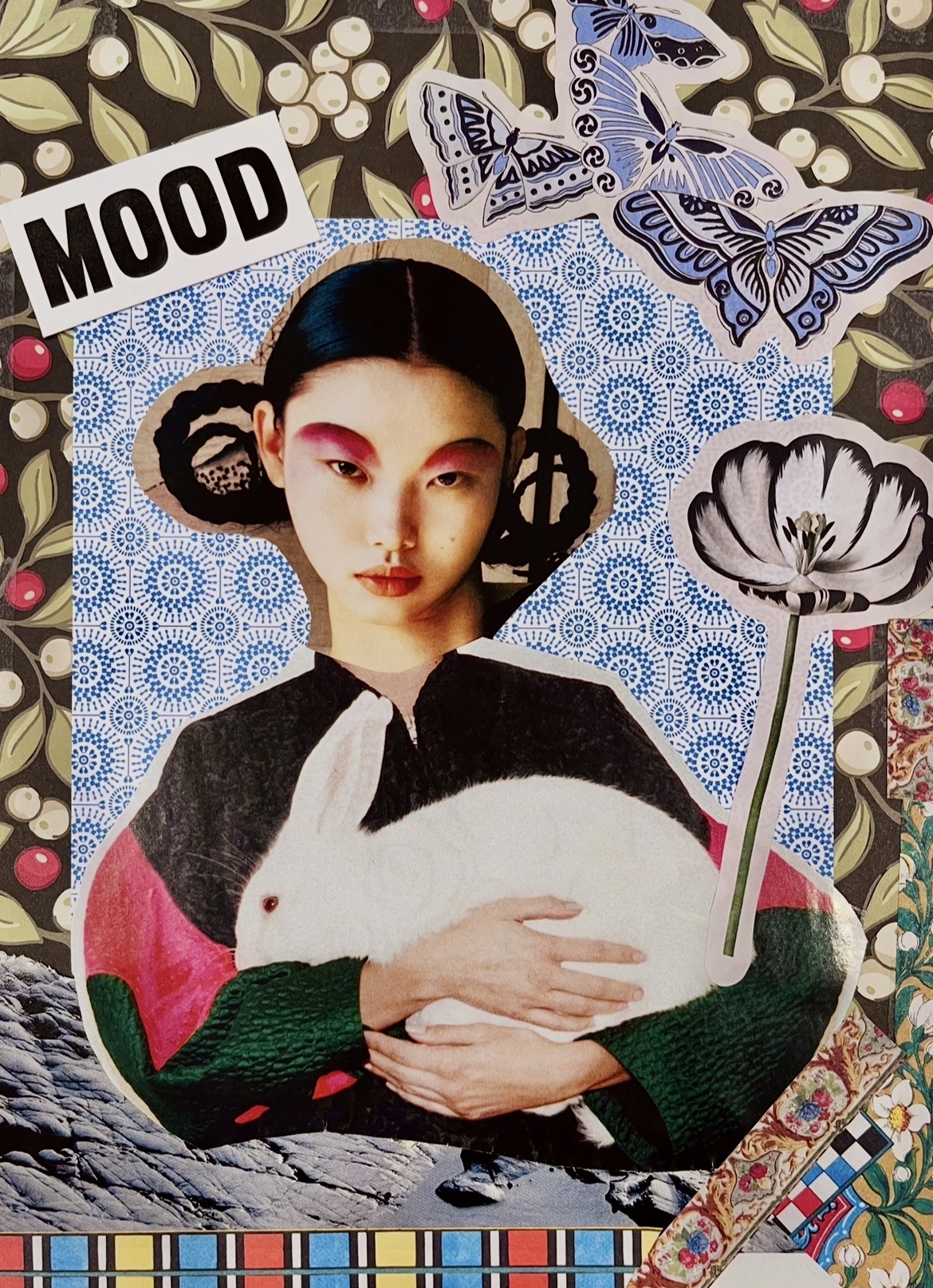
And the final result:
If you want to try your hand, this is one of the easiest and cheapest creative hobbies to start. You need minimal supplies, some of which you probably already have; the rest can be acquired fairly inexpensively. A notebook (mine is 8 x 11 in, but you can start with a smaller one), a good pair of scissors, paper scraps and ephemera, tape runner (or tape or glue), and pens (optional). For the paper scraps and ephemera (a fancy word for odds and ends), you can scavenge around the house first; lots of things can be useful, from old wrapping paper to pretty labels to greeting cards to magazines, etc.
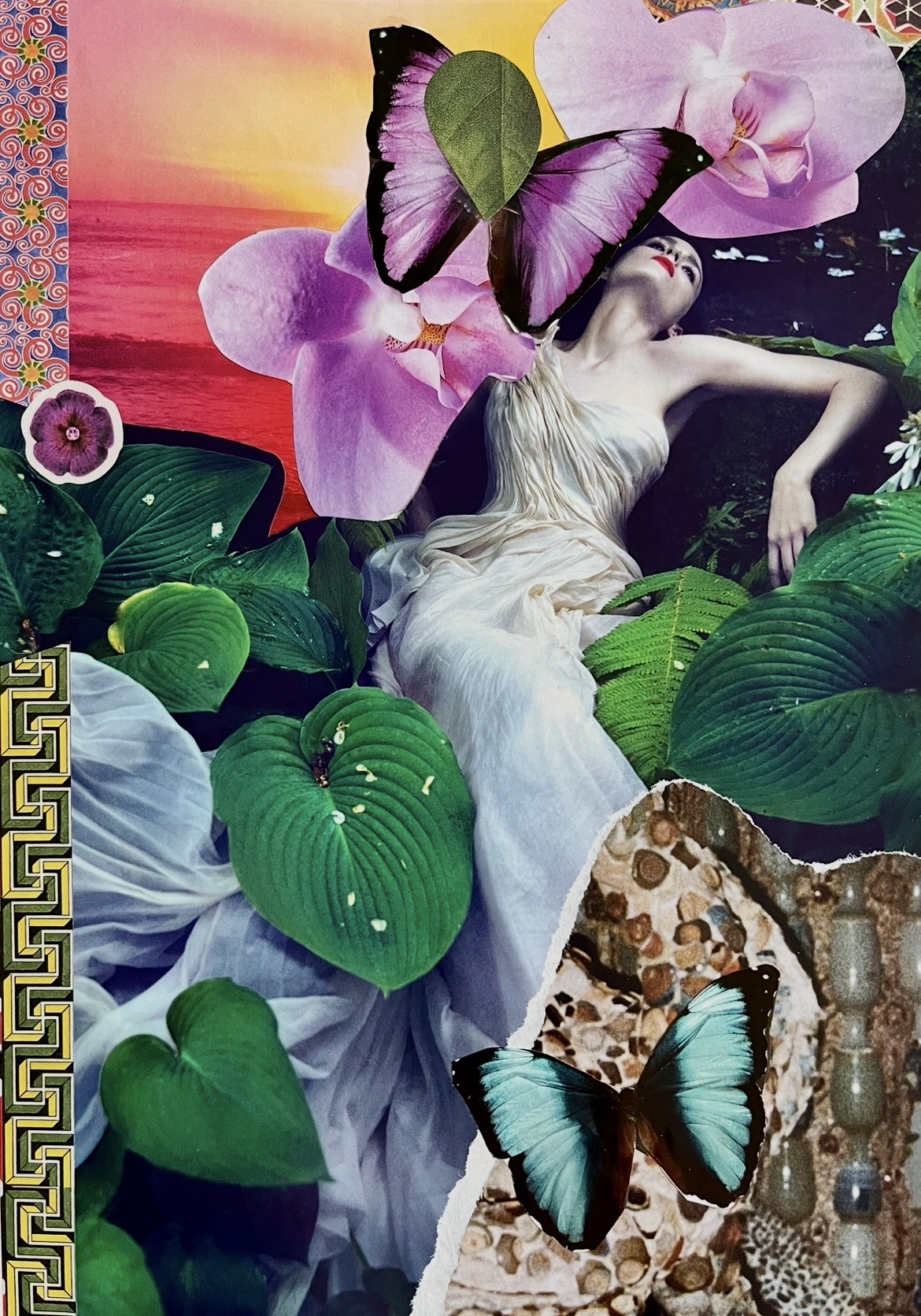
The thrift stores are also great places to source your stock, of course. In addition to magazines, I now also look for old, damaged books – especially vintage books (yellowed paper and interesting fonts) and art books. The idea of tearing up books makes me physically ill, but if they are already damaged (severe water marks, torn up covers, etc.), it’s easier to think of the process as giving old paper new life.