Category: Uncategorized

I Write Things: I Give You Book

I’ve dropped some hints before about my (finished) novel, but I think it’s time I give you a little bit more info. If you’ve been following my journey here and on Insta, you’ll know that it’s a historical romance mystery novel set in 1920s England. The vibes as Golden Era classic English whodunnit – think Agatha Christie, Ngaio Marsh, and Dorothy Sayers. Actually, think Georgette Heyer; she was my biggest inspiration in terms of tone and the romance crossover. I wanted to write a book that was neither pure mystery, nor pure romance, but a mix of both. The mystery provides the framework and main engine of my book’s plot, the romance adds flavour, stakes, and tension.

The title? A Party to Murder.

At the risk of some mild spoilers, the title is an allusion to 1) the setting of the book, and 2) an element of the mystery. The action takes place at a country manor where a large and quirky cast of characters assemble to celebrate an important birthday.  Here’s a very brief synopsis:

It’s the summer of 1922, and preparations for an extravagant party are underway at Cheveley Manor, the Marchmonts’ stately house in the English countryside. Richard Marchmont is fabulously rich, moderately eccentric, and fond of getting his own way – whether his family likes it or not. With everyone gathered to celebrate his 85th birthday, the scene is set for a memorable weekend. But even well-laid plans can go awry. Richard has quarreled with his heirs, whose future prospects will be lot less golden unless they get back into his good graces. The arrival of unexpected guests, return of a long-lost relative, and sundry romantic entanglements only make matters more complicated.

Audrey Tempest St. Clair has just arrived in England to visit her long-dead father’s relatives. On the train, she meets a dashing stranger. Michael Carrington, on his way to great-uncle Richard’s house, will stop at nothing to get to know the mysterious young lady in his compartment, and fate is on his side. Audrey’s cousin Philip just happens to be Richard’s solicitor and Stella’s half-brother, which makes Audrey practically a Marchmont herself.

Stella Marchmont is young, beautiful, and madly in love. Newly engaged, life couldn’t be peachier. There is just one small problem: everyone hates her fiancé, who may or may not be a gold-digging bounder. None more so than her grandfather, Richard, who is determined that she marry her horrid second cousin, Laurence, positively the last man on earth she’d ever consider for a husband. But Stella has a plan, and the birthday party is the perfect opportunity to put it into action.

All roads lead to Cheveley Manor, and when Richard is found dead in his study, a glass of poisoned wine by his side, there is a surfeit of suspects on hand, and the innocent as well as the guilty are caught in a web of deadly deceit. Clever Inspector Hawthorne has his work cut out for him: everyone at Cheveley Manor is hiding something and, for the murderer, the party isn’t over yet. Lies must be untangled, secrets old and new revealed, and hearts broken, before justice and true love can prevail. 

In addition to the murder mystery itself, there are two romantic subplots – one main, and one secondary. Juggling what are, effectively, 3 different plots, along with a large ensemble cast, in a character-driven story required a LOT of very careful plotting. My original high-level outline was something like 10 pages long. I ended up with a nicely paced plot, if I do say so myself. Even so, my first draft came in at something like 150,000 words. For reference, current industry guidelines for mystery novels range from 70,000 to 110,000 words, and many agents and publishers don’t even look at anything over 100,000 words. During the initial editing stages, I was able to cut back to 135K words, and eventually to 129K. Still on the long side … and I did get at least one form rejection on that basis.

However, this is the point when I started to query my book. Was it the right time? Probably not. Like most new writers, I made the mistake to going to query too soon. I had great beta reader feedback, and I felt confident that the book was polished, so I went for it. Now, in some ways, I’m glad I did. Pulling that trigger for the first time is hard, and I did it while I was riding a wave of excitement and hope, which is what you need – in spades! – to put yourself out there. And I learned a lot more through the process of actually querying than I would have by reading about querying; that’s just how my brain works. But there was also a downside. As it turns out, my book wasn’t quite as polished as I thought it was … which means that the writing samples I sent with my first 10-20 queries don’t represent my book as it currently stands. I subsequently ended up doing another major edit, cutting, tightening, and fixing some POV issues. My book is now 115K words and, in my biased opinion, considerably stronger than before. Good news for new and future queries; not-as-great news for my older queries. Basically, I didn’t put my best foot forward with the first agents I queried. Chalk that up as a lesson learned (the hard way).

So what happened between the start of my query journey and now?

In a nutshell: I wrote 2 more books. Writing those books polished up my skills in every core area, from plotting to characterization to dialogue. Once I finished the first drafts of those 2 books, I went back to A Party to Murder … and saw a lot of room for improvement. The good news was that the plot, structure/pacing, and characters were all solid. The book didn’t need a full developmental edit. It needed tightening up. Yes, the very thing I was convinced it didn’t need back when I first started querying. Sigh. There was backstory bloat; scenes that needed to be shortened and/or reframed; some POV hopping that needed to be fixed; and a lot of extraneous “telling” that just needed to be cut, period.  At 115K words, A Party to Murder is still a bit longer than genre guidelines, but more in line with those expectations. For reference, books #2 and #3 are currently sitting at 85K and 80K respectively (the latter will expand a bit during edits, I’m sure). One of the lessons I’m learning as a writer is how to say more with less.

A Party to Murder lives in my head as the first in a series of interconnected standalone mysteries — think the Hercule Poirot or Miss Marple series — but its future remains to be determined. I’ve got a general idea of the first 5 or 6 novels (and, as mentioned, have written 2 more of them), but for now, I’ve decided to put this mega-project aside and focus on “diversifying” my writing portfolio. The reality is that, if I am not able to get agent representation for A Party to Murder at this time, then it’s highly unlikely I’ll have better luck with the other books in the series given that they are in the same genre, style, and “universe”. I am getting myself ready to pivot, if necessary. That means writing a different book (still a mystery, but not historical) and taking that to the market. If that ends up getting me an agent, then I can see about getting A Party to Murder back on track.

While I am happy with this current plan, it does leave me in a position where I may not be able to get A Party to Murder into readers’ hands for a long time. There are many reasons why self-publishing isn’t a good fit for me (and there’s isn’t enough space here to get into that) which doesn’t leave me with many other options. But I *am* still thinking about options, including (possibly) Patreon. For those who expressed an interest in reading A Party to Murder, I’ll keep y’all posted!

Also, this is probably a good time to drop this in: if you would be interested in being a beta reader for my books, send me an email and tell me a little about yourself (including your likes and dislikes as a reader).

Lastly, if you’re a writer currently working on a book, or starting a book, or thinking about starting a book … I would love to hear from you. Let’s connect!
Friday Wrap-Up #3

Another week, another heartbreak. Here’s your regular reminder that writing is fun but trying to publish sucks. The agent who requested my full manuscript reached out this week to let me know they would be passing; while they found A Party to Murder “very clever and fun”, it was too similar to an existing client’s MS. How’s that for a gut punch? I sent a bunch more queries out, and also got a bunch more form rejections, so the universe balanced each other out, I guess *shrug*

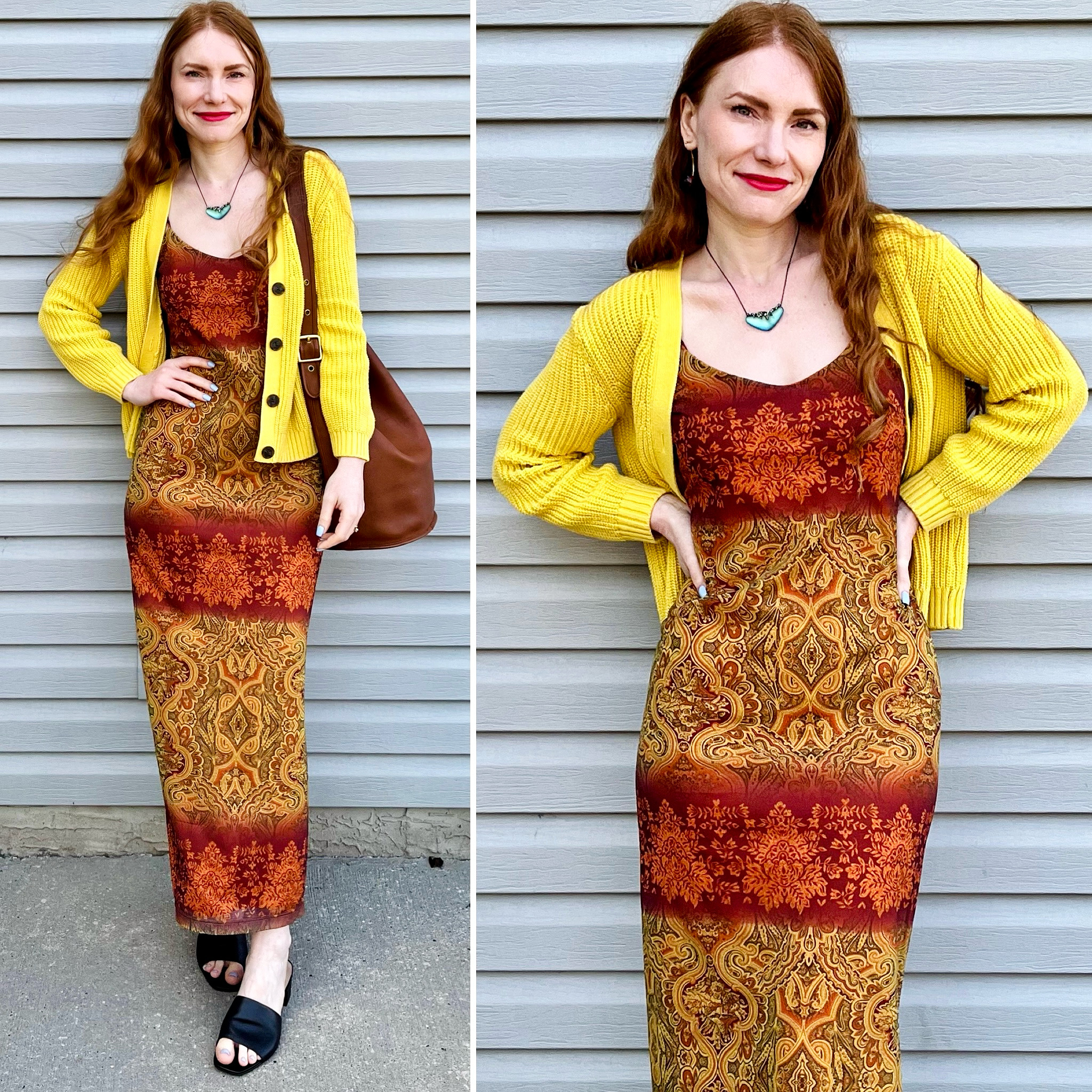
Thank goodness I had some good distractions. My husband and I went to a wedding last weekend, and got to catch up with some of his old coworkers, who were lovely. Also, I will always get dressed up for a good buffet. Actually, I will get dressed up for any and all reasons. I had too many options to choose from (my formal dresses don’t get much air these days but I miss them!) and making the final decision was HARD. I need more of my acquaintances to get married, ok? Loved the final outfit I chose, but you’ll have to hang tight another week or so; I haven’t posted it on Insta yet, but it’s coming.

The kids had their last day of school, and I’m still trying to wrap my brain around how my daughter is heading into junior high next year. Like, HOW?! She’s just a baby!! OK, so she’s nearly as tall as I am and twice as sassy but … SHE’S MY BABY *ugly cries* Also, my son turns 14 next month and keeps talking about getting his learner’s (driving) permit and *ugly cries intensifies*

I’m getting super engrossed in my current WIP, which is currently at that fun stage where I’m excited to write every day because I can’t wait to find out what happens next. [Like, I know what happens, but I’m excited to read about it, if you see what I mean.] It’s another genre-crossing mystery, but completely different from A Party to Murder and its interconnected non-sequels. I haven’t quite landed on the genre description, but I’m calling it a paranormal mystery for the time being.

As part of some background research, I read/am reading a couple of super interesting books by Ronald Hutton – one on the history of modern Wicca, and one on the history of witch trials. Yes, that is a hint … but only a very small one … about my new book. Sometimes, it’s helpful to submerge yourself in “lore” that is only tangentially related to your story; even if only a couple of tiny bits make it into the narrative, it still adds depth and richness to the tapestry.

I also managed to squeeze in a bit of BritBox this week (first time in months!) because I saw that Outrageous is now streaming episodes. Here’s a little-known fact about me: the Mitford sisters are one of my historical obsessions. I’ve read pretty much every book that’s ever been written about them, including The Mitford Sisters by Mary S. Lovell (one of my fave non-fiction writers) which inspired this show. I’ve only seen 3 episodes so far, and there are 3 more yet to be released, but I’m enjoying it. It looks great and it’s well-acted. As far as substance goes, it’s … OK. It oversimplifies and glosses over a lot of stuff, which is to be expected for this genre of “inspired-by-real-events” series, but I haven’t seen any egregious errors or inventions yet. I could quibble with the characterizations of the sisters, but again, they’re not egregiously terrible.

I really like the actress who plays Nancy, although they’ve made her too much of a sad sack and not sparky enough; the real Nancy was famous for her sharp wit. Diana looks great but has been reduced to a paper-thin “ice queen” stereotype, presumably because the writers/producers were afraid to glamorize/humanize a N*azi-sympathizer. Which, fair enough. I am finding the performances of the actresses playing Unity and Jessica the most compelling, perhaps because they have been given the most interesting material to play with. The show’s Unity, in particular, is such a fascinating character because they’ve not shied away from exploring her trajectory from slightly odd English aristocratic young lady to fanatical H*tler-lover. Her dynamic with her “twin”, the Communist Jessica, is also super compelling as (at a superficial level) a microcosm of the political and cultural crosswinds sweeping through 1930s Britain. Since we’re now living in what feels like a re-do of that era, I think it’s a period worth re-examination. Obviously, this show is just light entertainment … but if you watch it and like it, give Lovell’s book a try.

Have a great weekend!

Tales of Thrift: The Thrifter’s Journey

Editor’s note: hi, it’s me, I’m the editor. I’m adding this as a kind of introduction slash context for this new series, Tales of Thrift. The content of this series is adapted from the Memoir That Never Was, which I wrote last year. Its themes centered on identity-making and my relationship with secondhand stuff, but in writing it, I ended up synthesizing ideas that have been pivotal to my growth as a person since turning 40. Although I ultimately shelved my Memoir That Never Was indefinitely, I’ve decided that there are parts I would like to share here on the blog. It will get pretty personal/vulnerable at times, but I think the community we’ve created here is a wonderful (and safe) space, and I hope that these posts will inspire reflection and conversation. Cheers!

I considered a bunch of different titles for my book while I was writing it. The Thriftiad was a personal favourite, reluctantly put aside because I felt I might be overestimating the cleverness of my pun. On the other hand, Thrift Odyssey sounded like a low budget sci fi movie. Where am I going with this? Whether they know it or not, every thrifter-by-hobby embarks on a journey the first time they step foot in a thrift store. In that moment they are not a thrifter yet, of course; just a person walking into a store. Some journeys are micro-epics, lasting only as long as it takes the person to do a loop around the store and decide that thrifting isn’t their cup of tea. Some become generational sagas. It goes without saying that each journey is different, as unique as the hero(ine) at the center of it. Nevertheless, I find myself unable to resist looking patterns and making sweeping generalizations based on no scientific method at all. Let’s call it the stages of the hero’s thrifter’s journey. There might be no science in my method, but there is still method in my speculation. Let’s go!

The Kid In the Candy Store

In the beginning, thrifting feels like going to an all-you-can-eat buffet on an empty stomach. There is so much! And it’s all so cheap! Load up the cart! Wheeeeeee! You’re charmed by the quirkiness of random bric-a-brac. Do I need a porcelain hand with flowers painted on it? No, but it’s kitschy-cute and it’s only $4.99, YOLO! You’re amazed to find all the brands you’ve been coveting at the mall at prices the mall can’t beat even on Black Friday. Do I like the pattern on this polyester blouse? Who cares, it’s Anthropologie and it costs less than a Starbucks coffee, throw in cart! You’re suddenly discovering things you never knew you desperately wanted to collect. Pyrex? Vintage globes? Funny pictures of cats? Hmm, I think I have an empty shelf (or wall, or drawer, or table top) at home for that. There is So. Much. Stuff. And. You’re. There. For. All. Of. It.

I hope you don’t think that I’m denigrating this stage of thrifting. On the contrary, I think it’s a very important stage. If you look past the surface – past the giddy spree-buying and its sometimes-questionable results – big things are happening. Thrifting skills are being learned, applied, refined. People often say that such-and-such thrifter has “the eye” for it; that makes it sound like something you’re born with (or not) but it isn’t: it’s something you develop over time and with practice. You learn how to look at things and how to spot things that are worth looking at. You learn how to recognize quality and craftsmanship. You learn about history and tradition in how things are made and used. You make a lot of mistakes, and you learn even more from them. And all of it happens without your even noticing. You’re just having fun and filling up your closet and your house with fun things. This can go on for a while but, eventually, most thrifters come to a crossroad. The house is full. The closet is full. Thrift stores are still full, beckoning. You can stop, or keep going just as before – perhaps a storage unit can solve your problems? Or you can pick a new direction and see where that takes you.

The Treasure Hunter

Seasoned thrifters know what’s what. They know what’s good and they know what they like, and generally speaking, they like the best. Finding the best – the real treasures in the trash heap, so to speak – is a challenge and, once you’ve mastered the basics, who doesn’t love a challenge? Why get excited over Anthropologie when Ulla Johnson is on the table … or maybe under the table, or just around the corner, if you just look hard enough? And Ulla Johnson is not the end; there is always something better – more luxe, more niche, more desirable – to be found. You’re done filling your closet; it’s now time to elevate it. The same thing goes for your house. You have “the eye” and now you have a burgeoning aesthetic sensibility too. You’re no longer buying things simply because they’re cute and cheap; you want value. You’re on the hunt for holy Grails. We’ve all heard that story of the person who found a set of $10,000 Picasso plates at the thrift store. Not ten thousand dollars’ worth of plates: $10,000 per plate. The non-thrifter mind boggles. The thrifter recognizes a challenge.

This is the stage at which a lot of thrifters decide to try their hand at reselling. Think about it: they’ve already bought everything they personally need or want – minus a Holy Grail or three – but there’s a thrift-shaped hole in their lives that still needs to be filled. Thrifting is a hard habit to give up cold turkey. The thrill of a successful hunt doesn’t depend on what happens once the hunt is over. Ergo, thrifting for other people can be just as exciting as thrifting for oneself, with the added bonus of making one a little bit of profit on the side. In our side hustle-mad culture, it’s more surprising when thrifters don’t become resellers than when they do. After all, how often are we told to turn hobbies into secondary sources of income so we can power sprint towards capitalist Nirvana? I’d guess at least 72 times before lunchtime, assuming one spends even a modest amount of time on social media.

A discussion of the ethics of reselling could fill a whole chapter and since reselling has never played a major role in my life, that’s not a chapter I feel like writing. But having dabbled in it once or twice, I can tell you this: it involves a lot more work than people think. To be a successful reseller, it’s not enough to be good at thrifting. You have to be good at selling, which is an entirely different skillset. You need to know what people want to buy, and how to make them buy it from you. You need to understand pricing strategy, overhead, and profit margins. You need to know how to account for the time and skilled labour that goes into every sale, from sourcing desirable product, to cleaning, mending and photographing that product, to prepping it for shipping or delivery, and every customer support issue in between. And you need to have capital. Selling requires inventory, and inventory costs money – money you have to spend before you’ve made a single dime in sales. Make any wrong move, and your inventory will sit for a long time or, worse yet, never sell; suddenly, you’re not making money, you’re losing it. I know very successful resellers, and I know resellers who’ve barely ever made a profit, and they are all really good thrifters. Personally, I am wary of turning hobbies into jobs as a matter of general principle, but I have the privilege of a good income to say that. 

The Connoisseur

Your closet has been elevated all the way to the rafters. It is a veritable who’s who of fashion. And that burgeoning aesthetic sensibility? It has reached its final stage of maturity; no longer a chrysalis, it is now a resplendent butterfly. That butterfly has a vision, or maybe it is a vision, I don’t know, where am I going with this? Ahem. There is a vision. Neither brand nor value drives your hunt now; they are both subservient to your vision, and your vision’s in the driver seat. In a way, this stage is a mirror image of the first one; you are, once again, buying things solely for the pleasure they bring you, but that pleasure is now informed by all the things you have learned in the meantime. It is not a child’s pleasure in a shiny toy; it’s the connoisseur’s pleasure in the item that epitomizes their erudition and taste. You buy less, but you buy it for keeps.

Well, at least until the vision changes. We are forever learning, growing, and evolving; our visions evolve with us. That does mean there are other stages of the thrifter’s journey yet to come. I don’t know. If they exist, I haven’t reached them yet, nor have I met anyone else who has either. Is there a point at which you just … stop thrifting? Inconceivable! But then again, there was a time I couldn’t have imagined leaving a piece of Anthropologie clothing behind at the thrift store – I am willing to contemplate the possibility of things beyond the reach of my current imagination. Discovering things you didn’t know existed is part of the fun of thrifting. It’s that element of surprise – and wonder – that keeps even grizzled thrift veterans like me going back. We’ve seen it all … but there is always more.