Category: Wardrobe Analytics

State of the Wardrobe: Lifestyle Inflation & Clothes Spending

Let me start by admitting this: I am a bit of a nosy parker. I am fascinated by how other people live – the way they decorate their houses, the clothes they buy, their finances. The latter in particular is something of a taboo subject outside of Personal Finance blogs, so my nosiness on that score is infrequently satisfied. For that reason, I love online discussions like this Reddit sub-thread on income level and clothes spending. The wide range of responses is very interesting, as are the related comments that come up – such as, for example, on the topic of lifestyle inflation. They got me thinking about my own life … and so this blog post was born.

I have absolutely no doubt that lifestyle inflation is a real thing; I’ve got all the proof I need when I compare my life a decade ago to my current situation. Take my recent trip to Mexico as an example. Back in 2007, I went on an all-inclusive vacation to Cancun – and stayed at a 3 star hotel. Last month, the four of us stayed at a 5 star resort on the Mayan Riviera. Same general location, a not insignificant difference in amenities … and cost. I’ve been trying to decide whether lifestyle inflation has crept into my clothes spending as well. If I use the same time period for comparison purposes, I think the answer is unavoidably “yes”. But if I look at the last 3 years or so, the answer is less clear.

For perspective, here are some relevant stats. Since 2013, my personal income has increased by about 50%. During that time, my clothes spending (in absolute dollars) has remained surprisingly steady, varying by no more than 10-15% from year to year. (I did not track or keep a consistent record of my clothes spending before 2013.) The average cost of the clothes I have purchased has steadily declined – from $40/item in 2013, to $16/item in 2016. Meanwhile, the average retail value of the clothes has increased – from $113/item in 2013 to $218/item in 2016. Those numbers represent, in a nutshell, the trend in my clothes spending: buying better (or at least more expensive) brands predominantly secondhand.

But what about lifestyle inflation?

In some ways, it hasn’t affected my clothes spending. After all, on average, I spend less per item now than 2-3 years ago even as my income has increased a fair bit. But that is not the full story. Averages are tricky things … especially when you buy a lot of things, like I do. Masked among my many thrift scores are some “big ticket” purchases that, not that long ago, would have seemed pretty scary. The biggest upward creep in my spending comfort level definitely happened with bags. Spending $500 on a bag doesn’t faze me like it used; I don’t do it regularly, but it’s an easily conceivable notion. My “knuckle biting” threshold for bags is now probably north of $700. Shoes are another category where my thresholds have changed quite significantly. I used to baulk at spending more than $50 on a pair of shoes; now, while I routinely spend less, I am nevertheless mentally prepared to spend up to $200 on a brand I love (like Manolo Blahnik, Frye, etc.). Same thing with outerwear, thanks to my beloved MaxMara camel coat.

At the same time, thrifting has had its own impact on the progression of lifestyle inflation in my clothes spending. The best way I can describe that impact is this: thrifting has made it easier AND harder for me to spend $50 (or more) on a piece of clothing. On one hand, I find it harder now to justify spending more than $20 on anything, because that’s usually the upper limit of thrift prices regardless of the label. On the other hand, if I do find something truly special, spending $100 or even $200 on a single item seems, well, not unreasonable given how little money my thrifting costs me (and considering that it accounts for 90%+ of my shopping). I think that, on balance, the influence of thrifting on my spending mentality is largely a positive thing. I constantly question the value of the things I’m tempted to buy, and am far less likely to be swayed by sale prices and promotions. It has made me more aware of things that are worth the (retail) splurge — boots, outerwear, and good sweaters for example (things that people tend to hold on to, rather than donate before they wear out). Thrifting has also made me more comfortable with the idea that, sometimes, you just have to get the thing that sparks joy, price be damned.

Within reason, of course.

Now, tell me: have you noticed lifestyle inflation in your own life? How do you deal with it?
Wardrobe Colour Palette, 2017

As you may have started to notice, there has been some change happening in the old closet lately. Most of it has been of the organic, go-with-your-gut, find-your-joy variety, but one intentional exercise that I did undertake was updating my wardrobe colour palette. I had done a similar exercise a few years ago, but I decided to start from scratch again. (The results are actually quite similar.) I Googled Pantone swatches and colour names, and ended up putting together some basic collages. I think Pinterest would be a very helpful tool for this sort of thing, but I am too lazy to invest in a whole new social media platform. Below are my amateur efforts, which I’ve also saved on my phone to help me in future shopping trips.

A quick work on process. I didn’t follow any particular rules in doing this exercise – it was more of the same follow-your-instinct approach. Although, as you guys know, I love *all* colours, I realized that there were some that just “call out” to be worn more than others. I debated getting a seasonal colour analysis done, but ultimately decided against it because I wanted my wardrobe palette to reflect the colours I loved, not what I was told I should love. I may revisit this possibility later, just to satisfy my curiosity and see how close my own choices mirror, or not, my recommended colours.

First up, the neutrals.

For anyone familiar with this blog, there shouldn’t be any surprises here.

B L A C K
B L A C K
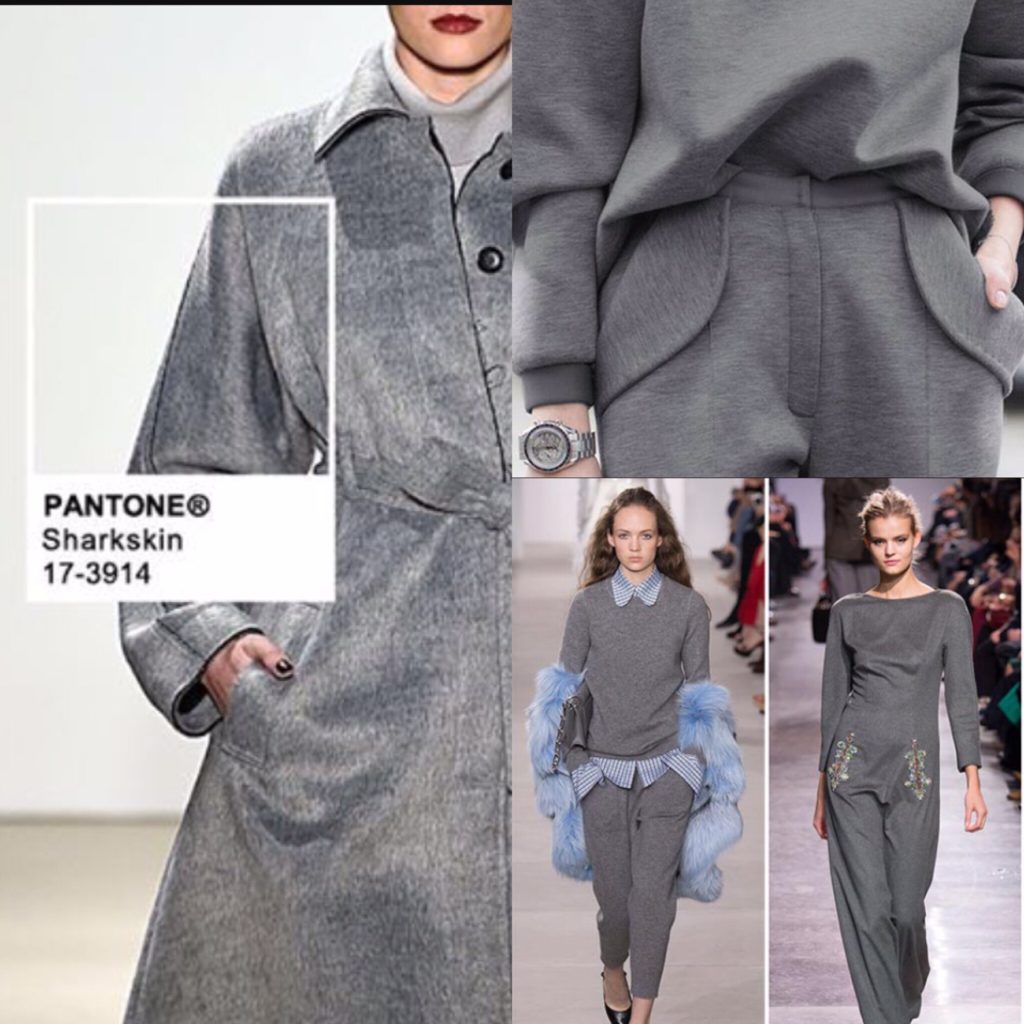
G R E Y
G R E Y
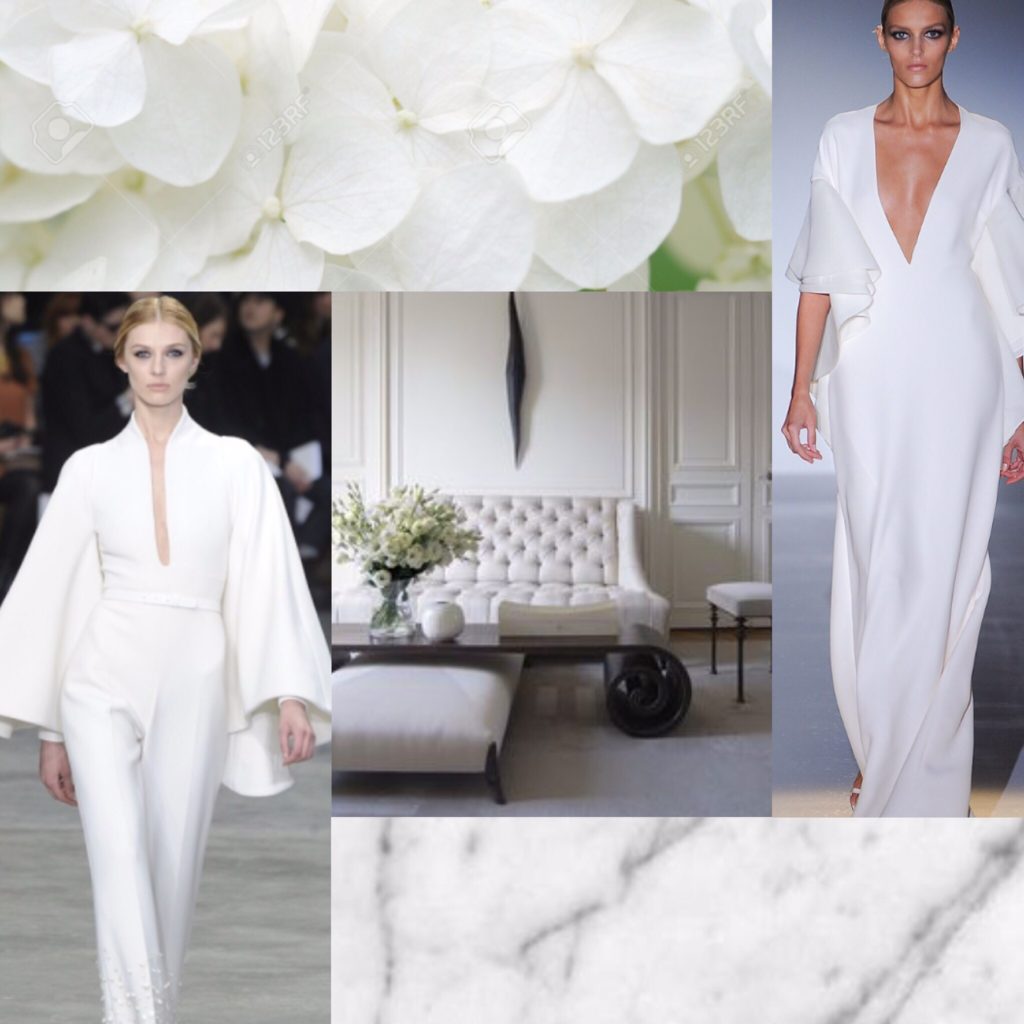
W H I T E
W H I T E
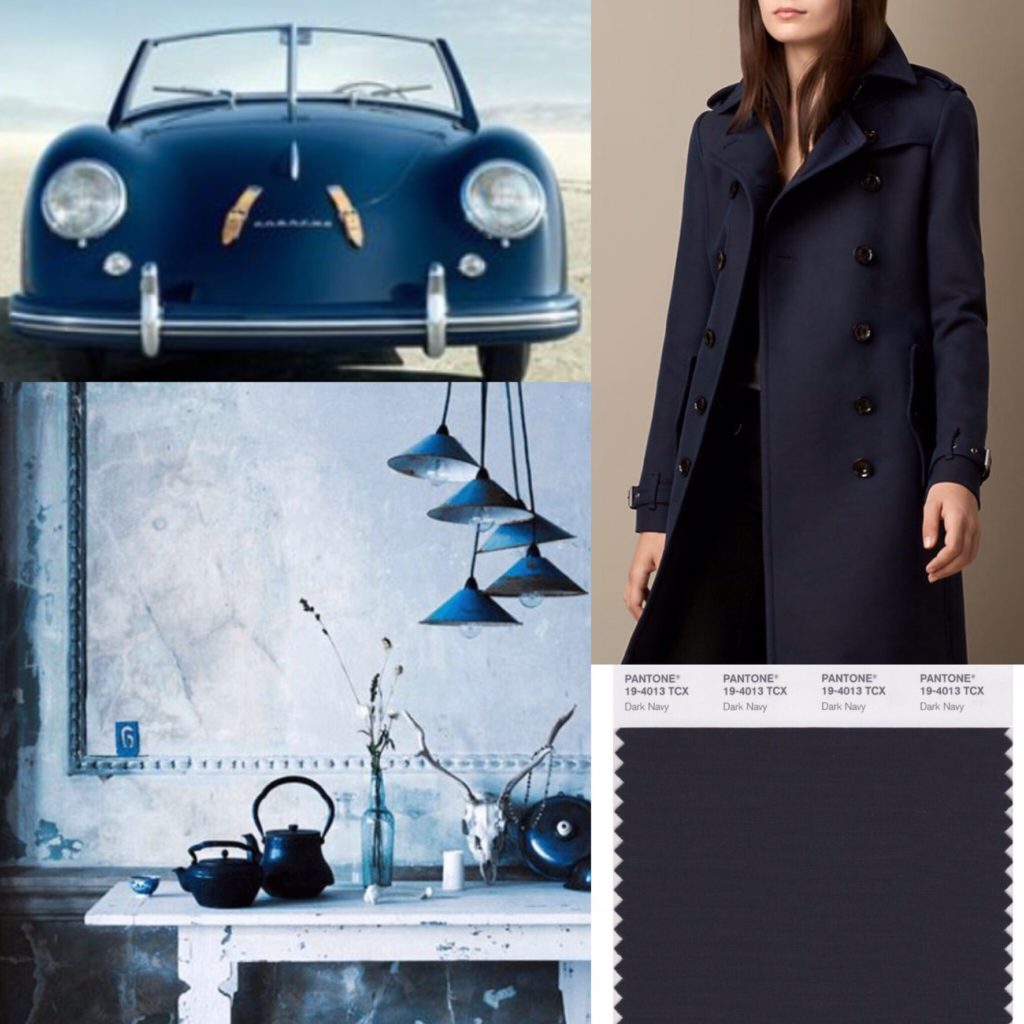
N A V Y
N A V Y
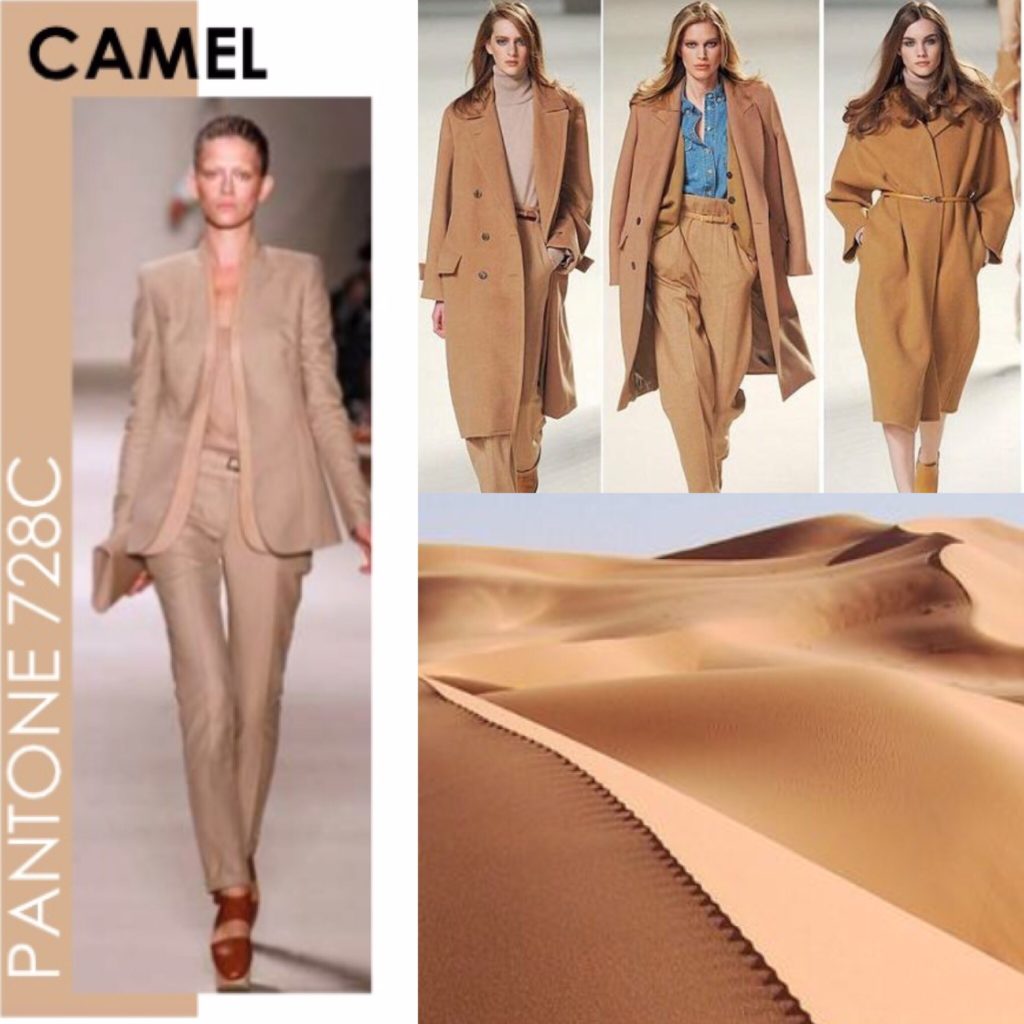
C A M E L
C A M E L

Next, my core colours. The main thing I’ve come to realize is that I like muted, muddled shades as opposed to either jewel tones, brights, or pastels. Basically, take any colour and throw some grey or black into it, and you have something I like. I call them my “complicated colours”. They’re probably not everyone’s cup of tea.

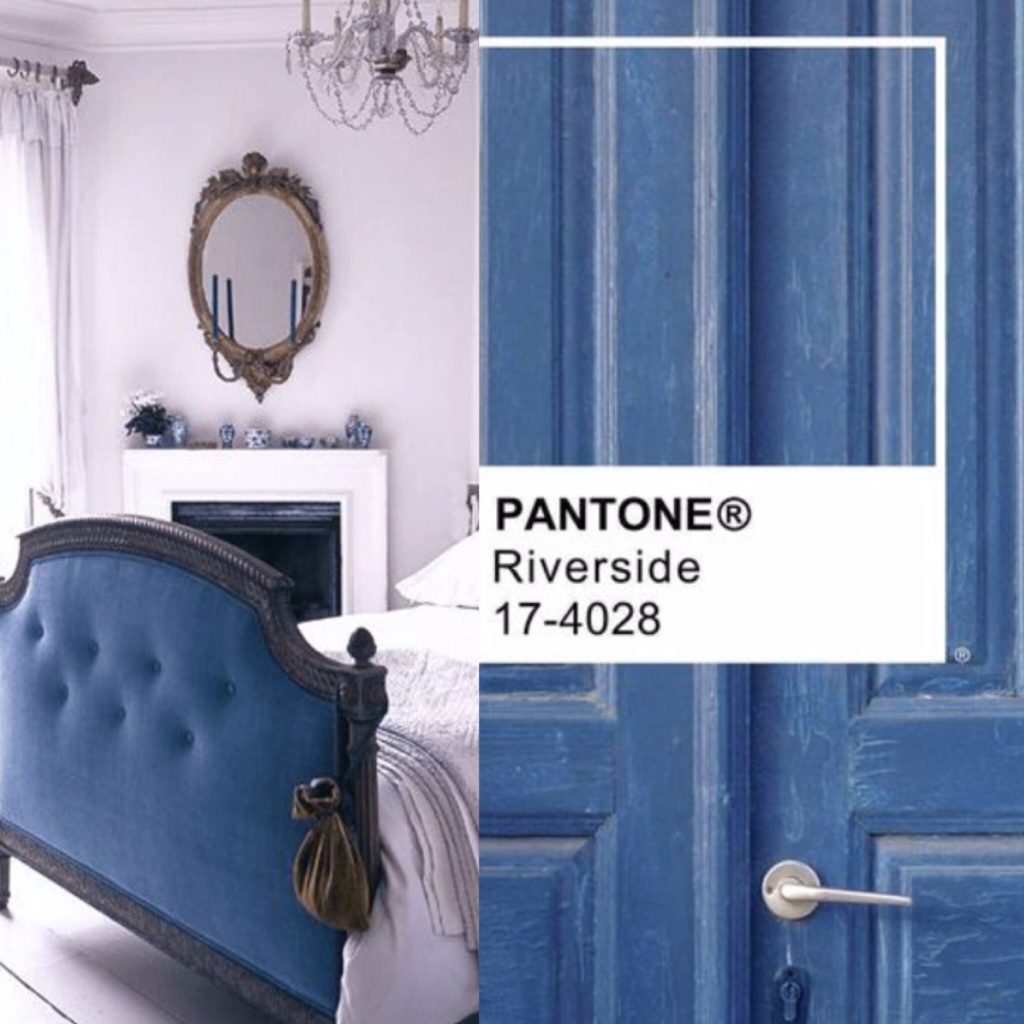
R I V E R S I D E (aka blue #1)

Blue — all shades of it — is my favourite colour, so the idea of narrowing that down to a specific shade was daunting initially. It became a lot easier once I ran across my new Club Monaco sweater dress. That was a blue that just spoke to me at a gut level. I ended up finding echoes of it throughout my existing wardrobe – sometimes lighter, sometimes darker. Pantone has a colour called Riverside that I think is the best approximation of this shade.

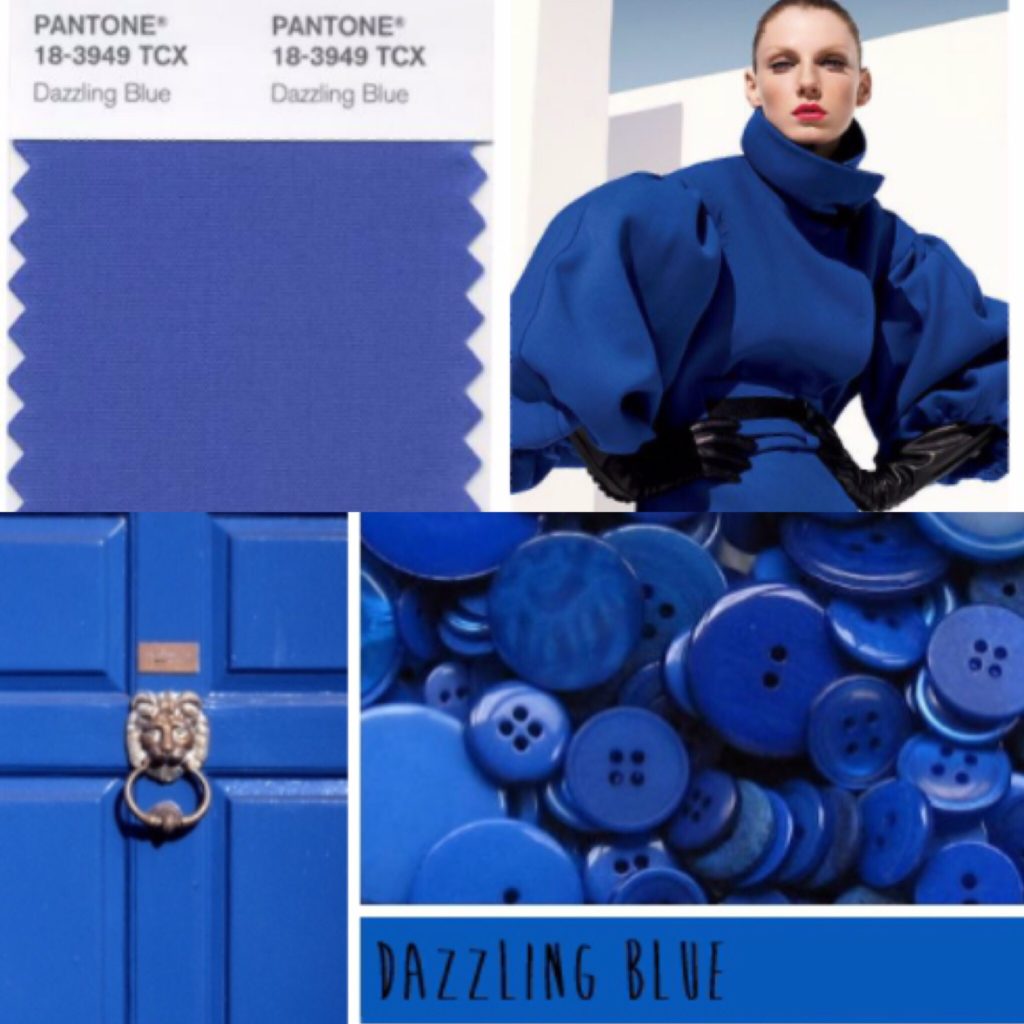
D A Z Z L I NG B L U E (aka blue #2)

In the process of looking for Riverside, I came across Dazzling Blue. To me eye, it almost looks like a more intense, less muddled version of Riverside. I’m obsessed with it. I’m not sure if I need two colours that are ultimately so similar in my palette, but I’ve included it here because … well, I am obsessed with it.

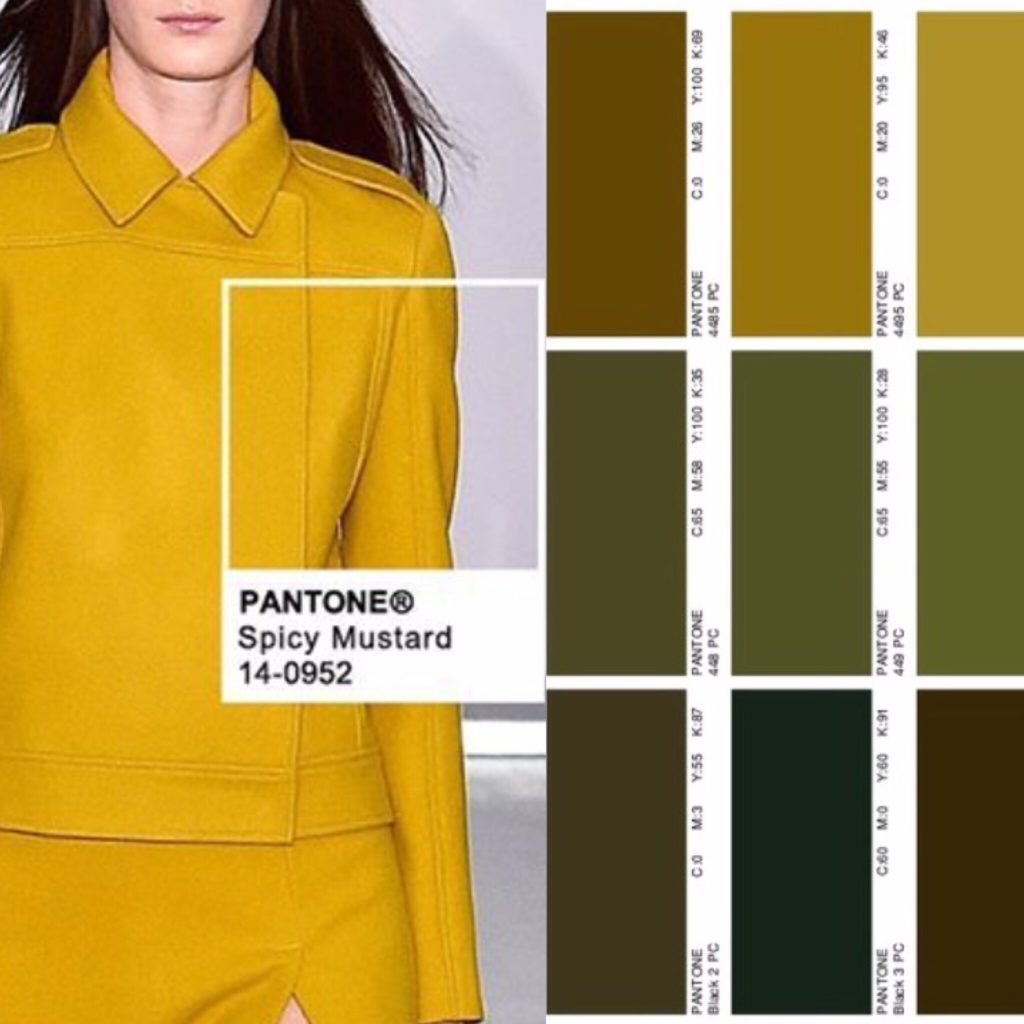
M U S T A R D (and olive, khaki and other mossy/muddy hues)

It should come as no surprise that mustard (or Spicy Mustard, as Pantone calls this shade) made the list. There is a lot of it in my wardrobe. Joining it is a small constellation of related hues on the spectrum between golden yellow and dark khaki (see small sidebar above). Basically anything kinda yellow, kinda green, kinda brown. Olive is definitely included, but that in itself has too many varieties to narrow down to only one shade. With the exception of mustard, none of them draw my eye in the same way that my blues do, but I find them very pleasing in combination with the other colours in my palette. To some extent, these warmer shades operate almost like a neutral for me.

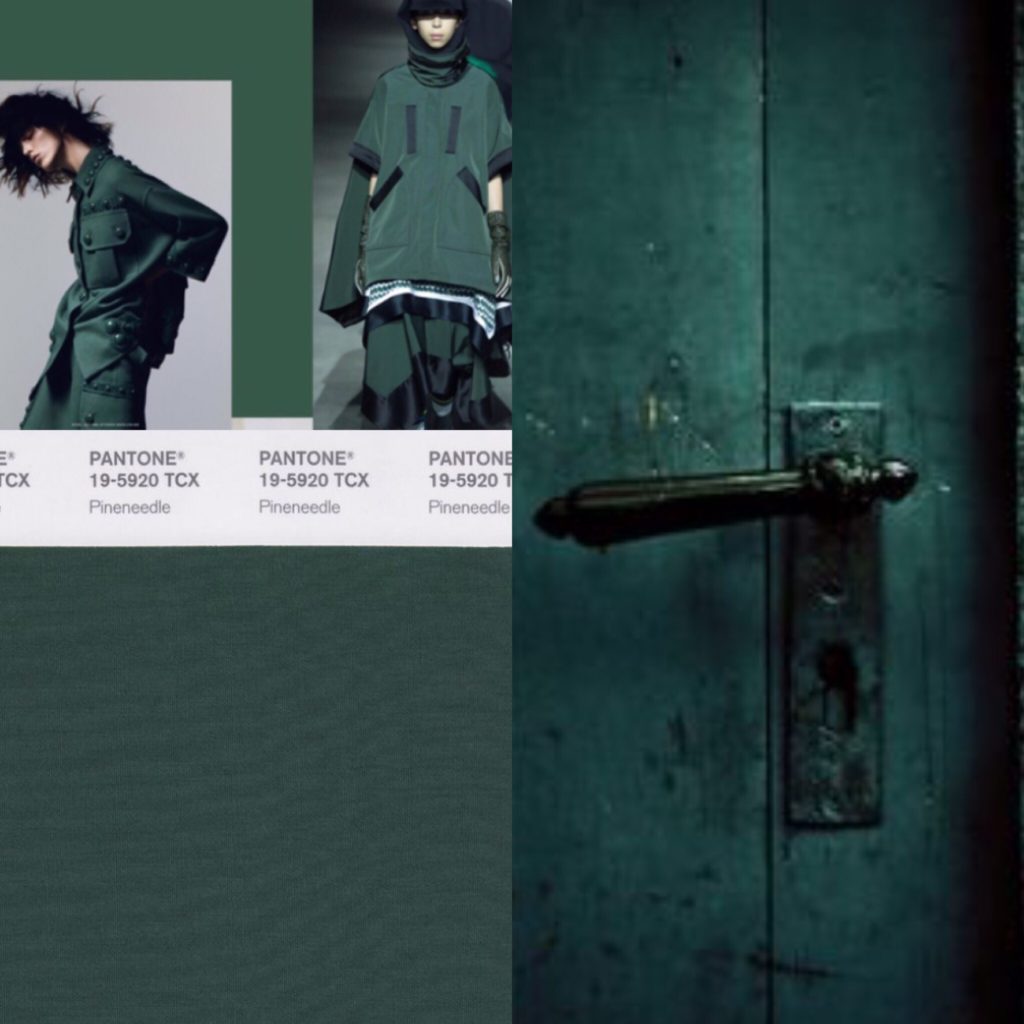
P I N E (aka darkened emerald)

I adore green, but don’t enjoy wearing it. I know, it’s a crazy thing for a redhead to say. The only exception is this dark, mysterious green. It’s kinda like forest green, and kinda like dark teal, but with less blue and more bottle green, and a heart of black. Clear as mud? It was actually quite hard to find photos that matched my imagined ideal, probably because I struggled so much with the search terms. The photos above come pretty close.

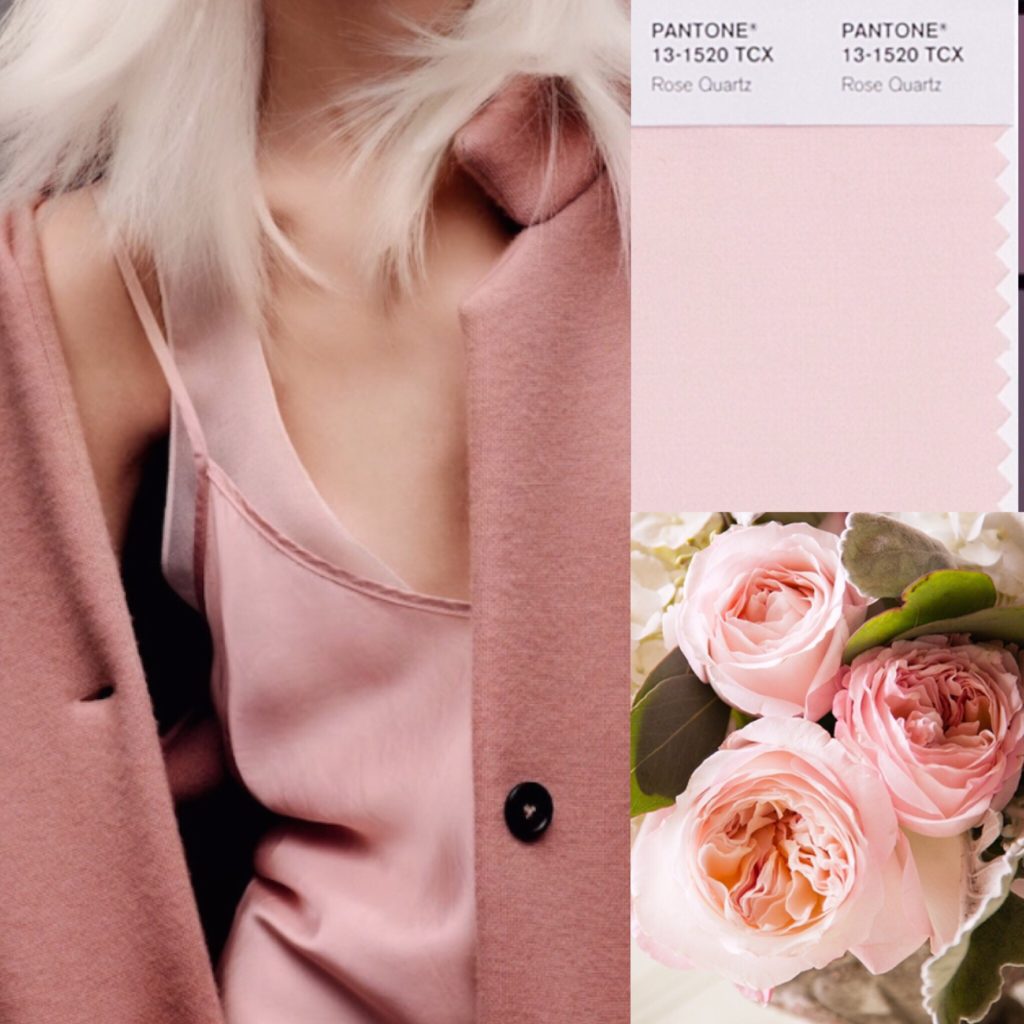
R O S E Q U A R T Z (aka blush pink)

Blush pink (or Rose Quartz, per Pantone) is basically like ivory for me — i.e. close to my skin tone. I’m probably too pale to pull it off smashingly, but I think it works well with my hair colour, and I find it very soothing.

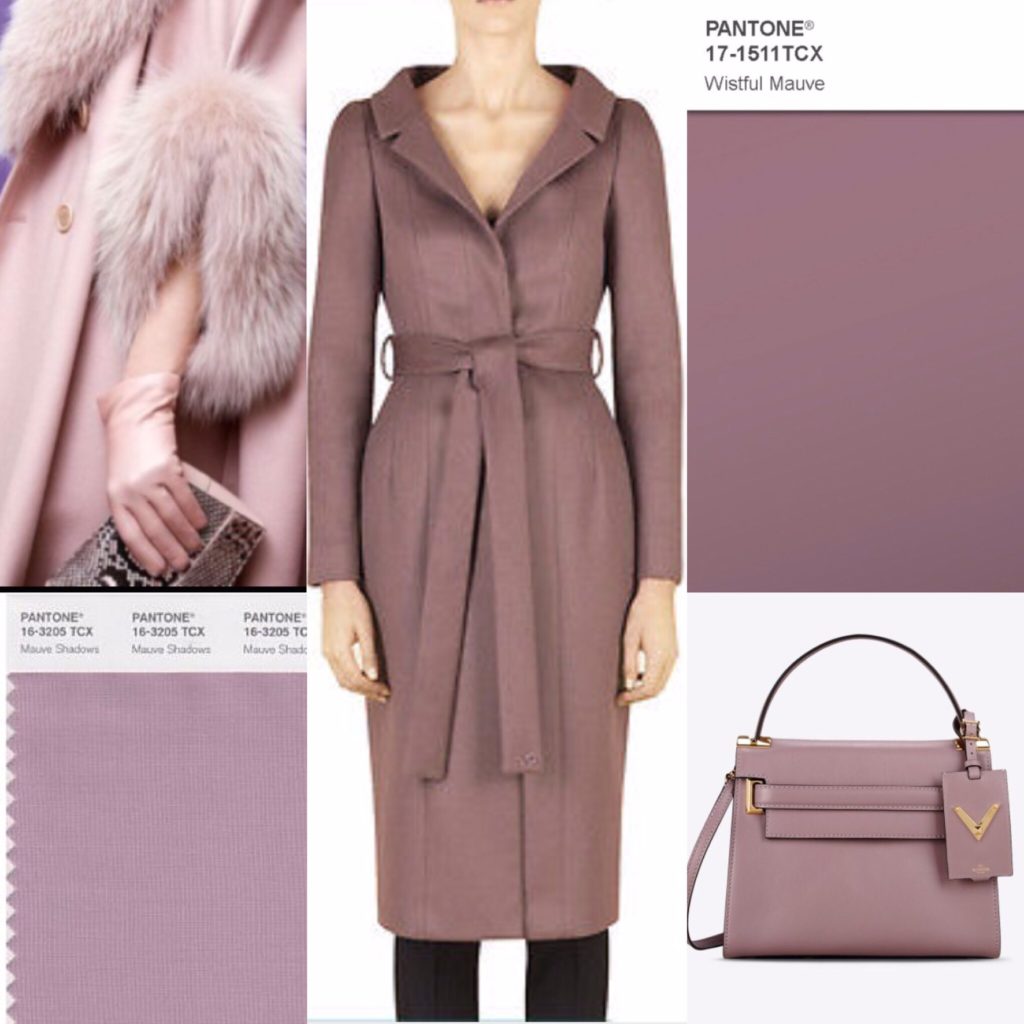
M A U V E
M A U V E

This was another colour for which it was very difficult to find a precise match, but what I have in mind is a very greyed out, desaturated purple.

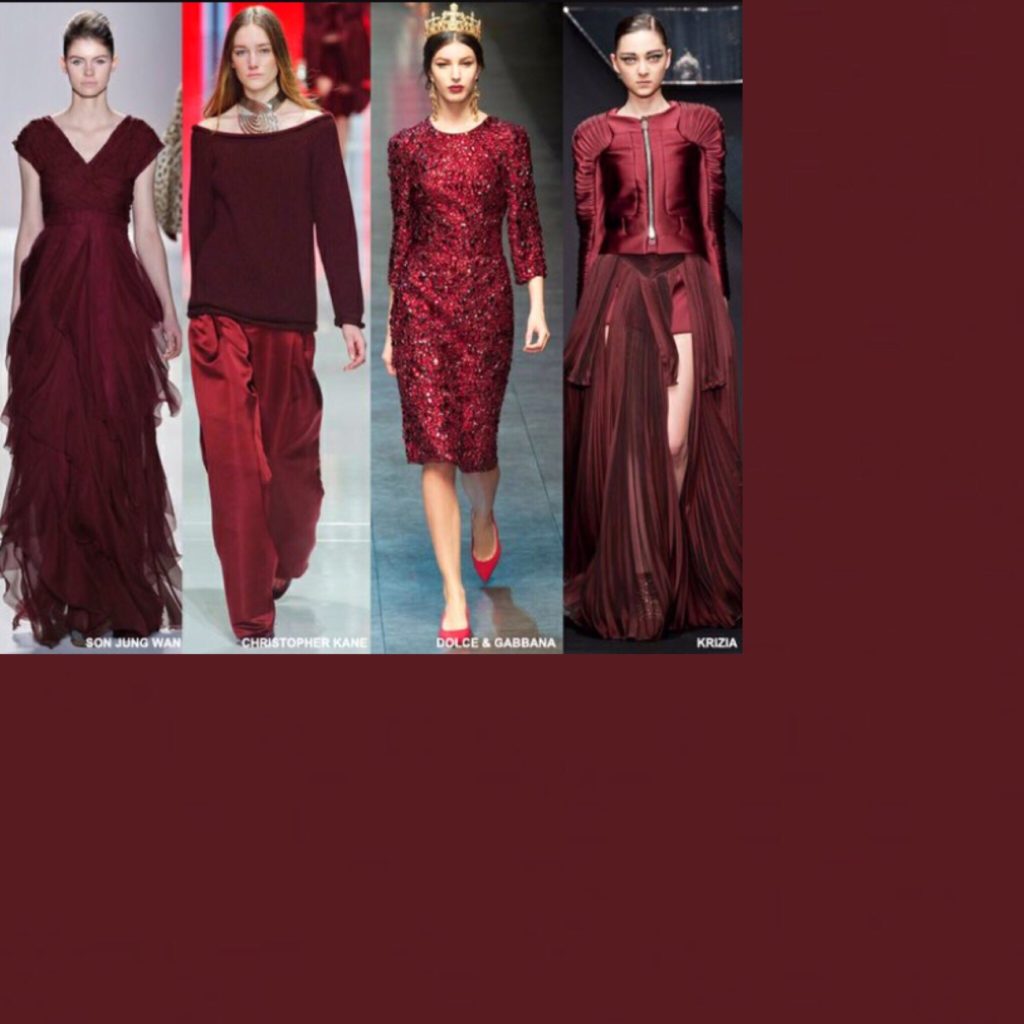
B U R G U N D Y (aka maroon, wine, etc.)

Burgundy, no surprise. I consider it an almost-neutral. Can you tell I got real lazy with this collage?

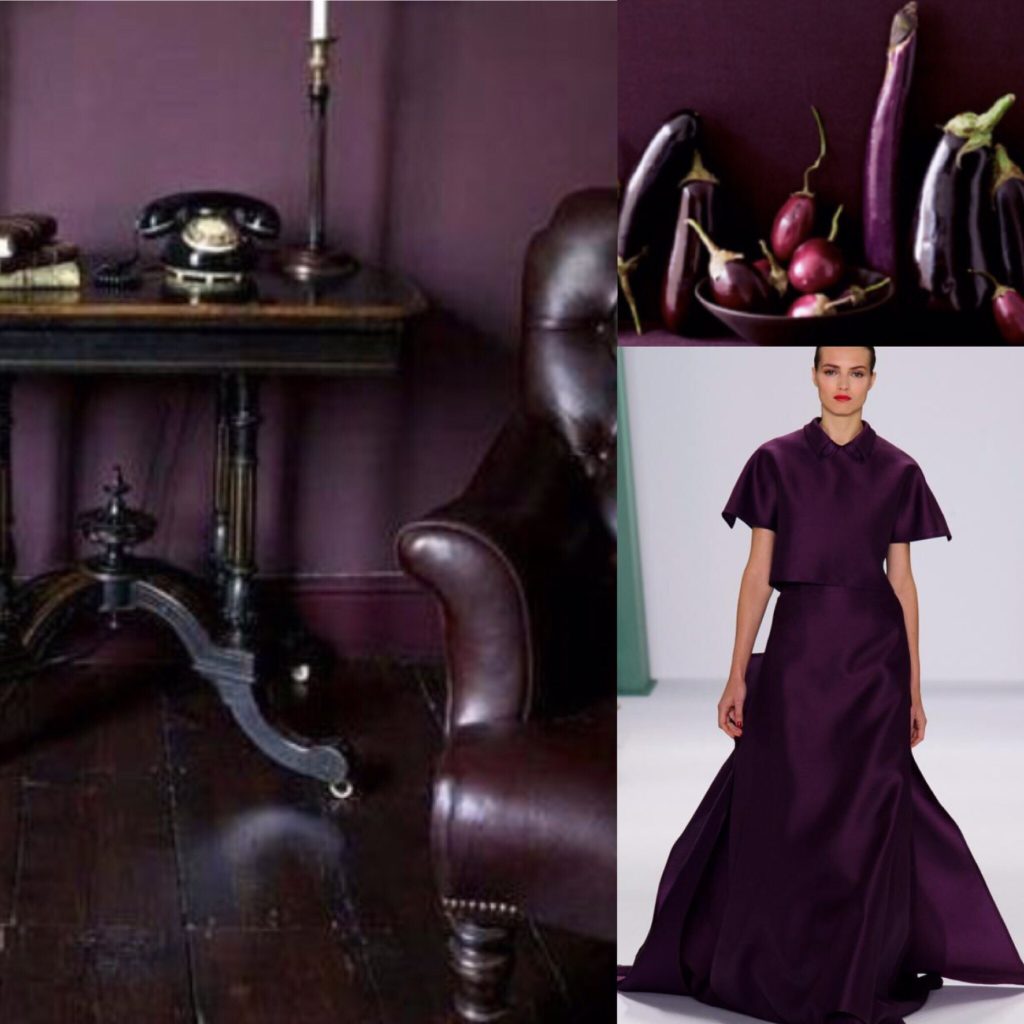
E G G P L A N T (aka plum, dark purple, etc.)

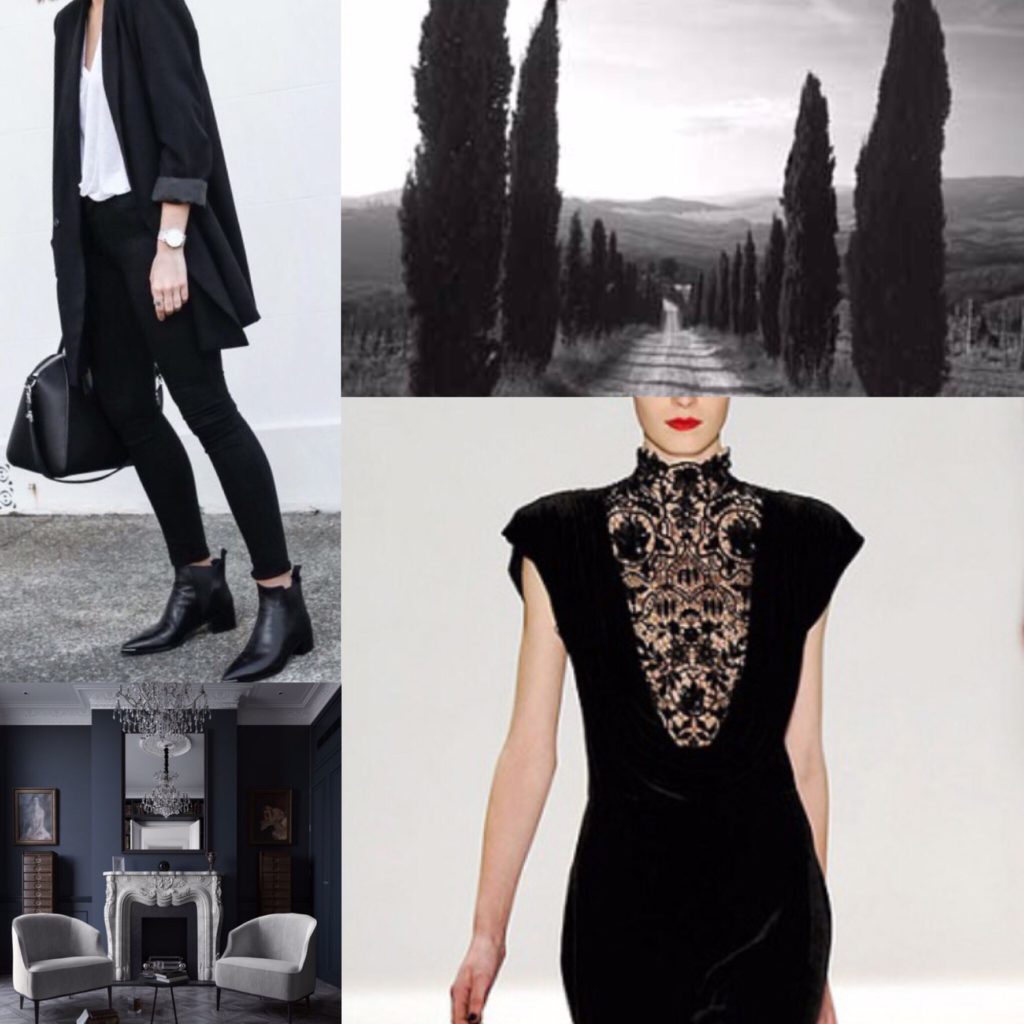
Last but not least, eggplant purple. Again, this is not a jewel tone. It’s darker, moodier (like my soul — zing!). I basically want to wear that magnificent gown (see collage above) everywhere; it’s made for dramatic entrances which, let’s be honest, is #stylegoals right there.

And that is my wardrobe colour palette in a nutshell series of pictures. The only shades missing are red and red-orange, which are my (sparingly used) accent colours.

For those of you who have created a wardrobe palette, I want to know: how did you go about it? Did you find the exercise useful? Did you limit yourself to a set number of colours? And if you’ve had colour analysis done, did you find it worth the price of a consultation?

State of the Wardrobe: Closet Exercises

In my last monthly outfit recap, I alluded to being a bit bored with my closet (or perhaps just looking for distractions) and wanting to tackle a new wardrobe challenge. The usual suspects – like Project 333 and seasonal capsule wardrobe – hold little appeal for me at this point, and I still haven’t found an alternative that looks fun and interesting. What I have been doing in the meantime is think about ways to pare down my closet and become more intentional with new (thrifted) purchases. Even as I go through this process, I know that, at a certain level, it’s futile. What underlies my organizational urges is the desire to control my environment (hello, my name is Type A, nice to meet you!) – a desire that will never be fully satisfied because life doesn’t work that way. But, since this blog is a place where we can all analyze the minutiae of our sartorial lives in glorious detail, I thought I would share some of my process/thoughts on the off chance that some of you might also be interested in looking at your wardrobe situation from new perspectives.

First, let me say that my process is a bit of mish-mash of exercises gleaned from a variety of sources, including Into Mind and Colette HQ’s Wardrobe Architect Series (thanks *** for the recc!). I claim no credit, and zero originality. If this topic is of interest to you, I highly recommend checking out those wonderful resources – and if you have others, feel free to leave your suggestions in the comments. Onwards!

Developing A Vision

I’ve talked before about how much I have struggled in the past with the (self-imposed) task of defining my personal style. I don’t think I’m the only person who’s found it near-impossible to approach that question head on. There are so many plausible answers; it is especially difficult, I find, to distinguish between the person you would like to be and the person you actually are. Side-stepping a potential philosophical morass, I’ll simply say that approaching the issue indirectly has been infinitely easier.

I know the “mood board” is a popular concept, but I find it unhelpful, and here’s why: counter-intuitively, I am more inspired by photos of styles different than my own. When I look at those kinds of outfits, I find it easier to analyze them, piece by piece, and identify what I like, what I don’t like, what I could borrow, what I would tweak, etc. Faced with a photo of an outfit I want to emulate, I lose my critical facilities. For me, a mood board would quickly become a “make this outfit happen NOW!” exercise in frustration. And often, the outfits over which I drool are not even necessarily things that would work for/on me — the person wearing them simply exudes some quality which I long to embody.

So, rather than distract myself with pretty pictures, I chose to think about the following questions (from the Wardrobe Architect series) indirectly related to personal style:

When you are wearing your favourite clothing, how do you feel?

Confident, comfortable in my own skin, elegant, polished, comfortable. My clothes are a second skin, if that second skin was an invincible, aesthetically pleasing armour.

When you are wearing something that is not quite right, how do you feel?

Ill at ease, uncomfortable, over-dresses/under-dressed, shabby, fussy. I am everyone’s poor cousin from the country.

Who do you consider to be your style icons? What is it about them that appeals to you?

Cate Blanchett, Tilda Swinton, Audrey Hepburn, Michelle Obama. They are not so much style icons — they each have their own style, which is not necessarily mine — as women whose style I admire. Their style seems natural, instinctive … dare I say it, effortless. They exude confidence and a rich inner life, a mystery that arrests your attention.

What are some words that describe styles that you like in theory, but are not quite you?

Gamine, minimalist, WASP-y

The Anti-Style Persona

Using some of the answers to the questions above, I decided to create a list of things that are definitely NOT “me” — the outlines of an anti-style persona, if you will. This was a very easy exercise, and I’ve been using the list extensively when I go shopping these days. It has been tremendously helpful to focus on these “no go” criteria when assessing potential buys versus the more amorphous and ill-defined concept of my personal style. (I find it easier to justify buying something if the question is “where would I wear this?” because I am very good at coming up with creative answers. Blame my inner writer.) Here’s what I’ve got so far:

– ruffles
– bright green (OK in accessories)
– skater dresses
– peep toe shoes
– coral
– flared pants
– pussy bows (long-standing prejudice, fwiw)
– low necklines
– neon colours
– body-conscious silhouettes
– very full skirts
– bright orange
– animal prints (except leopard print shoes)
– pastel colours (except blush pink)
– round toe flats
– mini skirts
– round cowl neck tops
– fussy details
– low waisted pants

It’s a work in progress. I also have a list of “probable no’s” — things I’m currently considering adding to the above list.

– turquoise (I love the colour, but not on me)
– shorts (I generally hate short hemlines, could live without shorts in the summer probably)
– wrap dresses (this one hurts, but there is literally one wrap dress I enjoy wearing — not a DVF)
– bootcut jeans (I’m a ride-or-die skinny pants lover, but may embrace these again?)
– deep V necks (they don’t do much for my very modest bust)
– platforms (not a huge fan of walking in these, and they seem to go in and out of trend every so often)
– jewel/bright purple (I love other shades better on me — see below)
– cardigans

Cardigans are my main experiment right now. I find them more comfortable to wear than blazers, but don’t love the look anymore. It reminds me of old Adina, who was hardcore librarian chic. I rarely wear them anymore, and probably would not buy new ones, but I’m trying to decide whether to exclude them from my outfit formulas (see below) for good or not.

Wardrobe Analysis

Also in conjunction with the above, I decided to update my wardrobe colour palette, and my core silhouettes (a concept explored by both Wardrobe Architect and Into Mind).

Wardobe Colour Palette

Got this narrowed down to 17,  including neutrals, core and accent colours I should probably split the “blue” category, but that would add at least 3-4 more colours to the mix so … maybe not.

Neutrals: black, grey, white, navy, camel
Core: blue, mustard yellow, dusty purple, burgundy, teal, orchid, forest green, olive, plum/eggplant
Accent: red, persimmon

Core Silhouettes

These are my core silhouettes, aka outfit formulas:

1) sheath dress + blazer
2) A-line dress + blazer
3) skinny pants/jeans + camisole/top + blazer
4) skinny pants/jeans + shirt + sweater
5) skinny pants/jeans + casual top + casual light coat
6) skinny pants/leggings + tunic top + coat/blazer
7) pencil skirt + camisole/top + blazer
8) pencil/A-line skirt + sweater

These can be adjusted for weather (more or fewer layers) and occasion (casual vs. dressy options), but basically describe 95%+ of my outfits. As much as I enjoy experimenting, I think I need to remember that there is a reason why I always end up gravitating to these silhouettes over others — they simply work best for my body and lifestyle. The results might not be Vogue material, but will hopefully make me feel, what else, but comfortable in my own skin.

Ok, your turn. Know a fun wardrobe challenge? I’m all ears. Alternately, have you done any closet exercises similar to the above? I would love to hear any success stories/style epiphanies.