Month: August 2018

What I Wore: August 17-28, 2018

Extra, Extra

442ABD1A-B6B2-421C-B3F8-21E9EBB44F2B

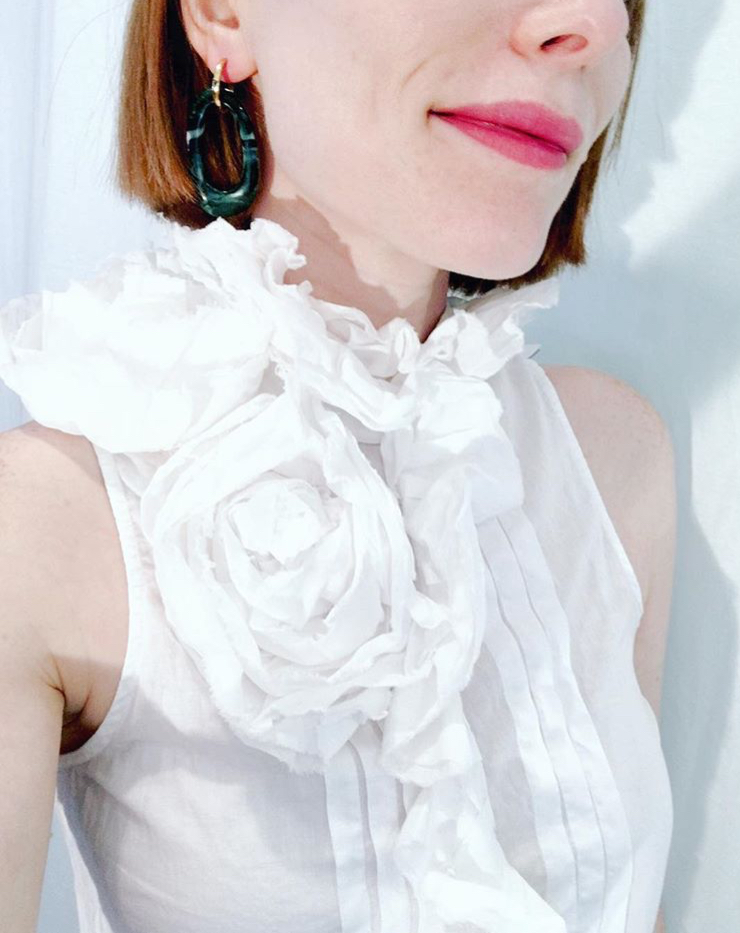
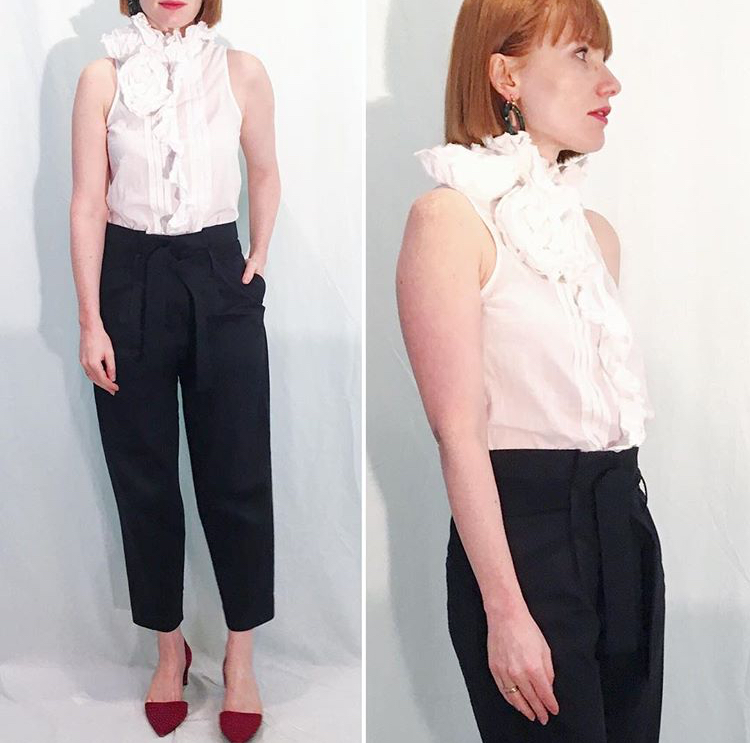
I mean, come on. This AllSaints shirt is as extra as they come … and it’s fabulous. I knew it was a keeper as soon as I picked it up, without even seeing the label. I love the shape & volume of the neckline with the large rosettes creeping up the shoulder. I don’t typically do ruffles, but I was immediately drawn to the drama here. They don’t look particularly “cute” to me, which is key; I further de-twee-defied the look by adding these boyish cut trousers by COS, which just happen to be my current faves. They’re incredibly comfortable and easy to wear, and I am low-key panicking about finding a replacement pair soon, given my current frequency of wear. I also added my birthday earrings, because why not double down on big statements:

15706315-4E19-4114-9A2D-AE98921B7FAB

On Repeat/strong>

8F43BE7A-DE91-4B4A-B2C1-54F525412DD3

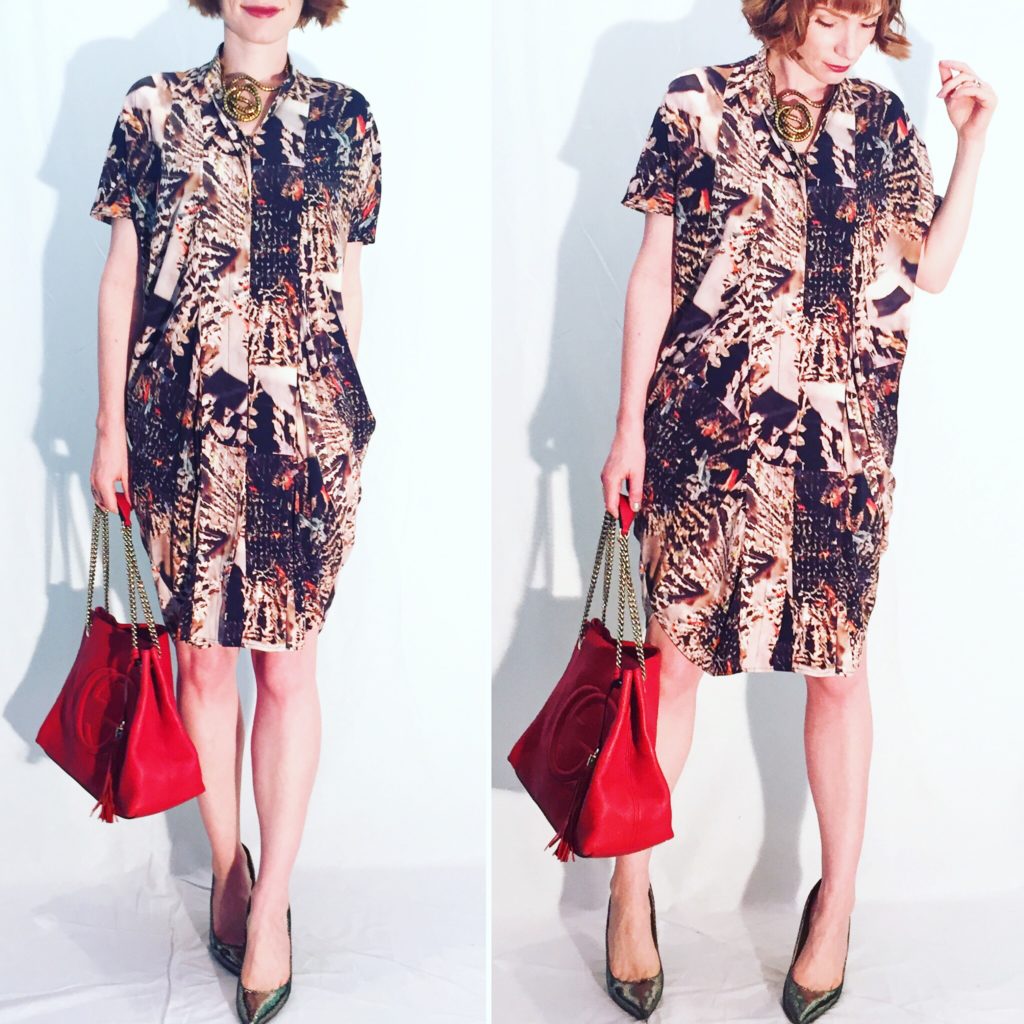
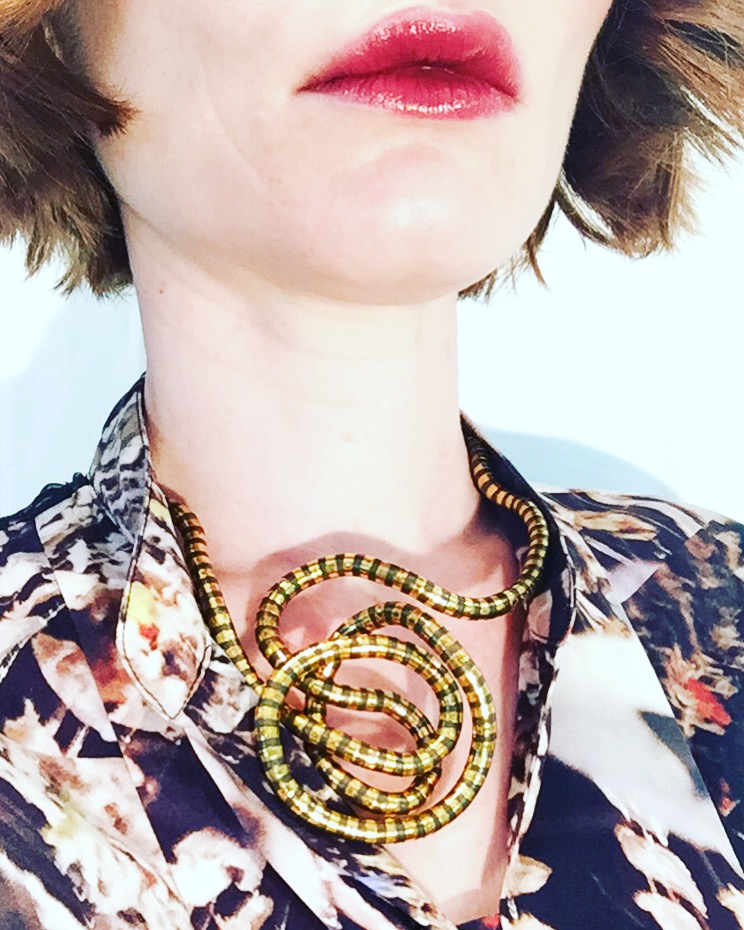
You guys know how much I love this dress, and here it is again. It’s a funky shape, for sure (you can see that better in this photos) but such a breeze to wear. I paired it with a fun, twisty necklace – it bends into any shape and can double as a fidget toy in a pinch.

A991D629-6524-4F43-960D-24219A8D6A2B

Smoky

2EDE4310-B7B5-4758-8167-1AE834E8F5C4

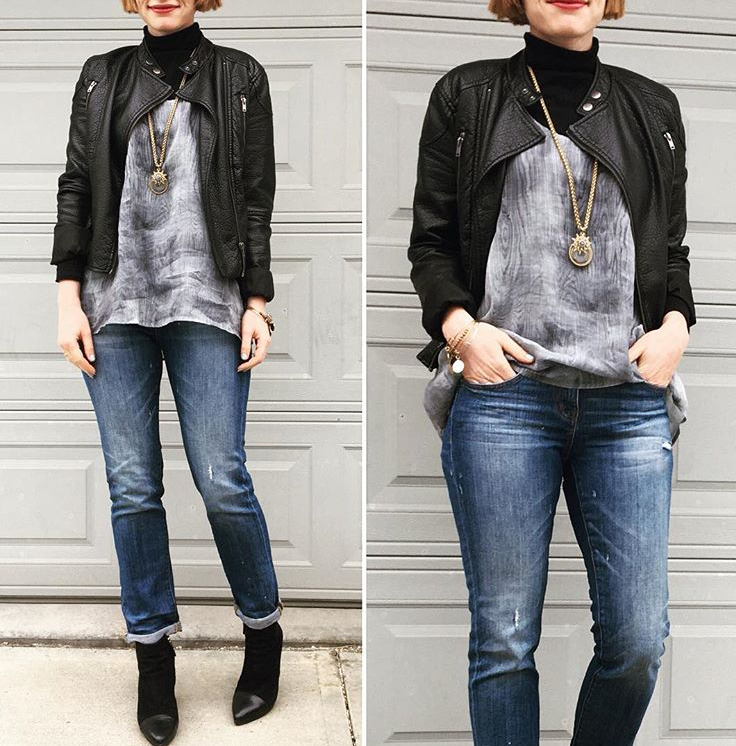
Not talking about the air quality around here (but also apt) – I’m talking about this Eileen Fisher top.Technically, it’s a wood grain print, but the colour paired with its filmy texture makes me think of swirls of smoke. Kinda badass, which is not necessarily the adjective I’d normally associate with EF. Paired with my trusty (and old) Madewell jeans, Club Monaco turtleneck, and Joe Fresh leather jacket, it added up to the perfect relaxed outfit for a (chilly) evening hanging out with friends.

A Different Take on Leopard

BE65D8B5-A580-4426-B67B-C6F259BBBD6B

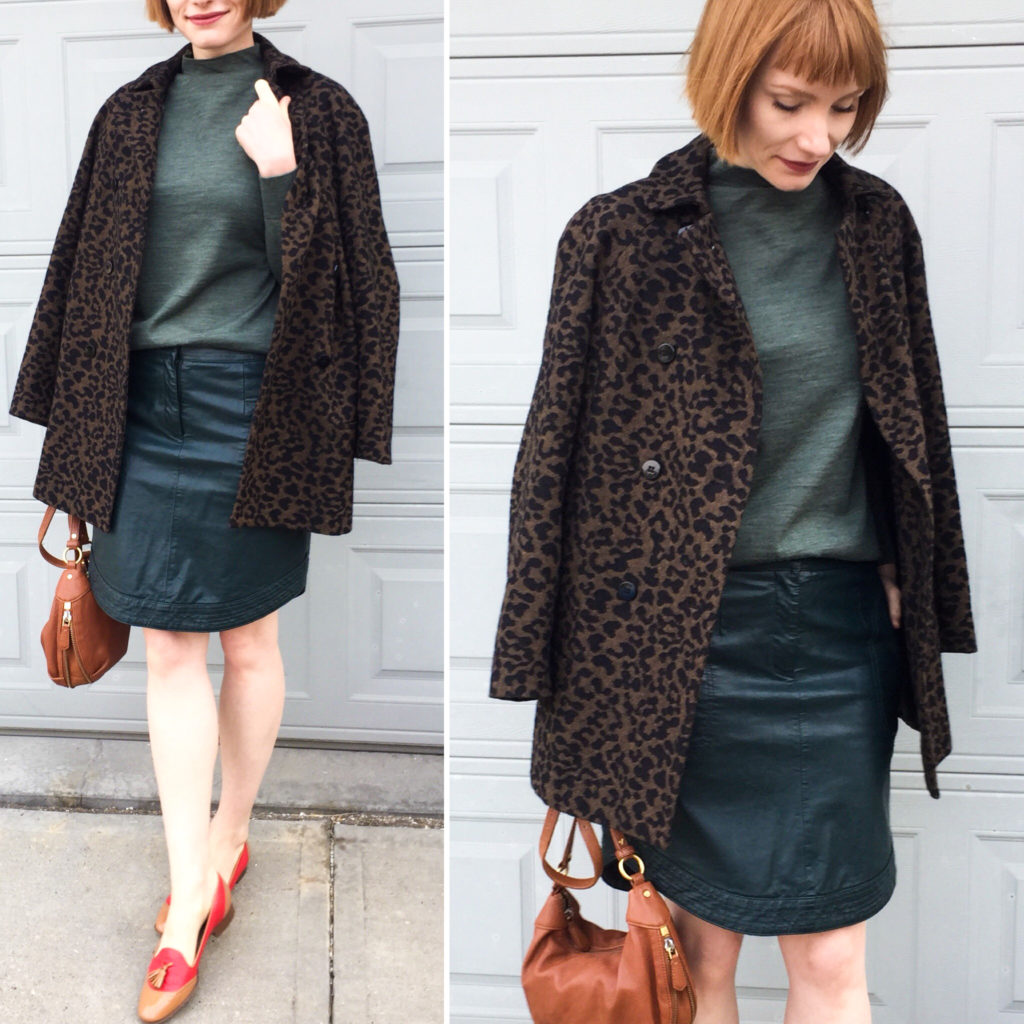
This outfit was a bit of a style risk, but I was not displeased with how it turned out. It was a cold morning, so I needed a jacket for practical reasons, but I was initially stumped for options. Black would have been an easy default, but I didn’t think it would add much to the outfit, nor do justice to the lovely dark green of the (faux) leather skirt. I wanted something that would offer a bit of contrast, but not a bright colour. That’s when I remembered this Zara coat; it’s a subtle take on leopard print (if such a thing exists) and it possesses surprising chameleon-like qualities. Here, it’s practically a neutral, letting the green take center stage. I added some cognac accessories to pick up on the brown and, voila: a slightly mod take on the Bohemian.

How I Organize My Archive Closet

A reader recently asked me about how I organize my overflow or “archive” closet, which I thought was a topic that others might enjoy. Before I talk about my methods, let me define what we are talking about. Separate from my closet, I have a secondary clothes storage area – a small rack in the basement – where I keep clothes that are not part of my “current wardrobe”. I do not separate in-season and out-of-season clothing (with the exception of outerwear), as most of my items can be worn year-around. This is why my overflow closet is truly more of an archive than anything else. It’s where I keep things that I don’t wear anymore, but which I am not planning to purge in the short-term.

How do I decide what goes into the archive? And what happens to it? Read on.

What Gets Archived

Broadly speaking, there are 2 categories of clothing in the archive: things that don’t fit anymore, and things that aren’t my style anymore. Needless to say, in both cases, these are things that I still like a lot – otherwise, they’d be gone lickety-split; my general rule is to purge any pieces I don’t wear or foresee wearing in the near future.

A quick aside about out-of-size clothing. In general, I don’t believe it keeping clothing that is too small; at a psychological level, I don’t like to put myself under expectations of losing weight. That approach has bit me in the backside only once (I didn’t end up losing pregnancy weight until 1.5 years after my daughter was born, long after I had purged a bunch of smaller clothing), but I don’t think it will happen again given my current circumstances. My weight has been stable for the last 3 years or so, but if it were to fluctuate in the future, I would expect it to go up (and then hopefully rebound to current level) rather than go down. With that said, my approach following weight loss would be to keep clothing in larger sizes – particularly classic staples like favourite blazers or black trousers – around for a bit longer than the usual 3-6 months, just in case. We are talking 12-18 months, tops. Fashion cycles pretty quickly, so for potential weight fluctuations that are more than 2 years down the line, I will take my chances with whatever is available in stores at that point.

In light of the above, you shouldn’t be surprised to know that most of my archive closet is devoted to “out of style” rather than “out of size” clothing. Out of style clothing is stuff that I used to love but that doesn’t fit my current aesthetic. Of course, to make the cut – because I can’t keep everything – they have to meet the following (loose) criteria:

1.Must have been an old favourite piece AND

2.Must be either (a) a truly classic staple; (b) a unique piece; or (c) a high-end designer.

I will confess that a good chunk of my “out of style” archive is composed of old Anthro pieces, which fits mostly under 2(b) above.

There is actually a third category of stuff in the archive closet, which is comprised of my special occasion (i.e. cocktail) dresses. Technically, these are part of my “regular wardrobe” but they take up a fair bit of room, and I don’t need them to clutter my small (working) closet.

How the Archive is Curated

Because my everyday wardrobe sees a fair amount of turnover, my archive closet receives a regular stream of contenders. To keep it at a manageable size, I edit/purge/curate it 2-3 times per year. This is not an easy process for me. Pieces that end up in the archive in the first place are things to which I have a strong emotional attachment; plus, they are already non-functional, otherwise they’d be in everyday rotation. So the usual rules for editing don’t apply. Over time, I have found that the best way to avoid long-term regret is to ask this two-part question:

How easy and how expensive would it be to replace this particular item?

It’s important to consider both parts, and to understand precisely what you would be looking to replace. Some things are easy and inexpensive to replace, regardless of retail cost, in the sense that there are other, cheaper iterations of the same thing readily available in the market. I try not to get attached to labels; if the only reason why I’m keeping something is because it’s a specific designer … I should not be keeping it. If it’s a specific designer and superior quality (not always a given) – or a specific designer and an unusual pattern or silhouette – that’s another story.

What about things that are easy but expensive to replace?

For example, as I mentioned above, I have a few Anthro pieces in my archive. These tend to be from the 2010-2015 era, and have some details that make them unique in my eyes (typically, the print). They would not be easy to replace with something I could purchase at the mall in 2018 – while I could get another floral print skirt, it wouldn’t be that particular floral print, and it’s that particular print that makes the skirt special to me.

However, it would not be too difficult to find these pieces online – on eBay for example. (Being Canadian, I don’t have access to Poshmark, more’s the pity.) Some “old” Anthro pieces can be found for reasonable prices on eBay; some can be surprisingly expensive. If I paid <$20 for a dress that is currently listed for $80 or more, I will probably hang on to it for a while. Every 6 months or so, I will re-evaluate if I still love that piece enough to justify having it taking up space in the archive. If I’m still undecided about something that’s been sitting in the archive for more than a couple of years, I will also throw another question into the mix: how much money could I reasonably expect to make if I were to sell that item? Sometimes, $50 in hand is worth more than the hypothetical $100 it might cost to replace the thing down the line if I come to regret selling it. The key with all of these questions, is to take the emotional component out of it, and think as pragmatically as possible. As soon as I start thinking about what an item means to me, outside of its (replacement) value, things tend to go south quickly. I’m a sap. There are a few things that I likely will never get rid of. My Louis Vuitton Alma MM bag is a good example. I don’t use it currently, and I don’t foresee using it regularly any time soon. It’s in fantastic shape and I got a great deal on it years ago. If I were to try to re-sell it now, I would probably make my money back even after accounting for consignment fees, but I would never be able to replace it for the same amount. It’s a bag that could become a classic in time, so I prefer keep it around and pass it down to my daughter (or granddaughter) someday. I don’t have a lot of pieces that fall into the category of “fashion heirlooms”, but this is probably as close as it gets. If you have something like my archive closet, I would love to hear about how you use it. And if you’ve got other wardrobe management question for me, hit me up in the comments.

We Did A Thing, Vol. 10

This past January marked 8 years since my husband and I bought our home. It’s hard to believe that we have spent almost a decade – our entire married life – in this place. One, because I have trouble understanding how EIGHT WHOLE YEARS could have passed without my feeling any older; and two, because most of the people we know have moved on – usually to newer and/or bigger homes – during that time. [I guess I could have added a third to that list: the fact that some of the projects we started when we moved in are still not, um, quite finished. Ahem, the-basement-of-which-we-shall-not-speak-again.] But here we are, still keeping the promise we made all those years ago to “never move again until we’re 60”.

Making do, as it were, has never been a big problem. With 2 growing kids, our 1,600 square feet of livable space feel a bit more cramped than before, but it’s also about as much house – and maintenance – as we can handle as busy working parents. What we have been slowly doing over the past decade is to make-over our home to make it better suited to our needs and tastes. Emphasis on “slowly”. Sadly, as much as I bemoan this fact with every project, life is not as speedy and convenient as an HGTV show, especially when you’re relying almost solely on sweat equity. On the bright side, my marriage has now survived a number of home DYI projects, so I think we’re doing pretty well.

It helps a lot that my husband and I are on the same page (mostly) when it comes to interior design. We both like a mix of Scandinavian Neoclassic (Gustavian) and Mid-Century Modern influences. The fly in the ointment, so to speak, is that we have what you might call champagne tastes on an IKEA budget. This is problem #1.

As far as décor goes, that mostly revolves around my various collections. My husband kindly indulges my collecting habits, which is a relief because (A) I have a few, and (B) it’s not hoarding if we both call it a “collection”. [I indulge his collecting, so we’re even. It also means that our garage is full of partially functioning vintage cars.] The tricky thing is finding space for all of my well-loved treasures. This is problem #2.

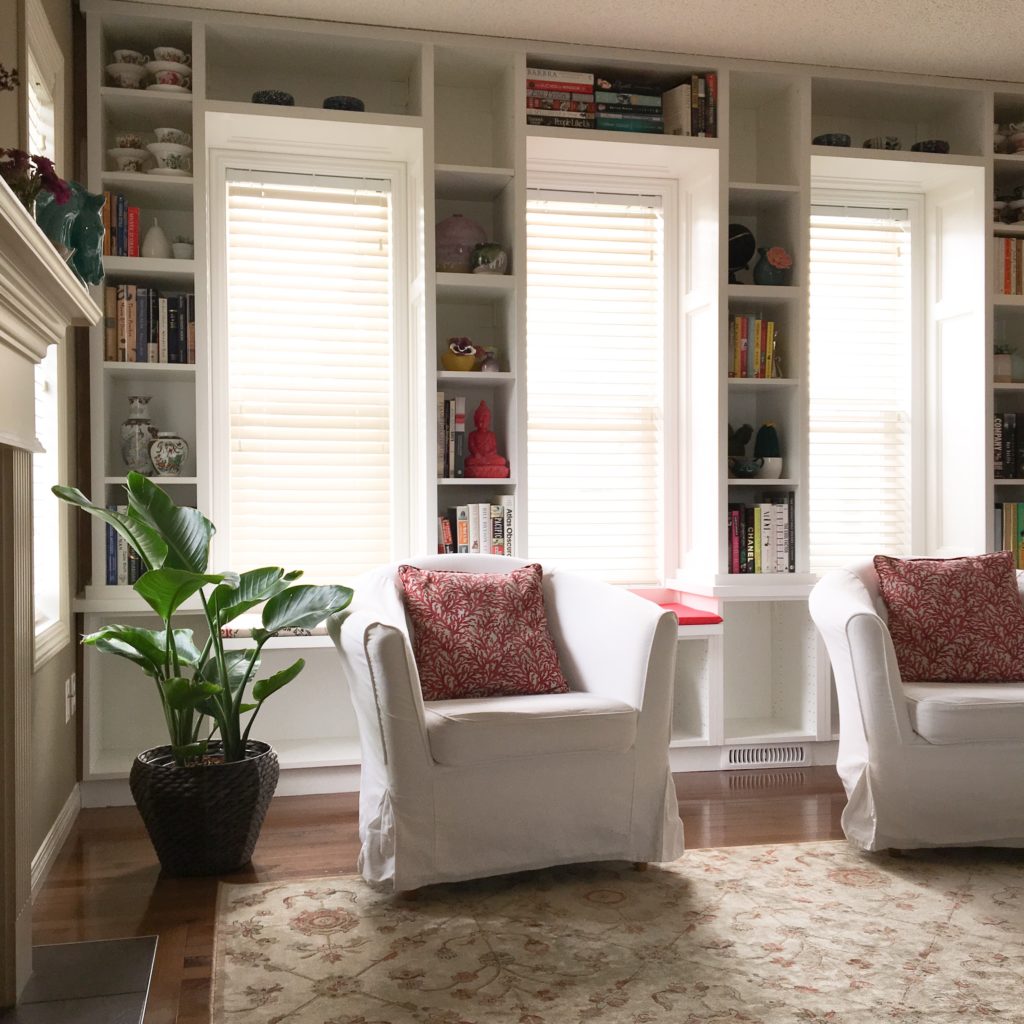
We have made various solutions to these problems over the years, most of them involving some form of built-ins. Our house is a builder’s basic package, so it came pretty much bereft of any architectural charm or distinction. I like built-ins because they add some character, not to mention functionality to even the most undistinguished of spaces. I loved how the built-ins that my husband constructed transformed our family room and master bedroom; last year, I decided it was time to work the same magic on our living room.

I have written about the evolution of our living room before. Adding built-ins around the windows seemed like a logical next step, both as an aesthetic choice and a practical one. As it was, the space was underutilized; built-in would give us more storage and more seating options, particularly when hosting.

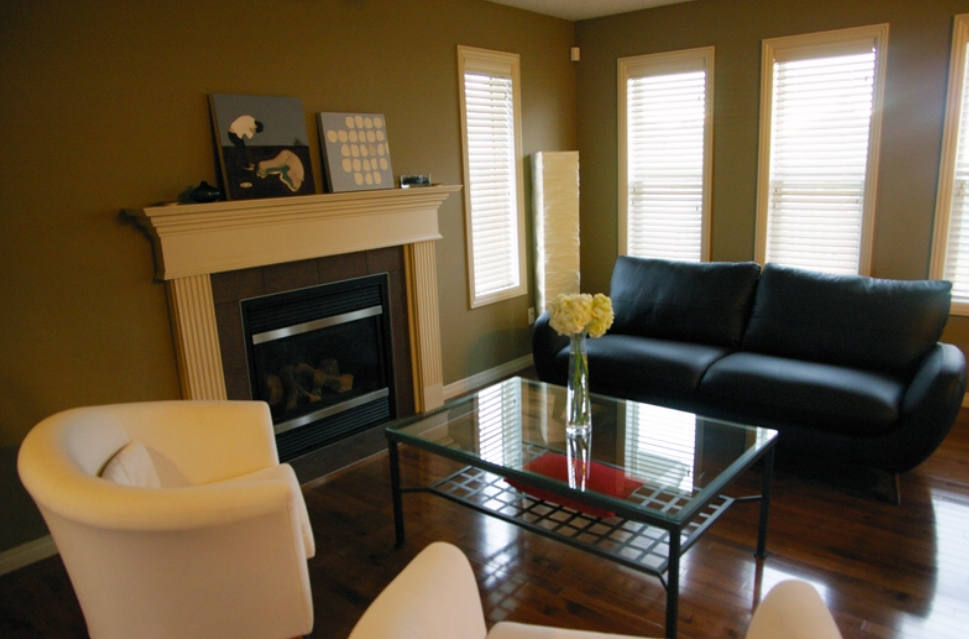
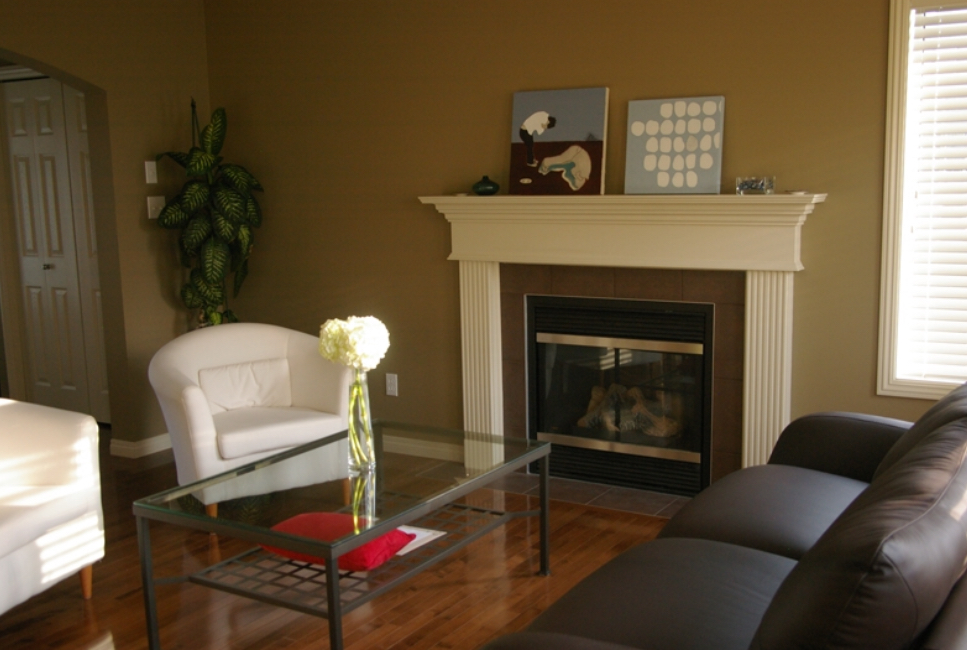
Our living room after we moved in

69CD2522-627D-454C-9E3C-CF877D611E85

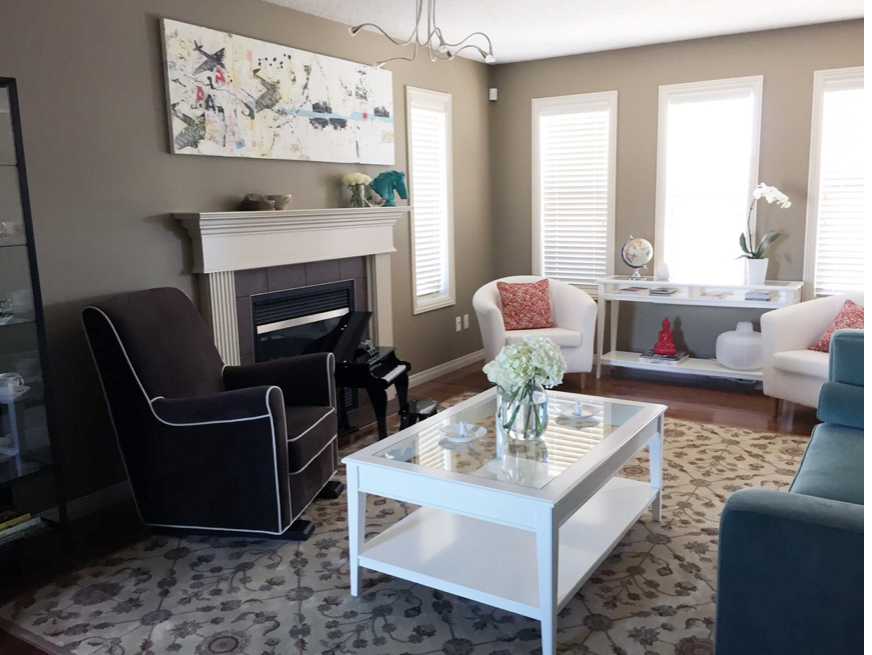
Our living room after the last round of updates

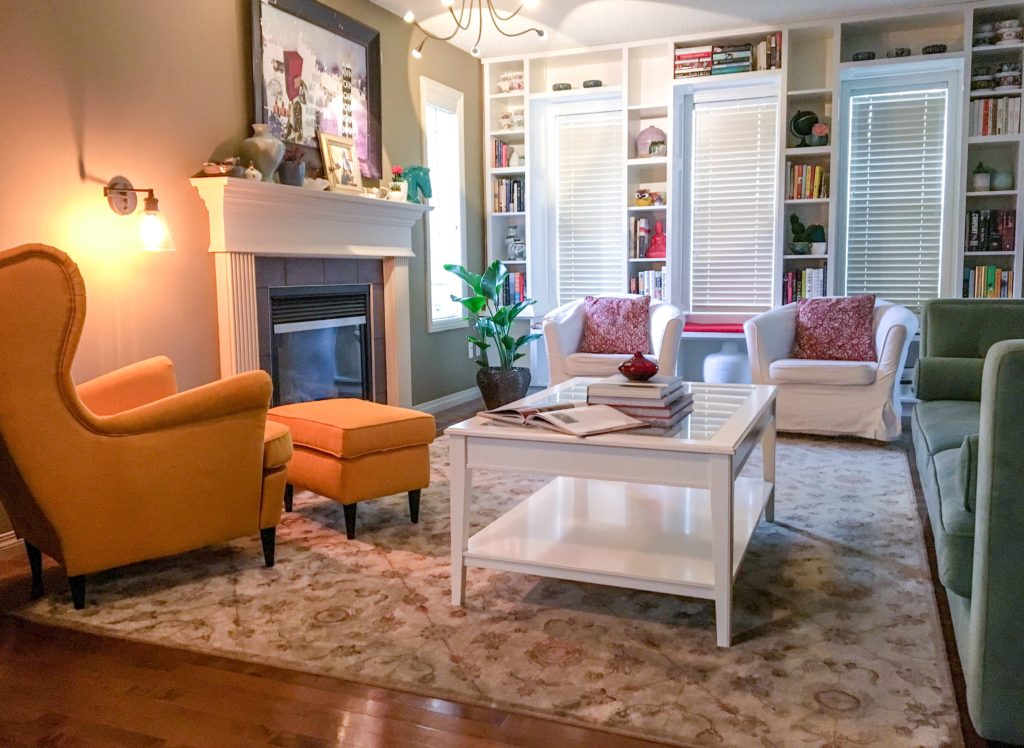
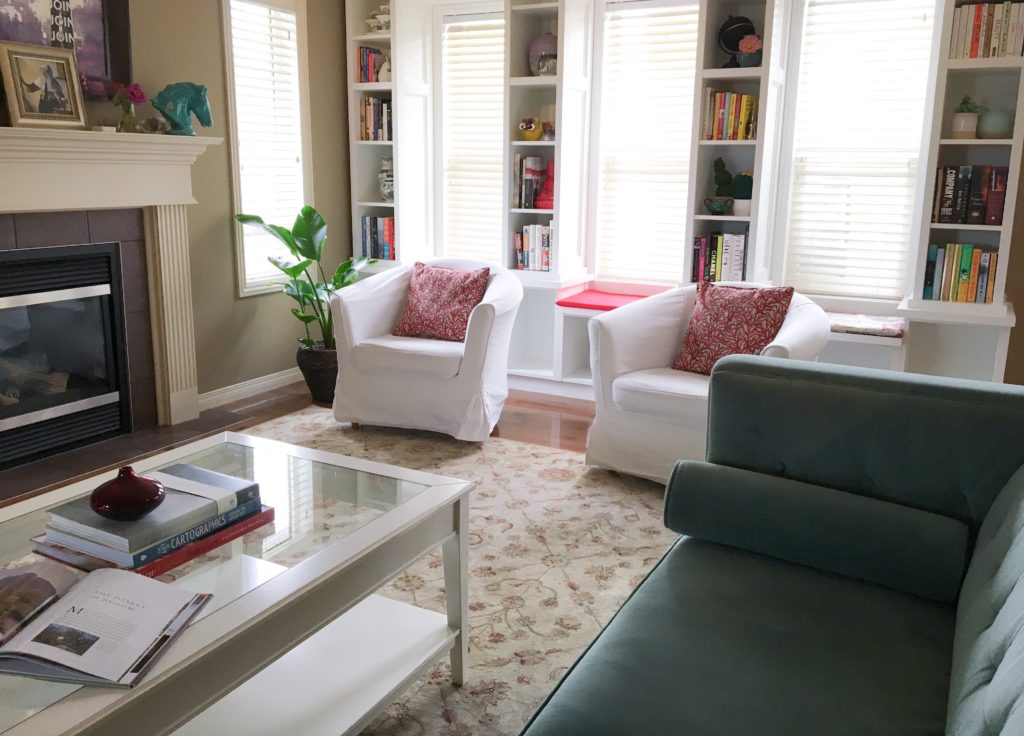
I brought my overall vision to my husband, who took the idea and went to town with it. Actually, he went to the IKEA website, because hacking basic IKEA boxes is one of his favourite things to do – and I’m being only a little facetious. He was able to design the whole custom ensemble for well under $1,000, using IKEA kitchen cabinets (on sale!) and wood trim from the hardware store. He is a keeper, that one. Anyway, don’t ask me how, but it all looked like this at the end:

After!
After!

Other than providing the vision – it’s important, I tell you! – I also did the painting of the built-ins, And, of course, my favourite part: the decorating. There are still a few things we need to do (including patching some dings in the wall and eventually changing the wall colour, adding wainscotting, putting doors on the bottom of the built-in cabinet, and changing the light fixture) but we aren’t in a major rush. The space is livable and quite cozy, so I want to enjoy it – and some peace and quiet – for a bit before tackling more work.

C2D75193-4596-4680-988B-1E644D3011EF

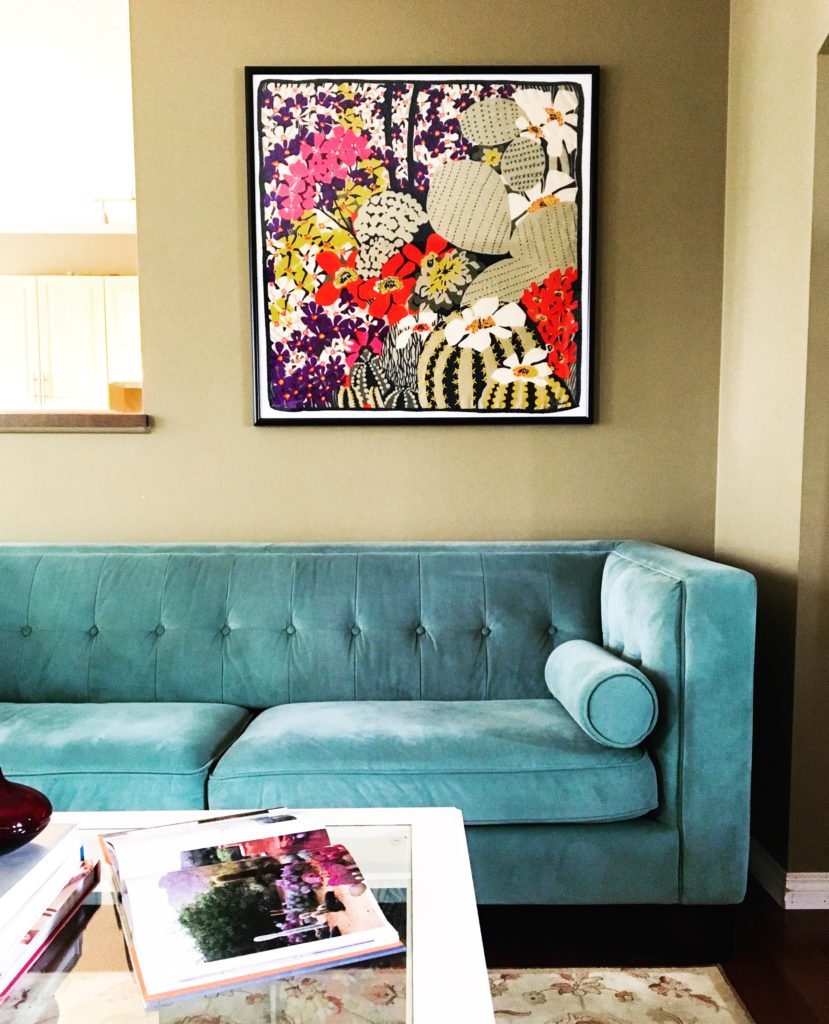
This was one of my fave mini DIY projects; we framed one of my thrifted finds, a vintage Italian silk scarf featuring my favourite succulents. The brand is La Mendola, and my internet research tells me that it was a Pucci rival in the 60s and 70s. I tried to thrift a frame, but the dimesions were too tricky (very large square) so we ended up with, what else, an IKEA poster frame. The scarf is simply sandwiched between the cardboard backing and the plexiglass, and seems to be staying in place. Up close, you can definitely see some ripples in the fabric, and the border is uneven, but I think that adds to its offbeat charm. All told, it cost about $30 (including the scarf) which is a great price for such a statement piece.

F1F62862-7178-4F90-AE27-7DD148097F79

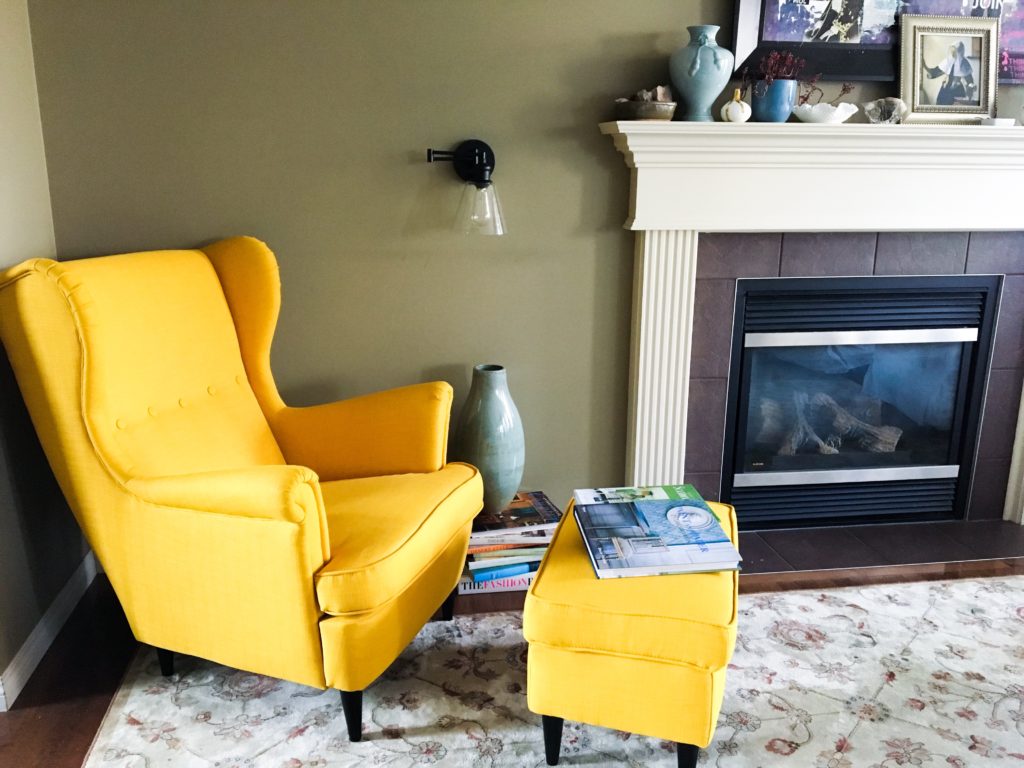
The trouble with IKEA is that you never leave with only the things you planned to buy. This chair is a case on point. I saw it as we were walking out of the store and ended up going back for it. My husband and I both loved the style and the vibrancy of the marigold yellow, which echoes some of the other decor in the living room and dining room. It’s a perfect reading nook, and it really brightens up the room. With this addition, the whole vibe leans more eclectic than traditiona, but I don’t mind; I think the “bones” of the room are classic, so it balances out.

Some more pics!

5843FCA8-80FF-492C-9C13-FDD4E0E24AFB

6375C844-831B-4E92-B304-E2C5AC08608E

All in all, another successful DYI on the bag at Casa J 🙂